Preparing dead insects for photography - Coloring and cleaning
Working with dead insects is common in macro shooting—especially at high magnifications. It often even becomes a necessity. Gaining experience and know-how takes time. How you store, clean, and stage the insects plays a leading role in how compelling the photo is. Some people do it so well that it’s sometimes impossible to tell the insects are dead.
We have a trailblazer among us: Murat Öztürk. He previously helped with a post on staging dead insects. I recommend it to studio photographers. Now Murat is sharing a new discovery. Speaking for myself, I’m pretty thrilled and excited about this news.
A known and used method for cleaning insects is to soak them in lukewarm water with a touch of detergent. But it’s not very effective and it takes a long time. It’s especially weak at bringing color back to the eyes. There are more effective methods for eyes—almost all of which involve toxic chemicals you wouldn’t want at home. Those substances are hard or impossible to obtain. Will this new method take their place?
Let’s hear from Murat
Bringing color back to dead insects
Hello friends…
I try to share useful macro photography tips with you as best I can. I’d like to tell you about an important topic I’ve discovered recently. This method will be very handy when we shoot with dead insects. We all know technique, light, and lenses are crucial in macro. Alongside those, having a model that’s striking and colorful—pleasant to the eye—will take the photo to the next level.
Since we generally work with dead insects, we often toss a model after a single use—because it dehydrates (dries out) and joints break—or we find it already stripped of color, so we can’t make much use of it. I’ve discovered a method that can bring back the original colors—even if the insect has been dead for a long time, as long as it hasn’t decayed too much—and that lets us easily reshape it. (Maybe others have done this before; I didn’t research it.) When I first found it, I shared it with a few friends on the forum. Now I want every macro shooter to know. Let me start by briefly telling how I stumbled on it.
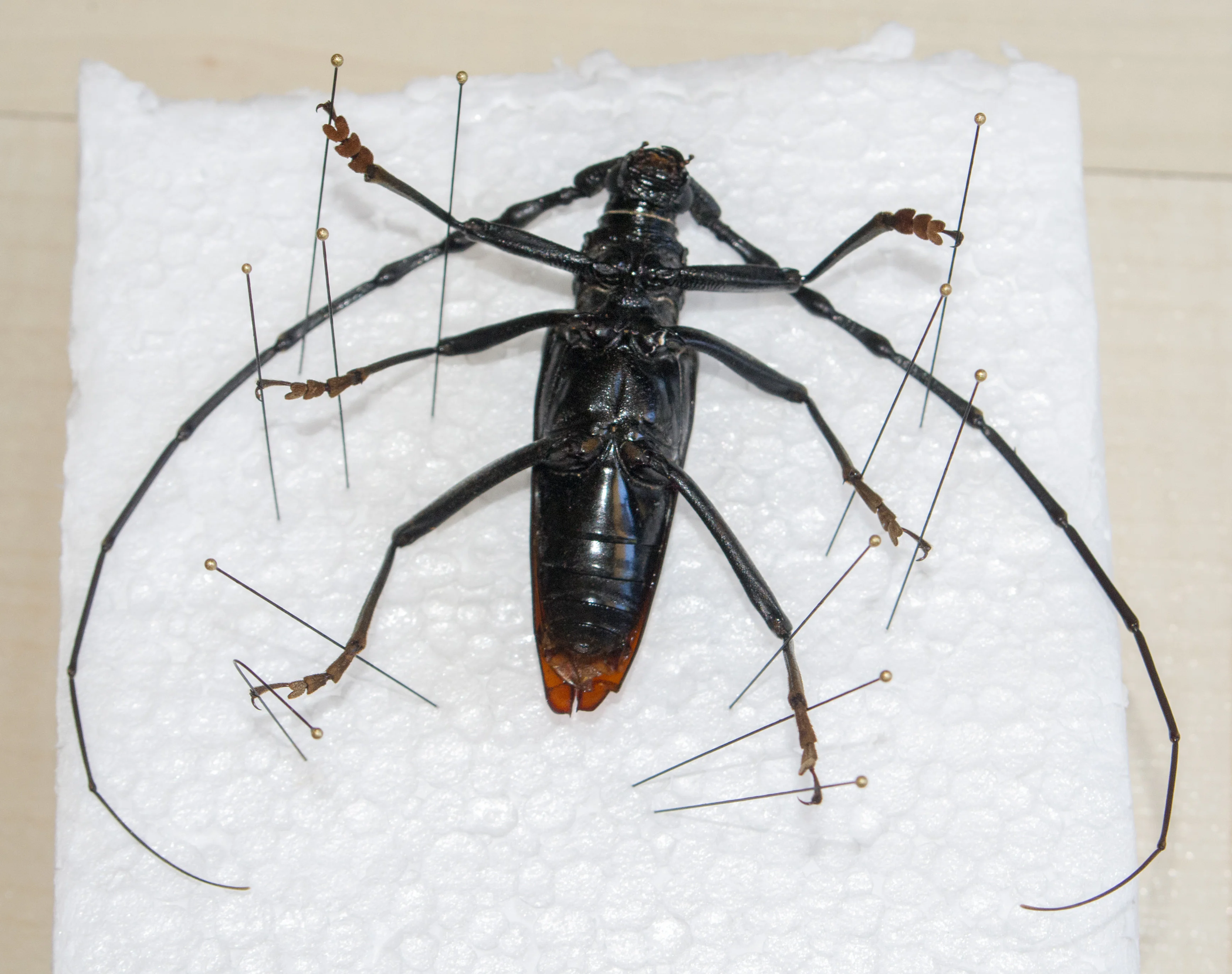
Up until about a year ago, I wore glasses and contact lenses. I had laser surgery and retired both. Lens wearers know the drill: you remove the lenses before bed, place them in their little cases, and add the special solution. We’d written earlier about Staging in Macro. To shape dried insects, we needed to restore lost moisture—by keeping them in humid or water-filled containers. I had a beetle stored in an empty ointment jar—scientific name dorcadion. A quick note: in a mentholated ointment jar, this beetle sat for nearly three months—and there was no drying or spoilage! (I want to properly test the preservative effect of the ointment and cover it in a new post. Storing insects in the fridge might become history.) However, some ointment had smeared onto the beetle, and I couldn’t remove it with water.
I thought of the solution we soak contact lenses in. It mentioned a cleansing effect. I put the beetle in a cup filled with solution for a while. I was able to remove most of the ointment, but not completely. Besides that, I noticed something else… Even the finest dust on the beetle washed away. I used to use a feather or a fine watercolor brush to clean fine dust. This solution was flushing out most dust and grime from spots they couldn’t reach. It had another function, too—but because of the ointment’s preservative effect, I couldn’t discover it at that moment!
As we know, horseflies have eyes in a huge variety of colors and patterns—in short, they’re perfect macro models. I had 3–4 horseflies and various bees whose eyes I hadn’t shot yet, and their eyes had turned pitch black. I’d tried pretty much every method to bring eye color back. Dish soap helped a little, but didn’t restore the exact color we wanted. And, well, what can you expect from a dead fly anyway.
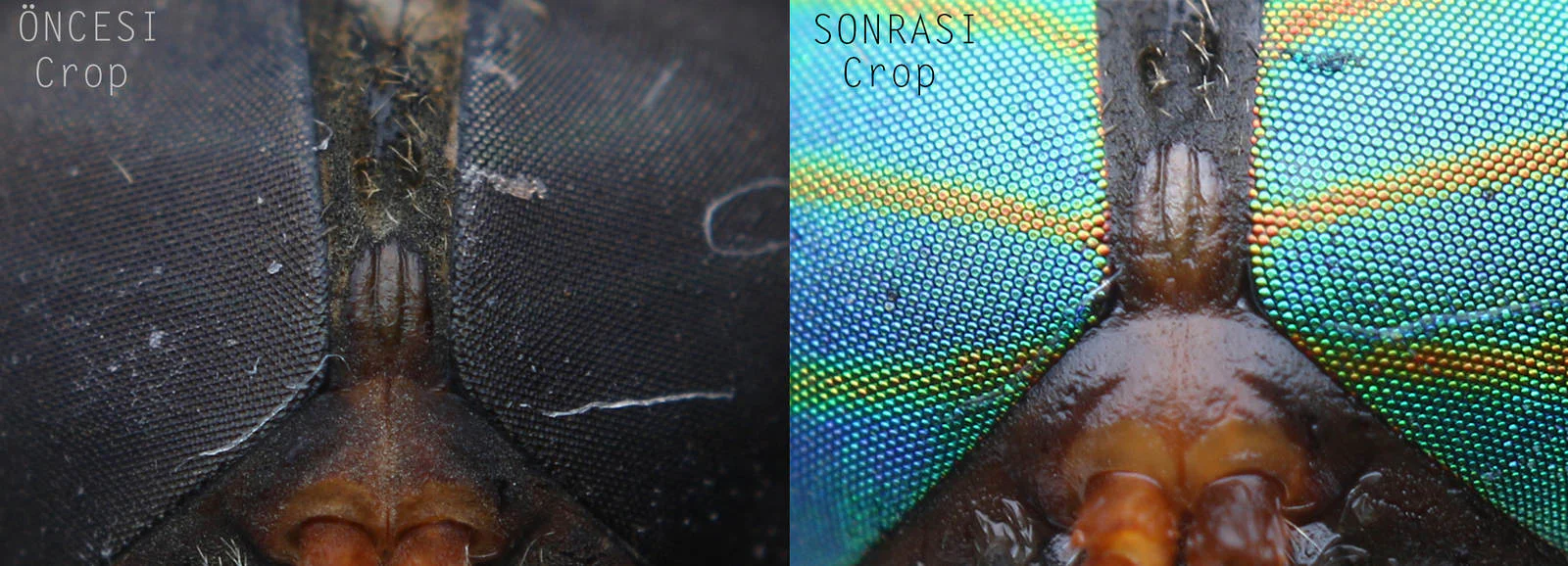
I wanted to shoot the flies, which meant softening and decontaminating them for staging. “Decontaminate” made me think of the solution, so I placed the flies in solution cups and sealed them. After a while I took them out—and I was stunned… The eye colors had come back! At about 90%—vivid, colorful, glossy—and most strikingly, some flies whose eyes had collapsed inward from dehydration had regained their original shape…
The flies in the photos below had eyes and bodies that were completely black.


With this method you can also easily shape mouthparts and antennae. In the hornet example, note how the jaws are open in the second photo—I did that easily with a pin. This way our photos can look more aesthetic and engaging.
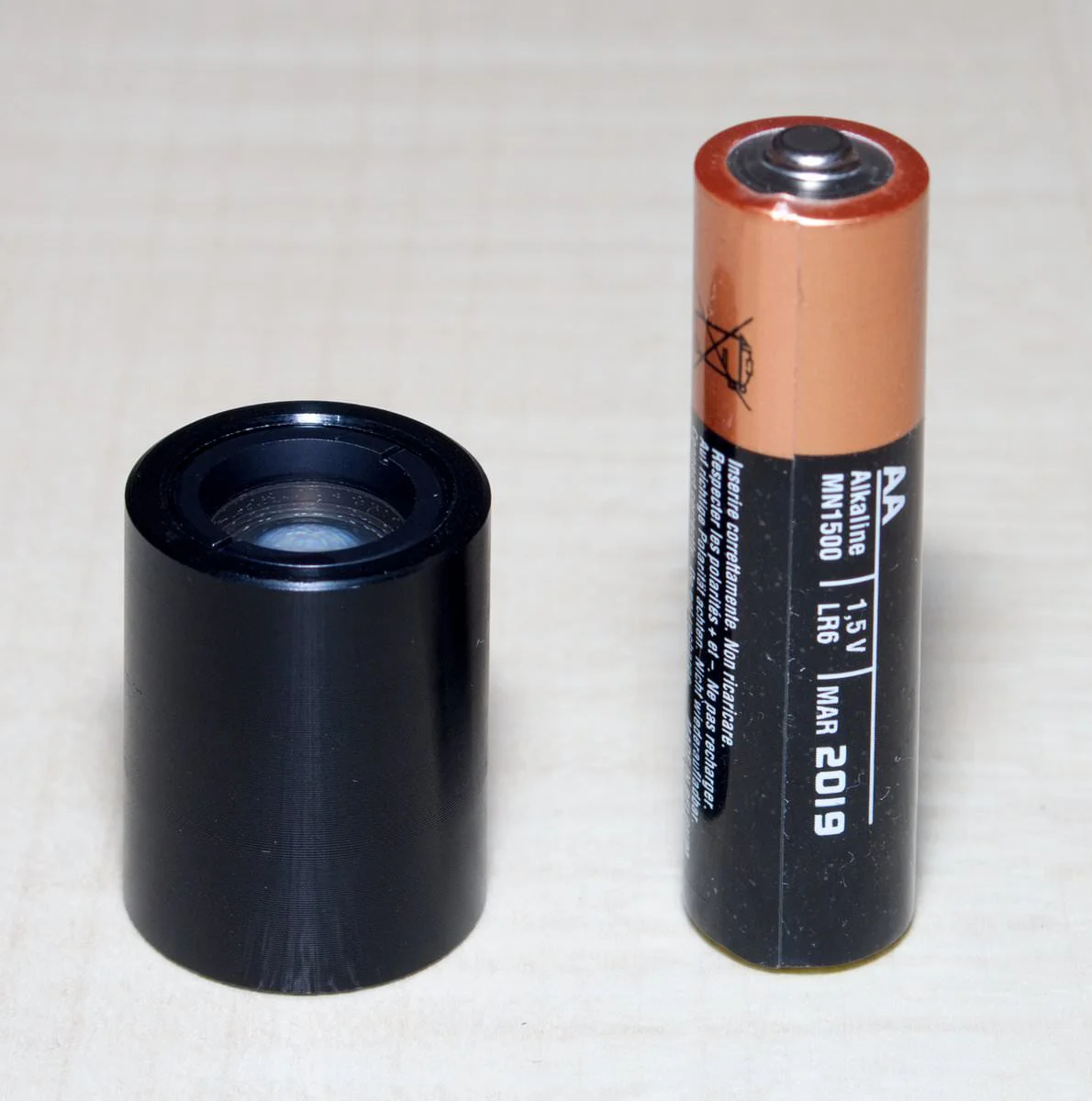
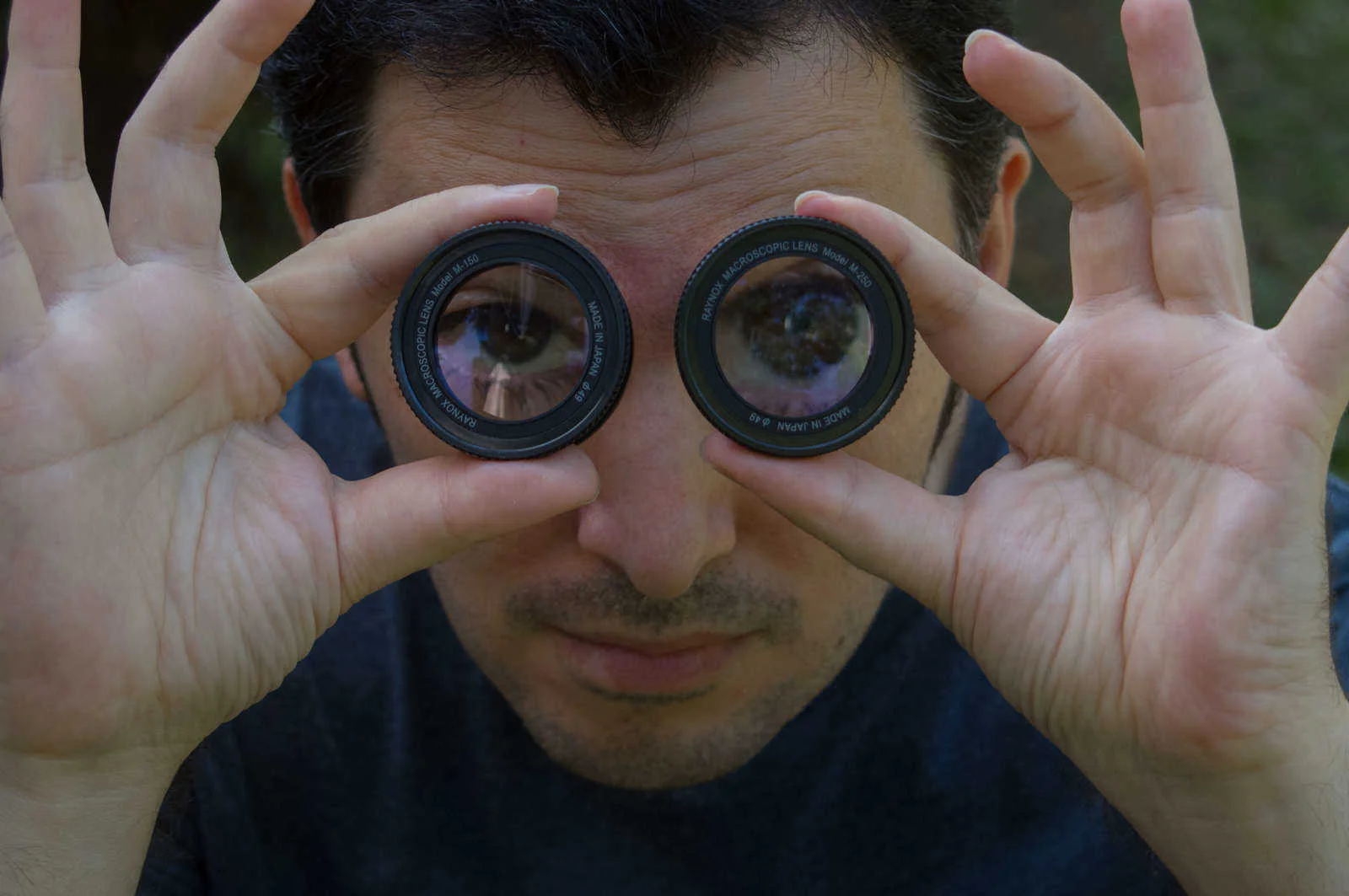
Lastly, I’ll share a photo of the contact lens solution—the star of the show—and wrap up. I hope this helps. Until next time—take care.

Update note:
I did some digging on the possible interactions of chemicals in the solution Murat discovered. Here’s what I found:
-
Cleansing: Lens solutions contain very gentle surfactants designed to dissolve protein and lipid deposits on delicate surfaces. This explains the excellent cleaning effect.
-
Moisturizing & Reconstitution: Among the ingredients, hyaluronan (hyaluronic acid) could be the key. It’s an exceptional humectant that can hold up to 1000× its weight in water. It likely enables tissues to regain lost moisture and “re-inflate” collapsed structures.
-
Protection: Components like boric acid provide mild antiseptic action, preventing bacterial and mold growth during rehydration. This is a much safer method than using plain water or soapy water alone.