Photography with a projection lens

The story part of what I’m going to tell is a bit old. So we could call this a belated post. I’ve been using projection lenses for a long time. That’s why I need to roll the starting point back a bit.
As a macro photographer I chased detail and sharpness for a long time. My eye got used to it. Macro or not, a photo had to be razor sharp. I had to be able to count eyelashes if need be. I tried lots of lenses for this. I even tossed some aside with prejudice without testing them at all.
What a sickness…

It took a long time—and it was a very enjoyable process. After reaching satisfying setups I again spent a long time savoring them.
I don’t know when it happened, but at some point I found myself spending a lot of time on manual lens forums, under threads about bokeh and flare. I started following people who own 100 lenses of the same focal length and are still chasing another one.
One guy would mount one of those lenses and shoot plain old twigs, and without any Photoshop effect, a rainbow-hued impressionist oil painting–level artwork would appear.
Turns out what the old-timers called “optical defects” have become nostalgic, artistic tools that stand out against today’s perfect but uniform optics. In plain Turkish: “The flea market got showered with light.”
Vintage manual lenses are a topic you couldn’t finish by trying or by telling. In this post I’ll touch on a small area that I find special: projection lenses.
Portrait / Bokeh photos
In portrait shooting, fast-aperture lenses are generally sought.
They say, “For portraits, lenses in the 85–135mm range are good. The wider the aperture, the more you kill the background and make the subject pop.”
Those specs indeed aren’t bad. People who see the photos usually say, “The kids came out great.” But kids always come out great. I also want the background to look great! So I don’t want to kill the background. Why should it die? Do we live in outer space?
The background makes a difference.
But making the background part of the photo requires staging. You need to think, move, and find the right position and angle. That’s hardly possible with kids running around.
In such cases, the usual tactic—killing the background without blinking and focusing only on the portrait—yields nice work in the name of capturing the moment. Creamy, melted bokeh adds a sweet, calm, eye-soothing feel. It becomes a nice tool to float the viewer through gentle tonal transitions and ultimately lock them onto the subject.
If we’re after fun, fantasy, and difference, we can try boiling the background instead of melting it!
Bokeh
Although bokeh is often thought of as the background, anywhere out of focus fits the definition. In other words, both front and rear bokeh characteristics have distinct, powerful effects on a photo.
This was back when I used an APS-C camera. My cousin brought his newly bought full-frame mirrorless for me to test. I slapped on the Helios 44 lens that happened to be at hand. I had tried it reverse/normal but never tested it properly. Looking through the viewfinder, I was stunned by the look of the sparkling light filtering through the leaves.

Swirly bokeh is hypnotic.
The famous “swirly bokeh” of the Helios was right in front of me.
This character of the lens showed itself especially toward the edges of the frame, and as long as I used an APS-C sensor, that beauty was cropped out and left outside the photo. After this experience, I became more curious about characteristic bokeh and found another reason to use a full-frame body.
My sharpness obsession ended there. While using APS-C I had been fooling myself with the defense of “The center of the lens is sharper; we crop out the messy edges—great!” For example, our eyes see very sharply in the central region but the edges are blurry. Do we put on blinders to crop off the edges so we can see ‘sharper’?
After that experience my next lens would not be for macro but for portraits—and would make itself known. At least that was the dream.
Soap-bubble bokeh
After closely following bokeh photos I noticed one style was especially popular. Lenses that produce rings like soap bubbles create a fantastical world. Among them, the best performer—or the best known—is the Meyer Trioplan 100mm f/2.8.

I knew this lens from hearsay here and there. I’d also seen classified ads with their unkempt, tarnished metallic silver bodies. Sometimes the aperture was broken and stuck. No matter; I was going to use it wide open anyway. The bubble bokeh only appears then. They didn’t look great in the ads, but $50–$60 seemed payworthy. Those were the prices I remembered.
I sat down at eBay and searched for the Trioplan 100mm. And what do I see! It’s $700, $800 and up! The lens had become unattainable. There were other Trioplan models in between—for example the 50mm f/2.9—going for $30–$40. It has bubble bokeh too, but not like the 100mm—just small bubbles. I figured it wasn’t suitable for portraits and turned my nose up at it. While I was turning my nose up for months, that lens shot past $150!
The situation looked bad. I went back to forums and groups to keep watching those flying bubble bokehs. The more I read, the more options I had. I learned that the Cooke triplet lens design is very old and that all these lenses produce a bubble-bokeh effect. Most of their prices had already climbed. Eventually, hidden treasures started to surface among the junk piles.
Projection lenses
I was in elementary school. One day they showed us a black-and-white film about how oil forms and is extracted. I remember being very impressed. In the ’80s they held these presentation screenings for the entire school in a large hall. I hadn’t been to a movie theater before. The image of the black-and-white film strip rattling along in front of the old projector’s flickering light was passing through a projection lens and being cast onto the screen. I was more interested in the machine than the film. The lens on that machine might be the very same as the lenses I’m using now.
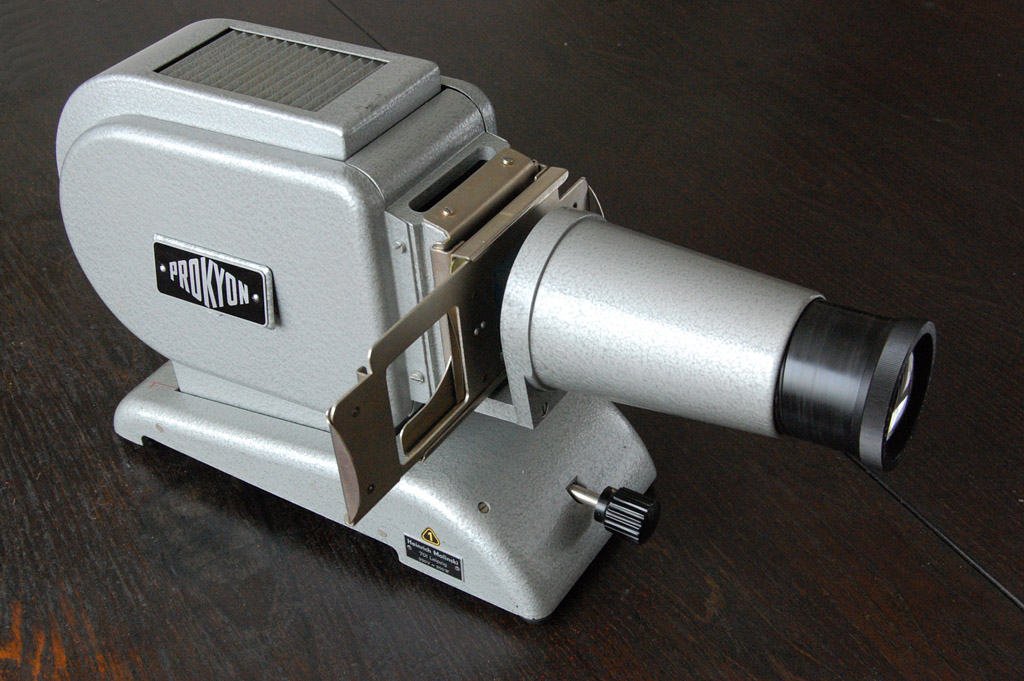
Projection lenses are found on slide projectors, movie projectors, and modern projectors connected directly to a computer. They project the image onto a white screen or wall.
Because these lenses weren’t made for cameras, there’s no easy way to mount them. In other words, you won’t find a standard projection-lens adapter for Canon, Nikon, Sony, etc. Each lens has its own odd threaded system. Sometimes it doesn’t even have that.
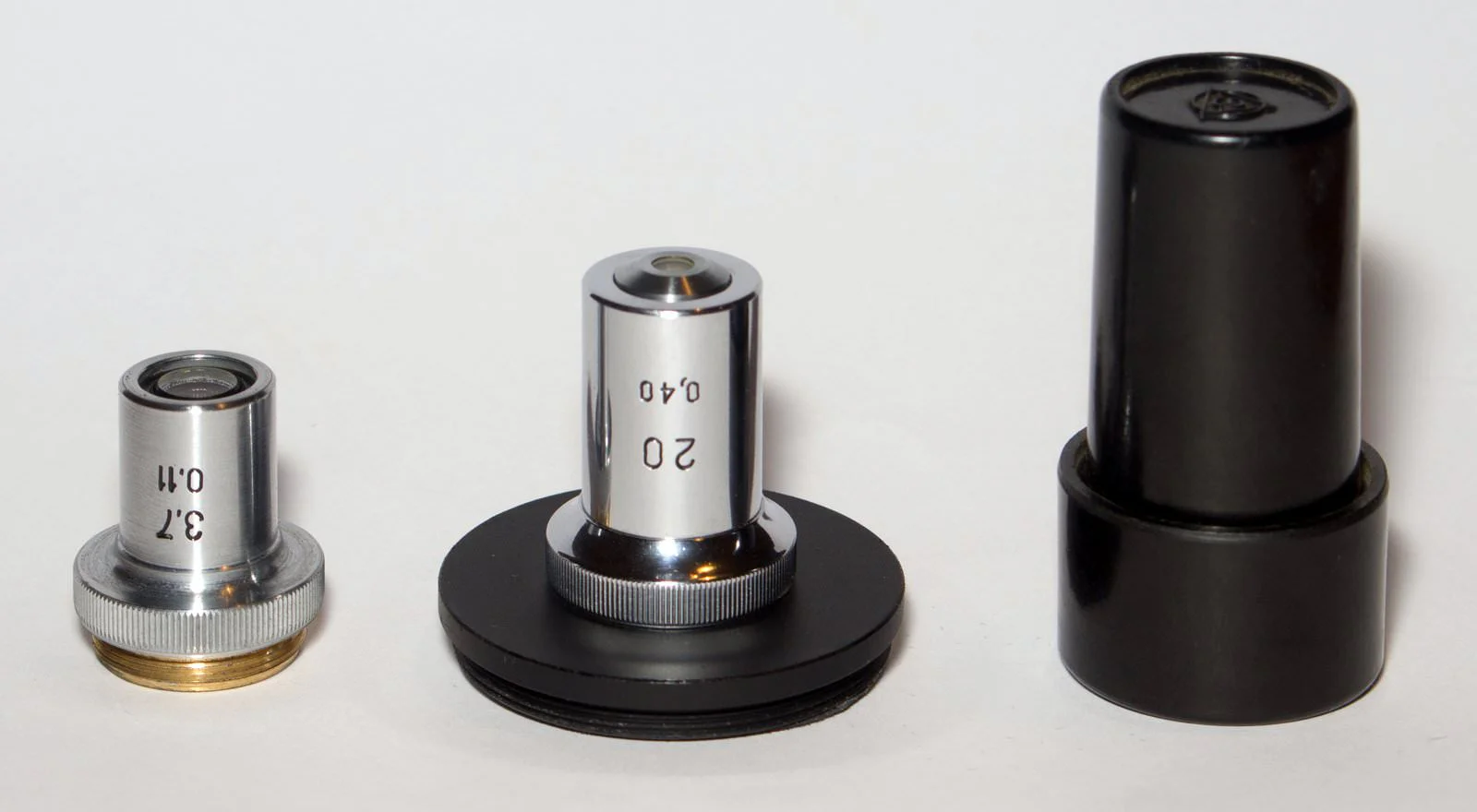
They’re usually built like a tube—think a metal tube with some glass inside. They have no focusing mechanism! They also have no aperture! The tube itself is the aperture—imagine a lens that’s always wide open.

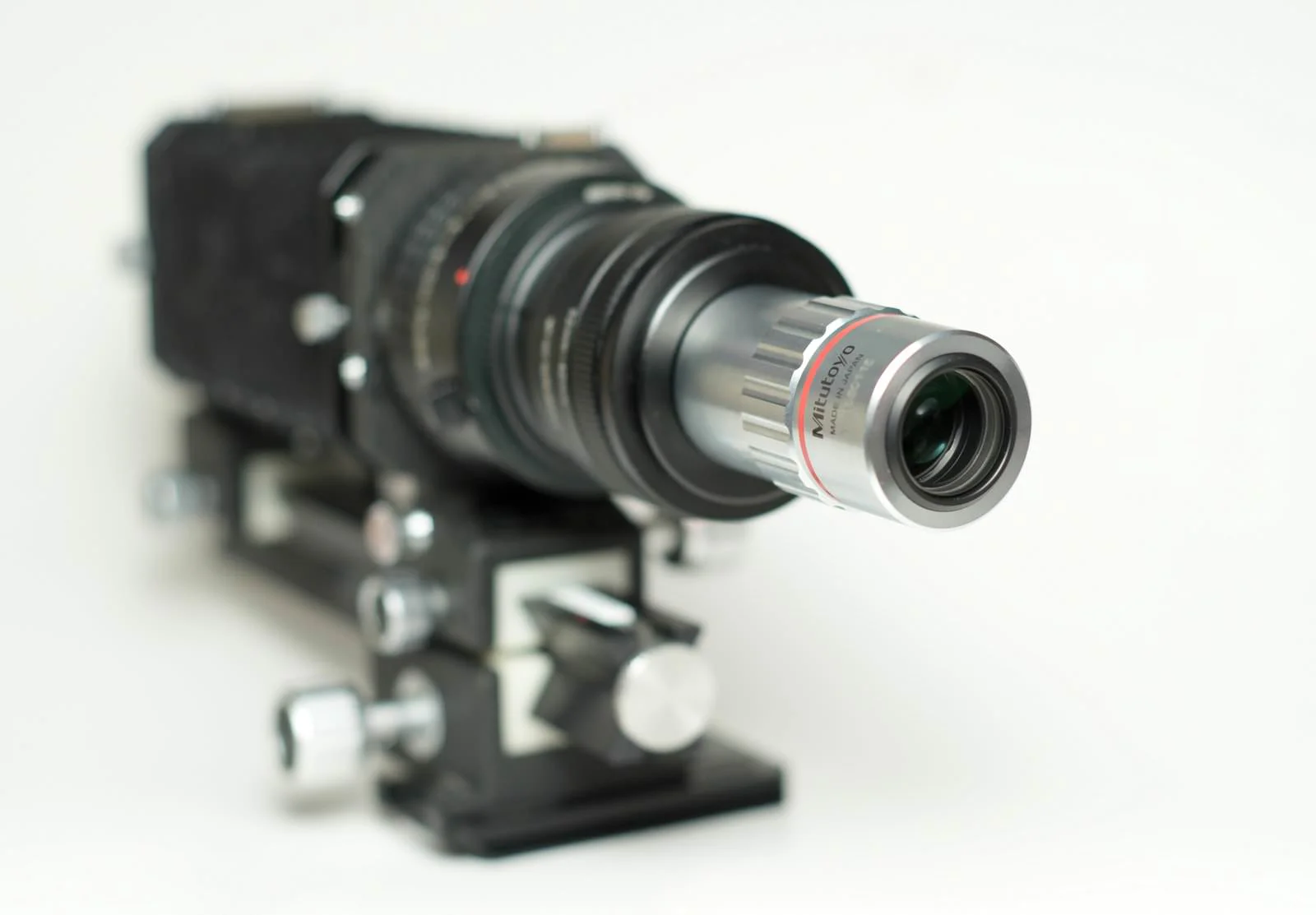
Their use on cameras became popular with mirrorless bodies. Mirrorless cameras offer almost limitless flexibility for lens use. If we can somehow attach the lens to a helicoid or a bellows for focusing, the system is ready to shoot. The further you extend the bellows, the closer it focuses; the more you collapse it, the farther it focuses—just like old bellows cameras.
Diaplan
The Meyer company has been re-founded and is reissuing old lenses including the Trioplan. But are they as good as the originals?
We said Trioplans are the famous lenses of the German firm Meyer Optik Görlitz. The brand also produced other legendary lenses long ago. They used the same triplet optical formula across different models. So you often run into their lenses that produce soap-bubble bokeh.
While browsing forums I read that some people were getting soap-bubble bokeh from Meyer’s projection lenses, which piqued my interest. Because they’re hard to use—and therefore cheap—alternatives. Among them was the Diaplan 100mm f/2.8, said to be the same as the Trioplan. It was like a Trioplan 100mm but without a focus ring, aperture, or mount.
I didn’t expect there to be so many Diaplan models on the market. Listings showed 80mm, 100mm, and 140mm Diaplans, with apertures like 2.8, 3.0, and 3.5. I couldn’t find exactly what I wanted—the 100mm f/2.8—so I bought another one I could find at the time: the 100mm f/3.5.
Diaplan 100mm f/3.5
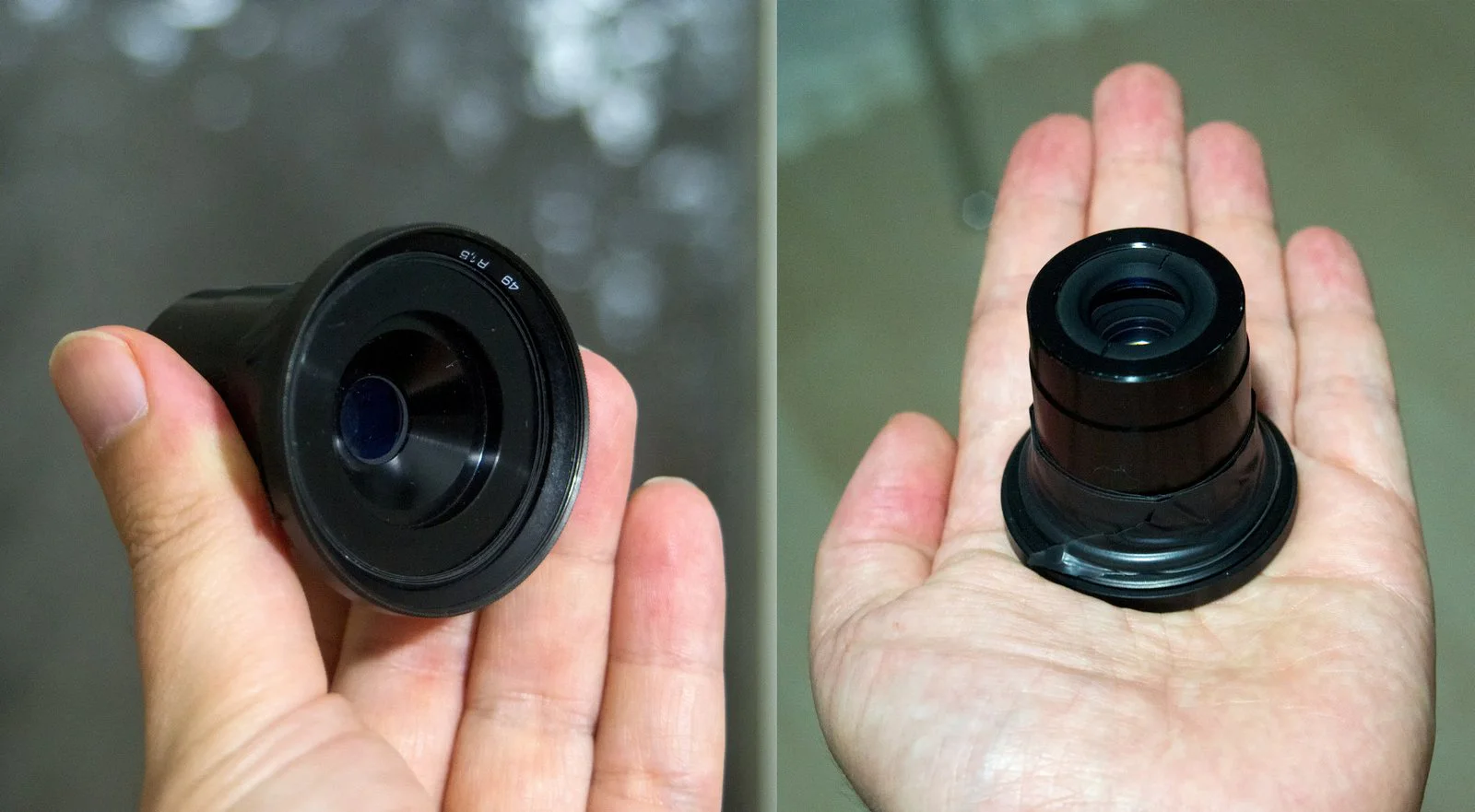
The lens arrived. It was a tube as expected. But I was lucky to find the 100mm with its own focusing helicoid included—mounted on it. I wouldn’t need to fuss with attaching a bellows to the rear. It would be very light and ergonomic. But then it turned out you still couldn’t mount this focus mechanism to a camera.

I have lots of adapters lying around. Without overthinking it, I decided to glue one to the back of the lens. At the time I was using Pentax, so I glued a 49mm reverse Pentax adapter to the rear of the focusing unit. Instantly, the lens became Pentax-compatible. Of course it now also works on my Sony body without issue. I can focus to infinity and quite close.

The Diaplan is a sharp lens. There’s no downside to using it wide open. It’s super light and super compact. It produces pleasing bokeh. The bubble effect I dreamed of isn’t very strong, but it’s there enough. With a suitably sparkly background, the balloons show up.
The main difference I mentioned between Sony/Pentax use is sensor size. On APS-C, the edges of the image are cropped, so I only get the central image and the lens gives a rounder bokeh—i.e., they appear bubble-shaped.

On a full-frame body, things change a bit. Toward the corners the roundness of the bokeh is lost and shifts toward a half-moon shape. In this state, even if it departs from the Trioplan character, it takes on a Helios-style swirly bokeh look that I find very pleasing.

After these first tests I began to suspect the Trioplans might be a bit overrated. A person who paid $800 for a lens won’t easily say it’s no good. After all those heavily applauded photos others shove in our faces, saying “My bubbles are a bit deflated” would hurt. Someone who says that will likely be unable to sell their “bad copy” for anything close to what they paid.
So what if the emperor has no clothes? No one shares raw images. Could they be inflating the bokeh bubbles at the PC by cranking contrast and sharpness? Whether it’s such an overprocessed, hormone-fed image or not, people look at the result. As long as the Trioplan provides that processable raw material, it looks like it will keep its market value.
I loved the 100mm f/3.5. It became a lens that makes me feel special while using it. Here’s an album of photos I shot with the Diaplan 100mm. The ones with cats were taken on an APS-C sensor. The others are full-frame.


Diaplan 140mm f/3.5
As my search for bubble bokeh continued and I decided to test another Diaplan, I picked the 140mm to make it a bit different from the first. Being a telephoto, I expected larger bokeh rings. When I ordered it, there were no tests or even a single sample photo around. Let’s see what we get.
When the lens arrived, it turned out mounting it to a body would be a bit of a hassle. It was again a tube, but this time there was no helicoid included. So I’d need a bellows to focus. The lens’s thread is on the inside—female type. Still mountable, but you have to figure out the pitch and diameter.
I did a quick test. Lacking a suitable adapter, I hand-held the lens in front of the bellows and took a shot. Even at its shortest, the bellows was too long—acting like an extension tube. The lens couldn’t focus to distant subjects. For shooting at only 1 meter, 140mm was too long—too much magnification. I wanted to be able to shoot from a bit farther away. If that’s how it is on a mirrorless full-frame body, I figured it would be unusable on a mirrored APS-C. The bokeh character was smooth but didn’t give the shape I wanted. After this experience I shelved the Diaplan 140mm for about a year.
In the meantime, other gear I acquired for two different purposes brought a fresh breath to how I use projection lenses.
- External aperture: I bought this for depth-of-field control with microscope lenses. It can likewise be used with projection lenses that are born without an aperture. Sharpening the lens and controlling depth of field is the aperture’s job.

- Helicoid adapters: I use helicoid adapters as macro tubes to force wide-angle lenses into close focus. Regular extension tubes are too long for wide-angle and make focusing impossible. If we use a helicoid adapter for focusing on projection lenses, we get a sufficiently thin focusing unit for lenses like the Diaplan 140mm that struggle to focus far.

Tests showed the Diaplan 140mm has a female 58mm (M58) thread. The external diaphragm is M42 type and I chose a Canon helicoid adapter. To connect all this together I used a series of adapters as shown above. You need to add an extra 20mm M42 tube between them. With that 20mm, I get the focusing range to ∞ – 1 m. If I leave out the 20mm, the lens can’t focus closer than 5–6 meters. Now it was just how I wanted it—time to test.


No doubt I’ll test this lens plenty under different lighting conditions in the future. I’m adding a new entry to my favorite portrait lenses. Below are samples shot with the Diaplan 140mm. New photos will be added here as they come.


Zettar 150mm f/3.0
One day while browsing classified ads for projection lenses online, I came across this lens called Zettar and tried to figure out what it was. There was almost no information about it. It was apparently made for Zett brand projectors. And we know it’s roughly a “triplet” design. I bought a good portion of my lenses by taking risks, without prior knowledge, trusting only my gut. The urge to discover won again, and I placed the order.

The lens has a rather crude, plain metal body. Of course it has no mount. Again there’s a female thread and it’s not obvious what it is. My first test was hand-holding it in front of the bellows. The lens isn’t sharp and it’s very sensitive to light. I don’t expect nanotech coatings from something likely made 50 years ago, of course. But it’s clear this is the most flare-prone lens I own. I figured I’d use it with a hood and started looking for adapters.

The thread turned out to be female 49mm. There are reverse M42–49mm adapters made for mounting lenses in reverse on M42 cameras. When I attached that adapter to the front of one of my small M42 bellows, the lens seated right onto the bellows. In the photo above there’s no aperture, but later I also mounted an M42 iris in front of the bellows—so I’d have aperture control.
The lens literally rains bokeh. And soap bubbles, at that. No, it isn’t very sharp. But I love the bokeh so much that it never occurs to me to stop down for sharpness. I want the lens just as it is.

When I first tinkered with the lens I thought its “extreme sensitivity to light,” i.e., flare, would be a disadvantage—but it turned out to be a toy in its own right. Forget using a hood; the possibility of flare became the very reason I preferred this lens. You don’t need any effort to do something different. The moment you move to a cross-light position to the sun, the fun begins. It’s like watching fireworks.


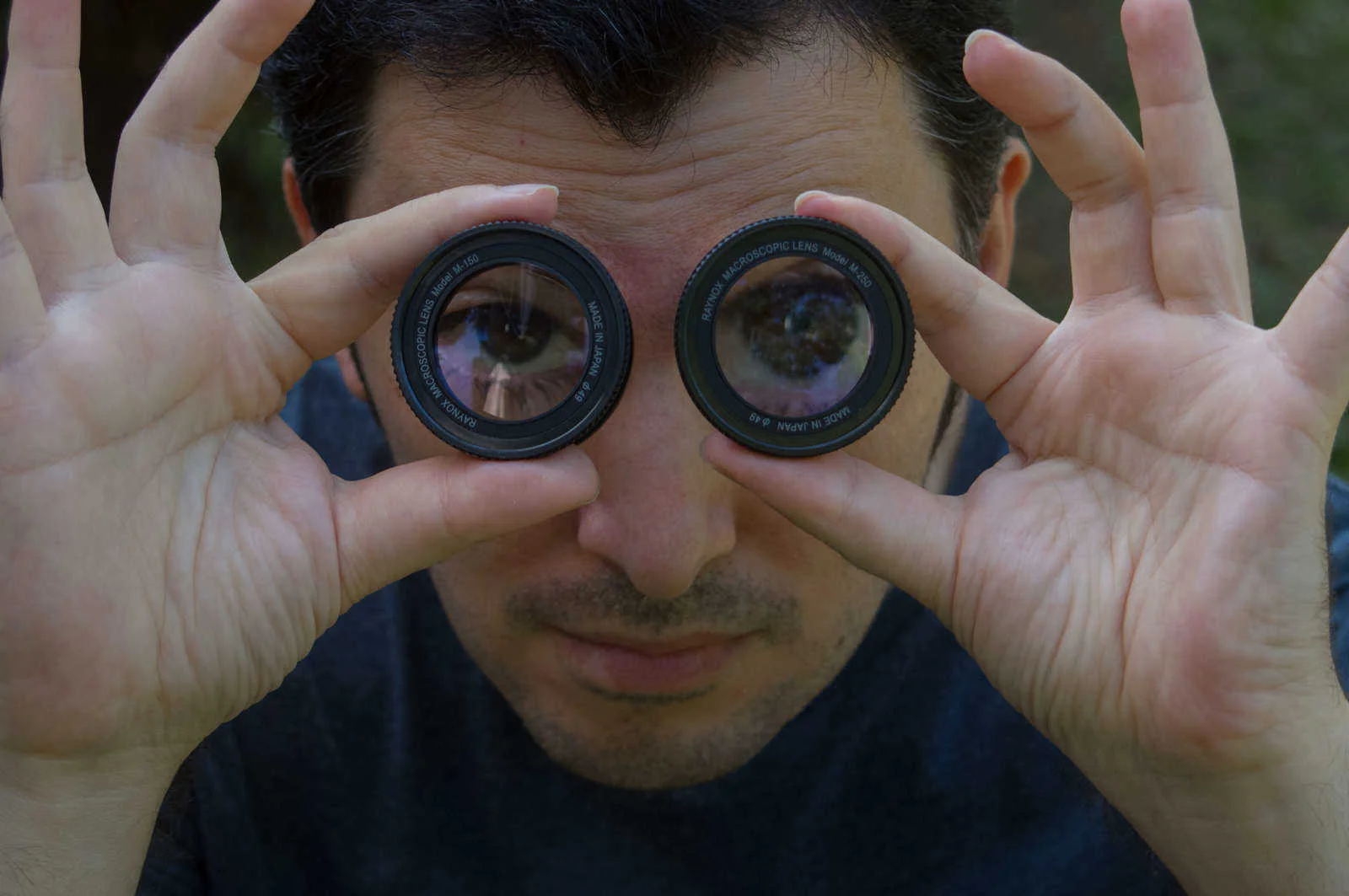
I loved the Zettar so much I didn’t want to risk losing it and went hunting for a backup. After a long search I finally put a second one in my drawer and relaxed. This lens showed me how strong a lens’s bokeh and flare character can be and cured my sharpness obsession completely. The taste of evening sun is best with the Zettar. Sometimes I daydream about fitting these two Zettars over my eyes and seeing the world that way :)
Let’s see what’s in the Zettar album:


Final words
You choose: a melting background? Or a boiling background?
Projection lenses are a bomb that’s gone off in the photo world in recent years. I know people who grab lenses from landfills and attics, shoot a few sample photos, and then sell them for hundreds of dollars. There are plenty of duds among them, but countless undiscovered gems lie in antique shops and junkyards.
I bought these three (actually four) lenses for laughably low prices. From what I see, that’s no longer possible. But the opportunities are still there. Most importantly, the thrill of discovery remains. I’ll keep testing and exploring, and I’ll make time to share about the world of photography beyond macro and the lenses I find special.
I recommend projection lenses to everyone who loves uniquely-charactered photos and fun.