Wide-angle macro photography and Laowa 15mm f4.0
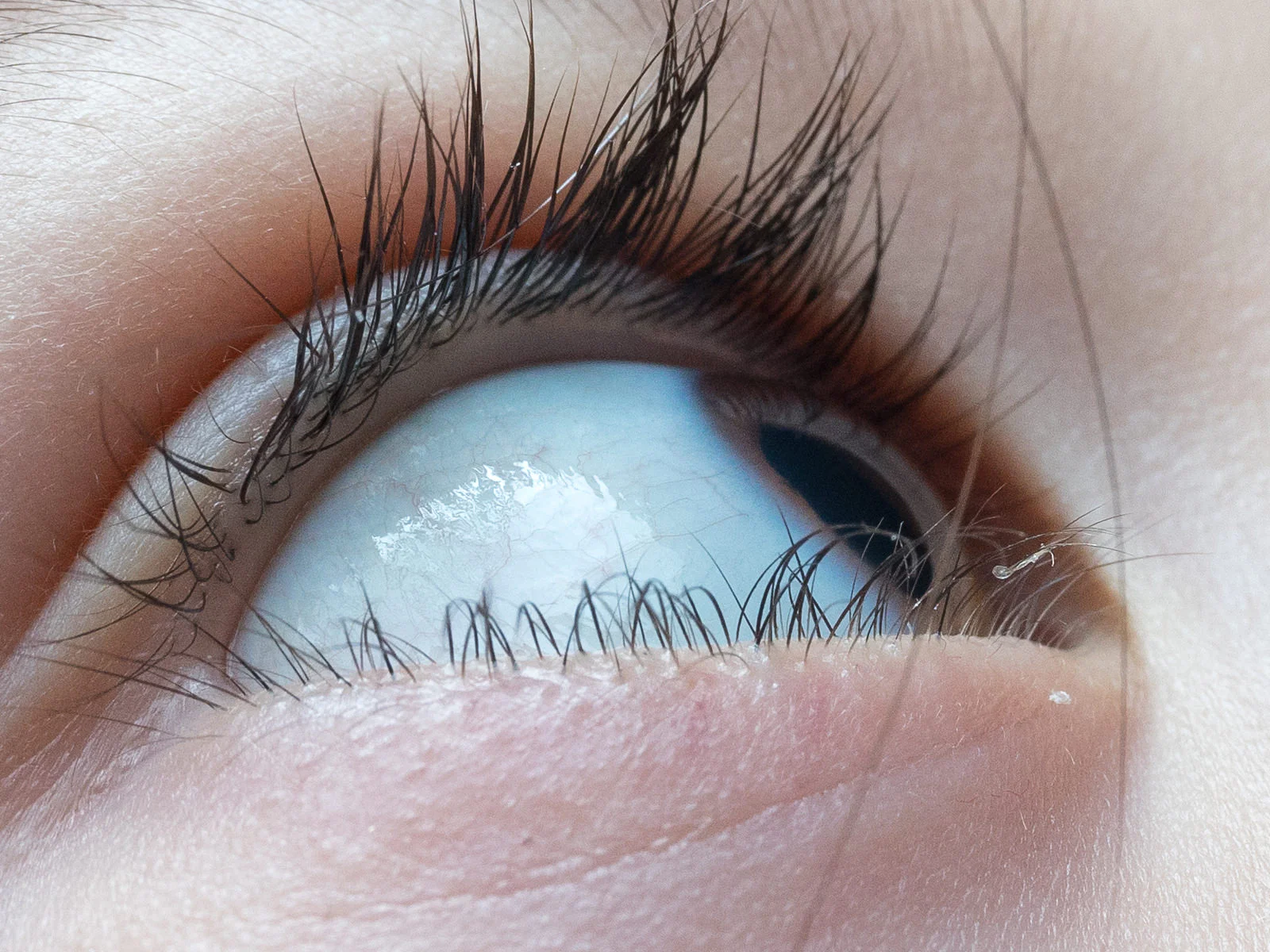
I remember the very first post I published on this site—I’d written about how I missed the shots I used to take in macro mode with my old compact camera. Primitive as that camera was, there was something that made those photos different: something I forgot once I dove into the magnification race, but kept longing for every time I saw similar images.
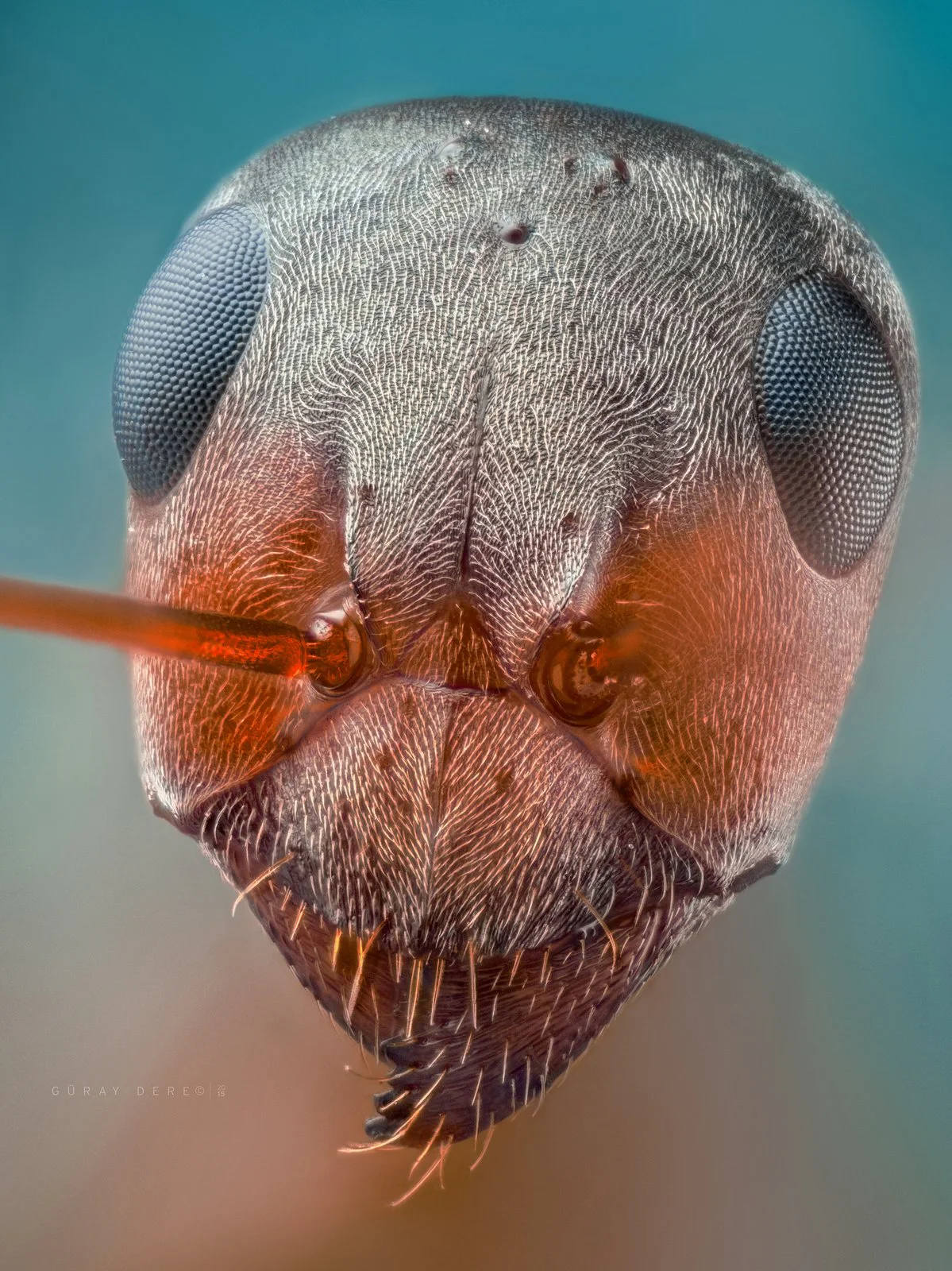
In a typical macro photo you move in close on the subject, melt the background into buttery bokeh, and let the subject pop. With a high level of detail, you can turn the photo into a visual feast. The more you magnify, the more detail you show, the more it wows the eye. The “Likes” and “Favorites” go through the roof. High magnification is a blast—I’ll never give it up—but sometimes I feel something’s missing.
I can’t step into the scene while watching! :)
What do I mean? If I literally shrank down and went next to that bug, how would I see the place? Or if I looked through the bug’s eyes, what would the surroundings look like?
I’m going to digress a bit. No other way around it. Since I’m discussing the concepts below through my own perception, there may be points I get wrong or leave out—if so, please set me straight.
Sense of reality and wide-angle lenses
By “sense of reality,” I mean “as if we’re looking with our own eyes”—as if we’re right there.
A single eye sees the world at roughly a 125-degree angle—pretty wide. We need a wide field of view like this to feel in control and safe as we perceive our surroundings. Otherwise it’s like peering through a narrow slot; we’d constantly worry about stepping into a hole or bumping into someone. We wouldn’t be able to take a step without swiveling our head nonstop to scan every direction through that tiny window.
- Wide-angle lenses give us that familiar sense of a wide world. We feel like we’re inside the frame. Photos shot at an angle closer to what the eye sees boost the scene’s sense of reality. Another component of realism is the background.
A world with no depth wouldn’t feel real. Wherever we look, we still make out what’s happening in the background to some extent. There’s always some bokeh, sure, but there’s also enough definition to see what’s going on back there. Otherwise we wouldn’t survive—while focusing up close we still have to catch threats coming from afar.
- Wide-angle lenses show a lot of the background. While a portrait photographer hunts for the fastest glass to obliterate the background, landscape photographers who want to show it work with wide-angle lenses and stopped-down apertures. At the same f-number, a wide angle gives far more background than a telephoto. When we say reality and depth, the last concept arrives—perhaps the most important one: perspective. I’ll dwell on this a bit more.

Our brain makes predictions based on experiences formed by the eye’s optics. We know the real sizes of an airplane and a person. If a plane in a photo looks smaller than the person standing there, we know the plane must be far away.
We know roughly how big a car is. The instant our eye spots a car coming toward us, our brain does the math without us even thinking about it. From the image size on our retina, we judge the distance; the faster that car image grows, the faster it’s approaching. We estimate the time it will take to reach us and hit. All that computation happens automatically. If we got it right, we cross the street; if we got it wrong, we die!
Seeing the background is vital, and so is judging how far background objects are. That’s why perspective is crucial to perception and belongs inside our definition of a “sense of reality.”
We also infer object size through perspective. Picture an empty room. If it’s small, the wall height near us and the wall height far away appear very similar—so we understand the room is small. But if it were a vast hangar, the walls would recede into the distance and that back wall would look tiny, telling us the room is huge.

For example, telephotos compress perspective. Distant objects shrink less. The longer the focal length, the closer those faraway objects appear. Back to the “airplane and person” example: in a film shot at 2000 mm, it’s hard to judge the distance between people in the foreground and a plane far behind them. Extreme telephotos almost erase perspective, so the plane looks like it’s about to plow into the people at any moment. Let’s watch the clip below:
https://player.vimeo.com/video/152514220 Dramatic Filmmaking with a 2000mm Lens from Vashi Nedomansky on Vimeo.
Now let’s flip it. Can we make something small look big? Yes—we’ve known how since the Renaissance. To make cathedral interiors look larger than they are, Renaissance architects pulled a perspective trick. To make a hall feel grander, they built the front columns taller and gradually lowered the ceiling and shortened the columns toward the back. Our poor brain, bound to the eye’s lens, has no choice: “Wow, what a vast hall—the rearmost columns must be so far away they look tiny!”
So we’ve got a teeny subject. A bug! But we want to make it look gigantic. What do we do? We must exaggerate perspective. If the part of the bug nearest us looks huge and everything in the scene rapidly shrinks toward the back, our long-suffering brain chimes in again: “Whoa, I must be right next to the bug. Either the bug is as big as me, or I shrank and climbed down there!”
- Wide-angle lenses exaggerate perspective. Large objects look tiny in the background. And if we shoot small subjects from very close, they look far bigger than they are.
Wide-angle macro
When we look at wide-angle lenses for macro purposes, we see those three bolded traits above are exactly what we need. We can get down to a bug’s eye level and view the world from there. By including the background, we can frame a flower or insect together with its natural habitat. Bold claims, I know. In practice a pile of technical issues crops up and we don’t fully get what we want—but the new possibilities are absolutely real.
Strictly speaking, “macro” refers to 1× magnification and up. Hitting 1× with a wide angle is quite hard. “Close-up” would be the more accurate term here, but once flowers and bugs are involved I’ve got no qualms calling it “macro.”
But if a wide angle normally makes everything look small and far, how do we photograph a bug? Wouldn’t it make the bug even smaller?
Yes—if we use the lens as usual, we won’t even see the bug. But if we get very close and shoot from very close, then the bug looks big despite the wide angle.
To do that we can use extension tubes. But to force a lens wider than 20 mm into close-focus, you need very thin tubes. The shortest ring in standard tube sets is 12 mm. That’s still so much that the focus distance can end up inside the front element—meaning you can never achieve focus. Different wide-angles come with different issues and some workarounds, but those will be topics for future posts. Right now, there’s a brand-new player that solves our problem: the Laowa 15 mm 1:1 macro.
Venus / Laowa 15mm f/4 1:1 Macro

In the wide-angle macro niche, the Laowa 15 mm has no alternative right now. I’d love to see other makers jump in fast, but until then, Laowa is the best tool for the job.
Delivering 1× at 15 mm isn’t easy. You have to get very close. This lens lets you do it: it can focus 4.7 mm in front of the front element—less than half a centimeter! That distance is for 1×, and you don’t have to work that high. 0.5× and even 0.25× compose beautifully.
If I list the lens’s strengths:
- You can go up to 1× magnification. - You can read the magnification right on the focus ring. Adds to the fun. - Because it focuses to infinity, it also covers day-to-day wide-angle needs. - It’s very sharp—after all, it’s a macro lens. - It supports full-frame bodies. - With a 14-blade aperture it renders a smooth background—a serious advantage. - The aperture is stepless and smooth—an extra plus for video. - It stops down to f/32. Normally f/32 is overkill and soft, but on a wide angle it has niche uses. - It has built-in “shift.” For example, you can apply shift in architectural shots to curb wide-angle perspective distortion in buildings. - You can mount filters. Some ultra-wides have bulging elements that block filters. For ultra-close work, a protective filter matters to guard that big front element from scratches and grime. Clearly, a lot of thought went into the design—and into execution. There’s plenty of bias about a product “made in China.” Like everyone else, I waited for early impressions, and soon delightful photos and glowing comments started popping up online.
I didn’t want to say much before I saw and tested the lens. Then, I believe as the first in Turkey, my friend Hakan Uğurlu got the lens and sent it to me to test. Many thanks to him again.
Macro shooting with the Laowa 15mm
My first impression in hand was how rock-solid it felt—seriously stout and heavy. Since it was a Canon mount, I had to admire it on the shelf for quite a while until my Canon-to-Sony adapter arrived. I even resorted to pretending to mount it—holding it in front of the bayonet by hand to try a few shots. As soon as the adapter came, I slapped it on and dashed into the garden… only to find everything covered in ice and snow. Yep—winter was here, and there was hardly a decent subject.
When the sun peeked out, I tried to get a feel for the lens on my favorite “models.”


After that, Hakan kindly let me keep the lens for months. It went into hibernation in its box, waiting peacefully for spring. If you like, take a tea/coffee break here and savor the feeling of waiting. Patience—macro’s chief virtue—is back on duty. :)
…
We’re waiting for spring here…
…
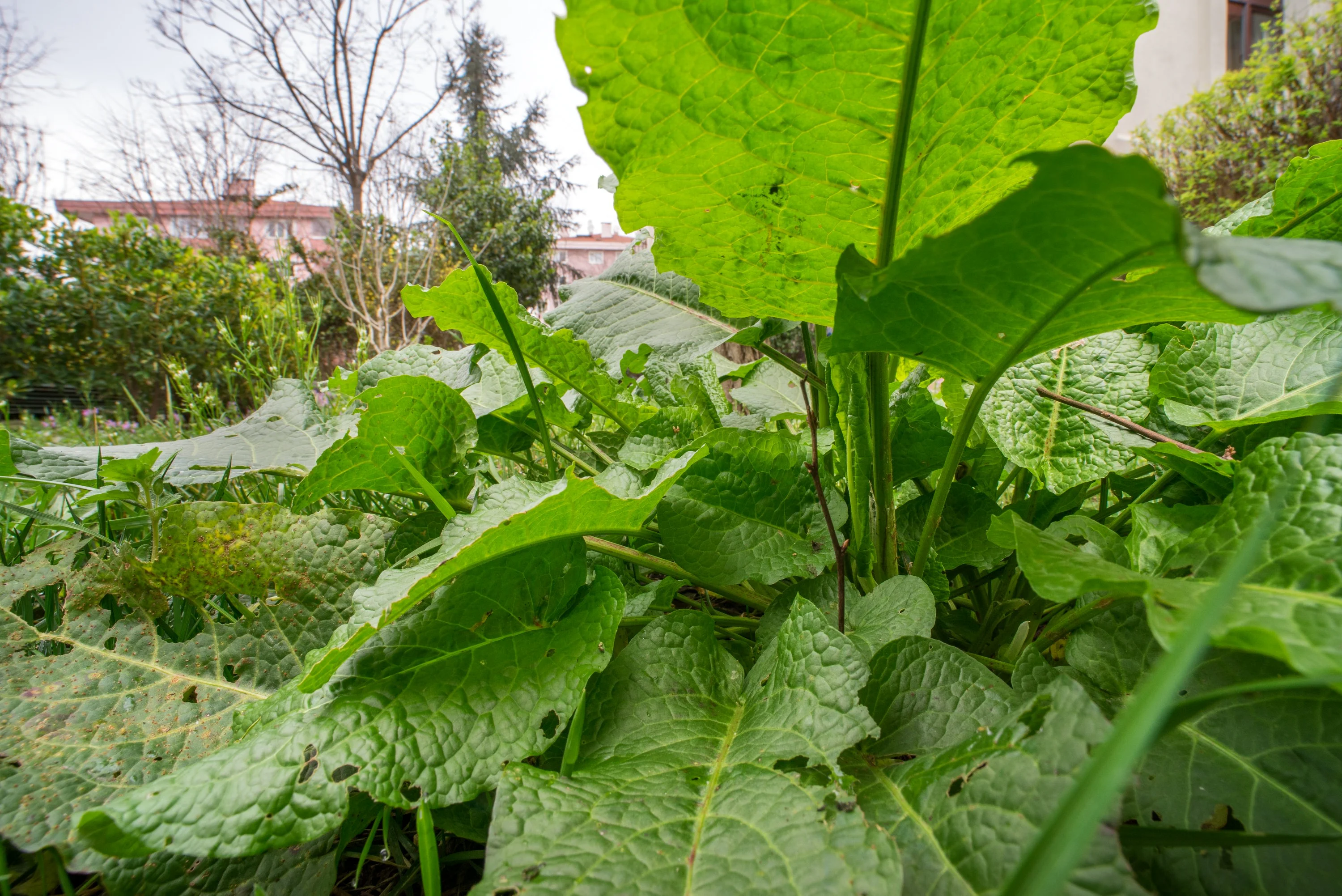
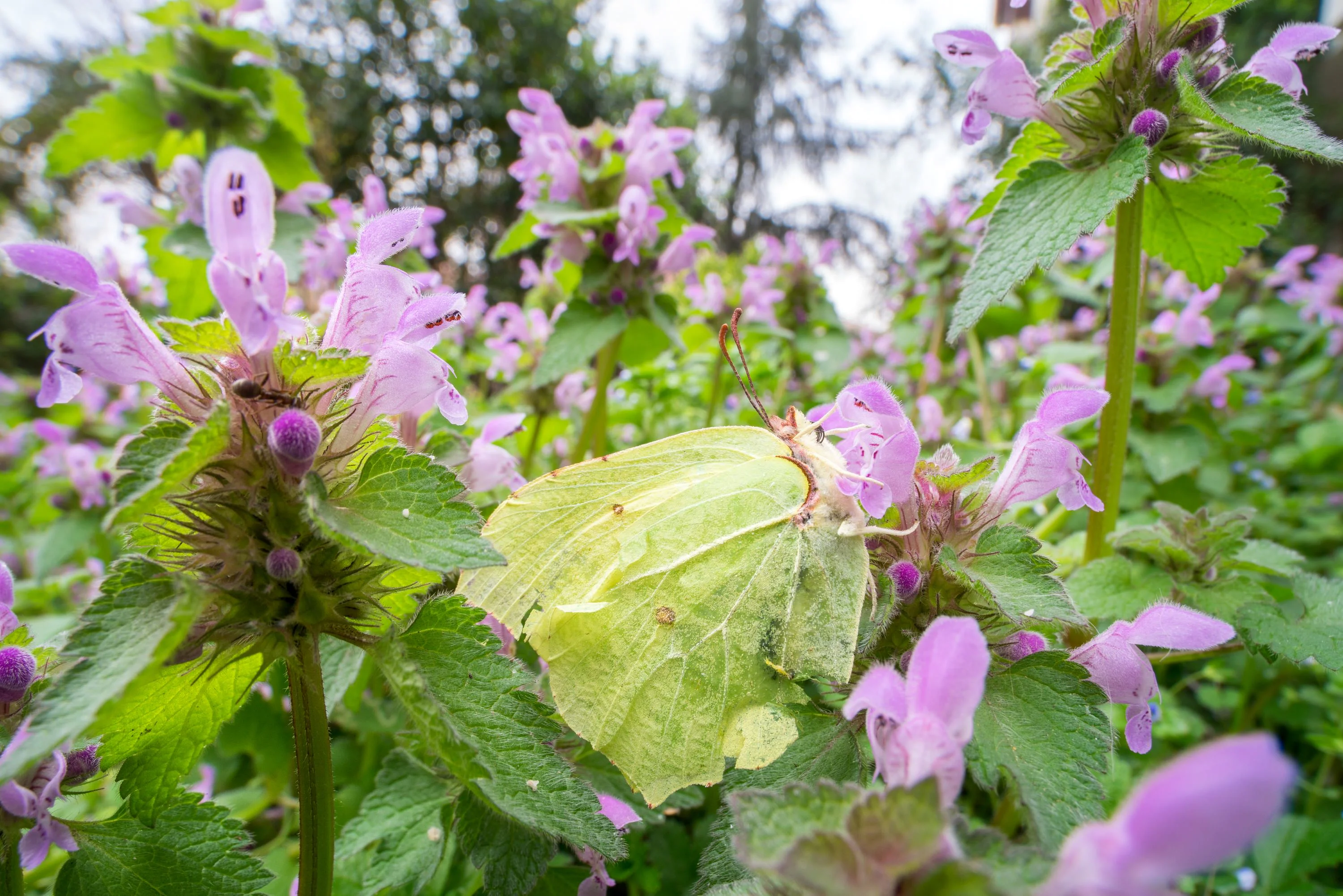
Spring finally arrived; flowers and bugs took the stage. When March came, I grabbed the lens and ran into the garden. In wide angle, subjects don’t look very large in the overall frame. So I uploaded the shots below larger than in other posts. Still, rather than posting the full 24 MP files, I halved them to 3000 px so friends on mobile aren’t pushed too hard.
Shooting video with the Laowa 15mm
Yes—macro video. Something I’ve always wanted to do, but rarely made time for because it’s so demanding. With normal macro lenses, magnification is high, so they’re extremely sensitive to shake. Add shallow depth of field, and you end up needing a controlled environment and a tripod. Wide-angles, however, have deep depth of field and are less twitchy about vibration. That made me feel handheld might be viable, so the first thing I tried was video. Let’s watch first, then talk:
https://youtu.be/yEGdxXZkCjo Laowa 15mm video test In the first half I’m chasing a fly. As you can see, getting the light right isn’t easy. I start with the aperture not too far stopped down. Depth of field is thin, and I struggle to keep focus on the fly. Right after the first scene I stop down more; you’ll notice the background snapping into focus. As the scene goes on, the lens—and the cameraman!—cast a shadow over the fly. When I set exposure for the fly in shade, the background ends up blown out. Another point is working distance: the lens keeps brushing the grass, so getting close without jostling the flowers the fly lands on takes planning. On the lighting side, if your body supports it there are video modes like S-Log2—RAW-ish gamma curves. Annoyingly, that didn’t occur to me at the time, but oh well.
In the second half we watch ants attacking a poor butterfly. It must have reached the end of its life since it didn’t even have the energy to resist. Because this takes place in shade, I don’t need to work extra to tame the light—it’s nice and soft. Nothing’s darting around, so rather than roaming handheld I add a mini-monopod for support and can almost eliminate shake. Once light and vibration are under control, of course the image looks crisper.
I used small apertures like f/16–f/22 and high ISO. The benefit of a mirrorless body is that I can watch a bright, sharp feed on the screen while shooting and control focus. With classic DSLRs at f/22—especially in the shade—seeing anything through the viewfinder is tough. When it comes down to the human eye, we can’t compete with modern tech. New-gen mirrorless bodies can practically shoot under moonlight. Folks who’ve tried reverse-mounted handheld shots will know exactly what I mean—without mirrorless, you can hardly see what you’re shooting through the finder.
Field test with the Laowa 15mm
Though some of the shots above were outdoors, I don’t count my yard as the open field. Out in a windy field there’s a fine line between fun and a nervous breakdown. Conditions were far from ideal for me that day.
By the time we reached the spot, dusk was near. Cold, very windy—classic “March that makes you button your coat” weather. All manageable, but it takes time :) Since I’d be shooting handheld with flash, each image would be a single frame—no focus stacking, no hours at the computer. That alone is a big joy. With f/16–f/22, depth of field would be enough.
I waited for lulls in the wind, crouched, took 3–5 frames, and moved to a new target. After years of stacking, it felt so fast that I thought I could document every species in the field one by one, right then and there.
Balancing the flash takes some fiddling. As ambient light dropped toward night, I kept adjusting flash power, shutter speed, and ISO to match the background. I started around 1/100 s, ISO 320 and slid toward 1/20 s, ISO 800 as the hours passed. Every frame with different settings. Without hundreds of shots under my belt, it’ll be hard to find a formula that blends the four variables. Since a wide-angle takes in so much of the surroundings, the background has to be lit by ambient light alone. The flash only lights a small area in front. The dance between foreground flash and background ambient constantly changes. I managed about 150 frames. Many were throwaway light tests—rookie mistakes that later went to the bin.
When the sun set, I felt I had enough. Laowa testing done. I packed up the camera. Our little one had already started “testing” the meat on the grill—so I went to “test” some myself and rejoined the family. :)
Note: Click the images below to enlarge.
All tests passed that day. Then I packed the Laowa nicely and, with thanks again, sent it back to its owner Hakan.
Why is the Laowa 15mm a hard lens?
Because macro is always hard. If we could just let the lens loose in a field and have it take striking photos by itself, that would be easy. But we have to take them. If we want impact, we need experience first. And the Laowa has its own flavor of experience curve.
Working-distance woes
Picture a 4.7 mm working distance for 1×. Sounds like a joke—but it’s normal. At as wide as 15 mm, you can’t magnify much unless you literally press the lens right up to the subject. Threading through vegetation is another story. With such a big front element, you can’t slip between blades of grass without bumping things unless you kindly persuade the bug to climb to the very tip. And when you plant that 77 mm glass right near the bug, you create a nearly impossible-to-light shadow.
What happens if, with a “we’ll make it work” mindset, you obsess over sun angle to avoid casting a shadow and insist on shooting 1×?

This makes cleanliness a risk. There’s a constant chance of brushing plants, getting it wet, even scratching it. You can’t imagine how hard I worked to keep that borrowed lens away from that cat nose up there! A clear protective filter is worth considering—if you do, pick a top-quality one so internal reflections and sharpness loss don’t become a pain.
In short, the 1× capability feels partly like a marketing choice. With live subjects, 1× isn’t practical. If we drop magnification to 0.5× or 0.25×, we still get excellent detail and it’s far easier to work. In practice, the lens feels made for that range.
Lighting trouble
As I said above, if you’re very close, the lens’s shadow is a serious problem. Even if you light from the sides, illuminating the subject’s front—facing you—remains tricky.
Another issue concerns all wide-angles. While flash only lights the near field, a wide angle and deep depth of field will still show distant mountains. Balancing the intensity and color of close-range flash with far-off ambient takes finesse. Sometimes the flash direction can even conflict with the sun direction and look odd. For example, shadows of foreground objects may fall backward because of flash, while background shadows fall to the right. Best is to use flash as gentle fill and milk natural light for all it’s worth. That means longer exposures and higher ISOs.
When you combine our quest for flattering light with the lens’s wide field of view, you get shots like this:

And then the diffuser shows up in frame like a halo overhead. With such a large object, a lens that sees so wide will keep catching it. That day, a fair number of frames had diffuser bits sneaking into the composition.
A dark viewfinder
Doing focus stacking with a wide angle is both easy and hard. Easy because just a few frames can make everything sharp. Hard because with such a wide frame, something is always moving. To avoid contradictions, I didn’t stack at all. I used f/16–f/22 and got enough sharpness in single frames.
At small apertures on DSLRs, it’s hard to see anything in the optical finder. Since the lens is fully manual, the diaphragm stays at whatever you set. With fully automatic lenses, it’s not like that: even if you dial in a tiny aperture, the lens stays wide open until the shot. The finder stays bright and you can see.
Honestly, this is just how a macro shooter likes it. We’re usually manual die-hards. For example, the only thing I run in auto is my car’s transmission :) Everything else is manual. The Laowa is, too. So the depth of field you see in the finder matches what you capture.
In short, if your body has weak live-view, you risk going cross-eyed—or pulling a neck muscle—while hunting for focus. Wide-angle macro should be composed from the screen, not the viewfinder. Articulating, flip-out screens are lifesavers for anyone who doesn’t want to crawl in the dirt. Being able to monitor ground-level shots from above is huge comfort—honestly a must.
Mirrorless bodies are tailor-made for this. Even in dim light and at small apertures, you get a bright display; you can punch in to focus precisely, highlight focus areas… It’s all ridiculously helpful.
Final thoughts
The Laowa 15 mm is great fun. Though its main purpose is macro, it’s sharp enough to handle all wide-angle needs up to and including the Milky Way. The difficulties I listed apply, to some degree, to all wide-angles regardless of model. With habit and experience, you can get past them easily. Compared to the challenges of microscope objectives, it’s nothing to write home about. And hey—if you love the rose, you live with the thorns, right?
To close, a few sample shots from my cousin Kerem, who’s been using the Laowa 15 mm for a while.


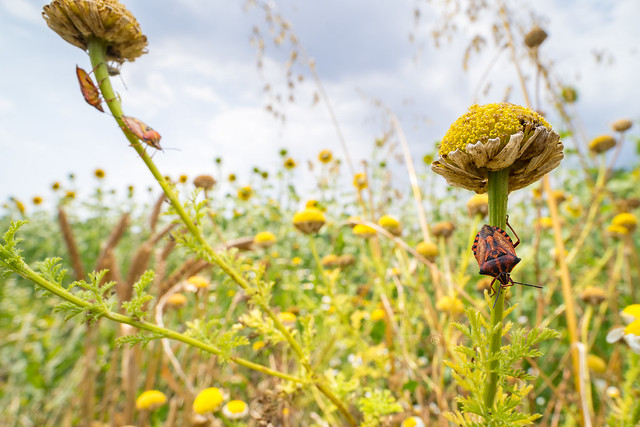


You can follow Kerem’s photos on his Flickr album: Özgür Kerem Bulur