Macro photography with a 20X microscope lens

In those discovery-era days when I couldn’t find peace chasing macro photos and kept hunting for alternatives, the same thought was always on my mind: get closer, see more detail.
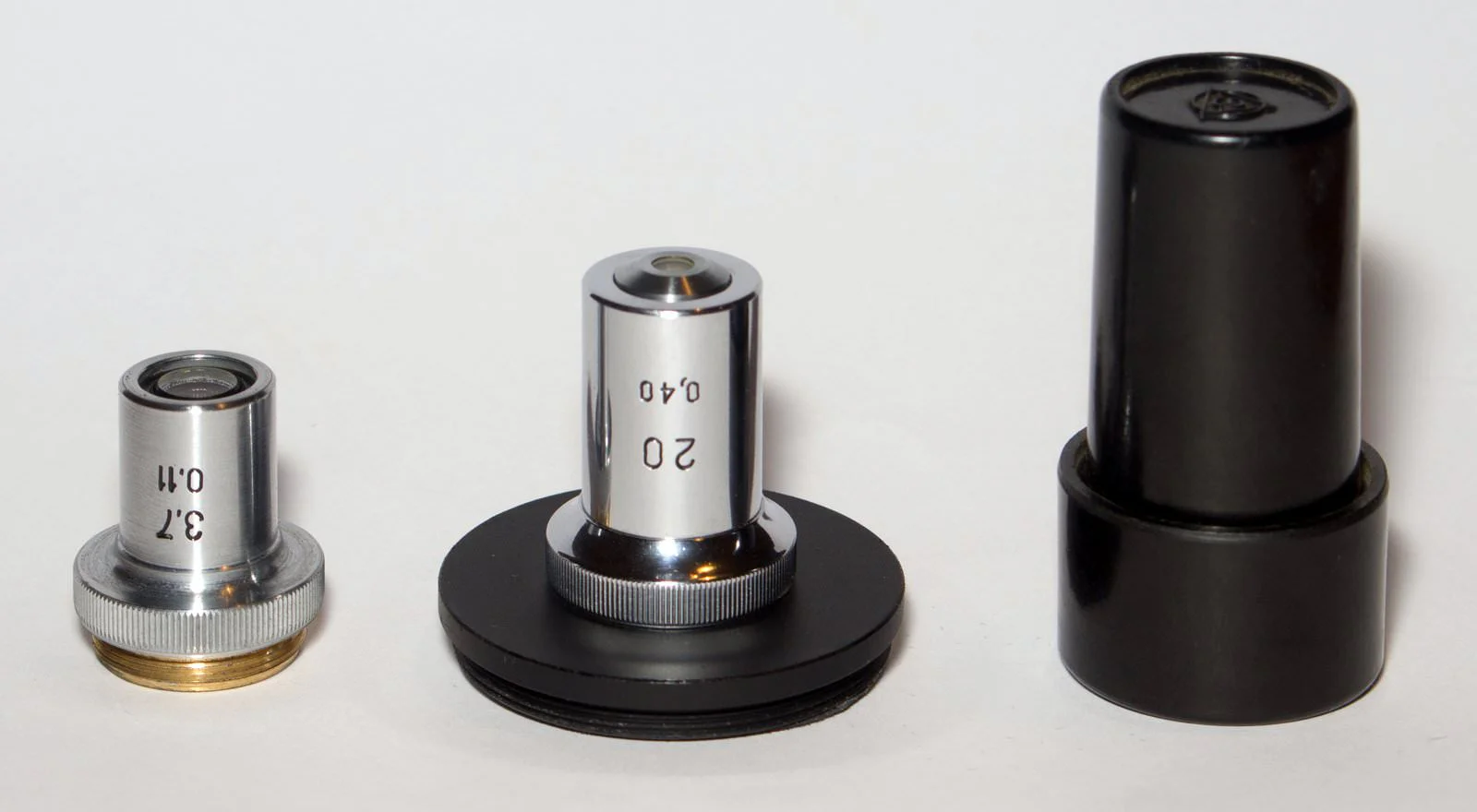
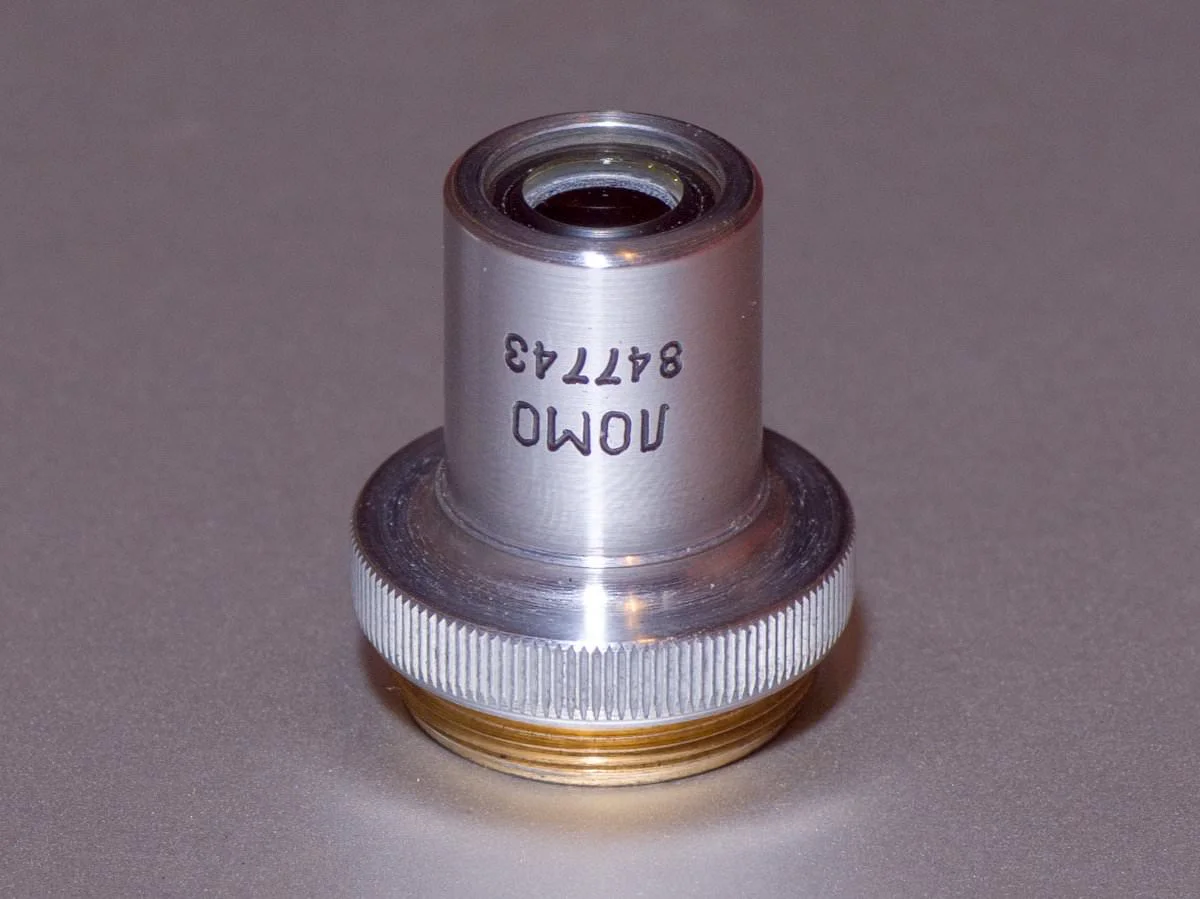
Firsts came one after another. Reverse-mounted wide-angle lenses, microfilm lenses, and finally microscope objectives. Revealing organic structures and details I’d never seen before was a joy. After 3×, 5×, 8×, 12×, I hit the limit with a Lomo 20×. And right about there I hit a wall. That’s where sharpness ended. My shots looked like mud. The lens wasn’t the only culprit though—this wasn’t going to work with my mirror-slap-happy Pentax K-x body full of vibration. I called off the arms race and carried on enjoying comfortable magnification levels.
20× is a pretty bold magnification. I was seeing tack-sharp photos from masters—even 50×—but they were using rigs that looked like space stations. There’s also the subject problem. Where do you actually need 20×? If you’re not working to showcase a particular detail, or you don’t find a truly tiny subject (like a mite), it doesn’t make much sense. Anyway, let’s get to our lens.
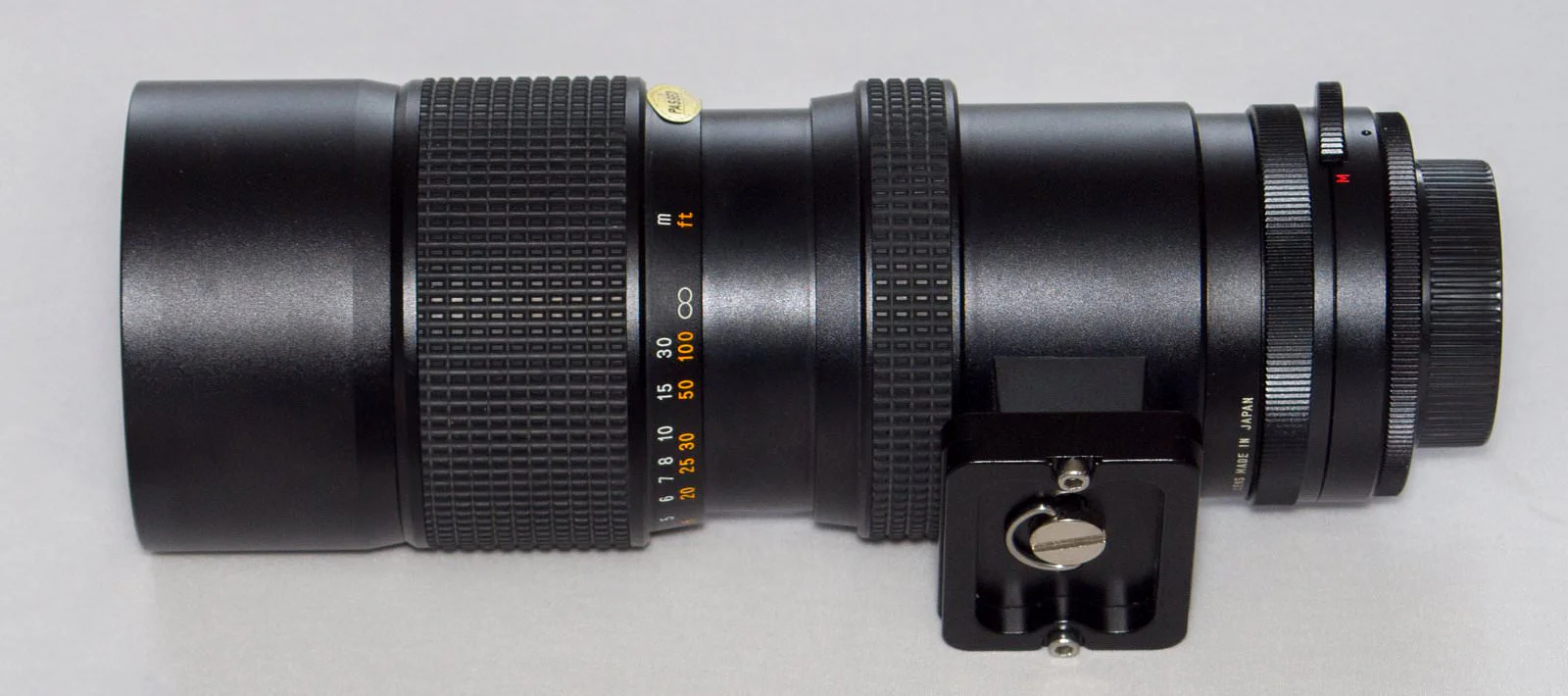
The lens in this article—the Infinity Plan 20× microscope objective—was sent to me for testing along with several others by my friend Abdullah Tanık (many thanks to him). Among the microscope lenses, the 20× stood out first in the box simply by looking larger. Then my eyes locked onto the ∞ (infinity) symbol. You know those cartoon characters whose eyes turn into dollar signs at the sound of a cash register? Exactly that. It was my first time seeing an infinity-corrected lens; the effect was hypnotic! We stared at each other for a while.
Let’s quickly recap microscope objectives

Finite (tube-length) microscope objectives
The most common microscope objectives are finite-type. In the past, they were all like this. So these tend to be older and cheaper. Don’t underestimate them, though—the range runs from inexpensive and good to models that cost an arm and a leg. If you see markings like 160 or 190 on them, that tells you they’re finite. That means you can screw the lens onto the front of a bellows and start shooting. If you extend the bellows to the value printed there—160 mm or 190 mm—you get the objective’s rated magnification. Mount a Lomo 3.7× on a bellows extended to 160 mm and you’ll get 3.7×. Open the bellows more and magnification rises; close it and magnification drops. This lets you dial in a suitable framing.
Infinity-corrected microscope objectives
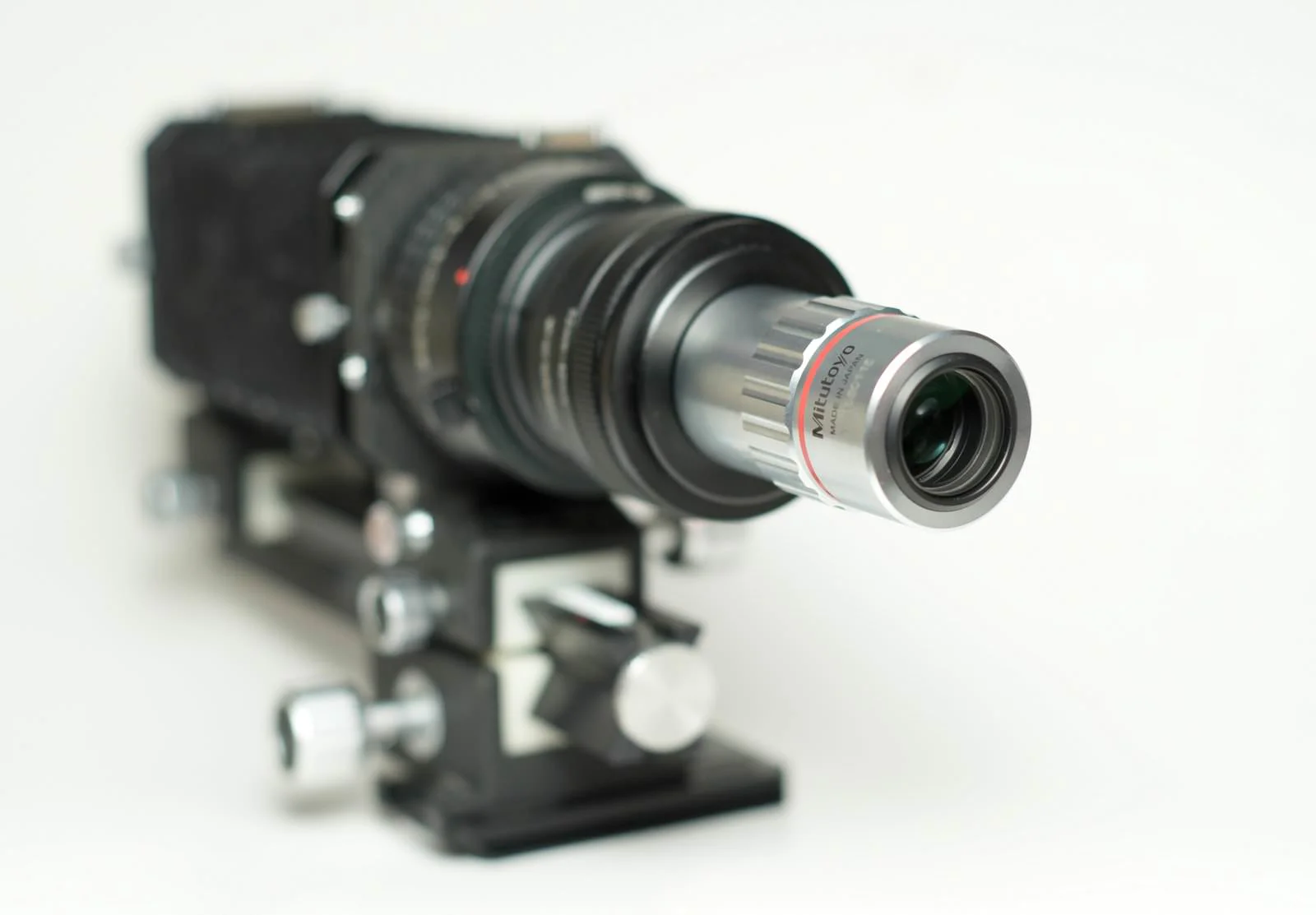
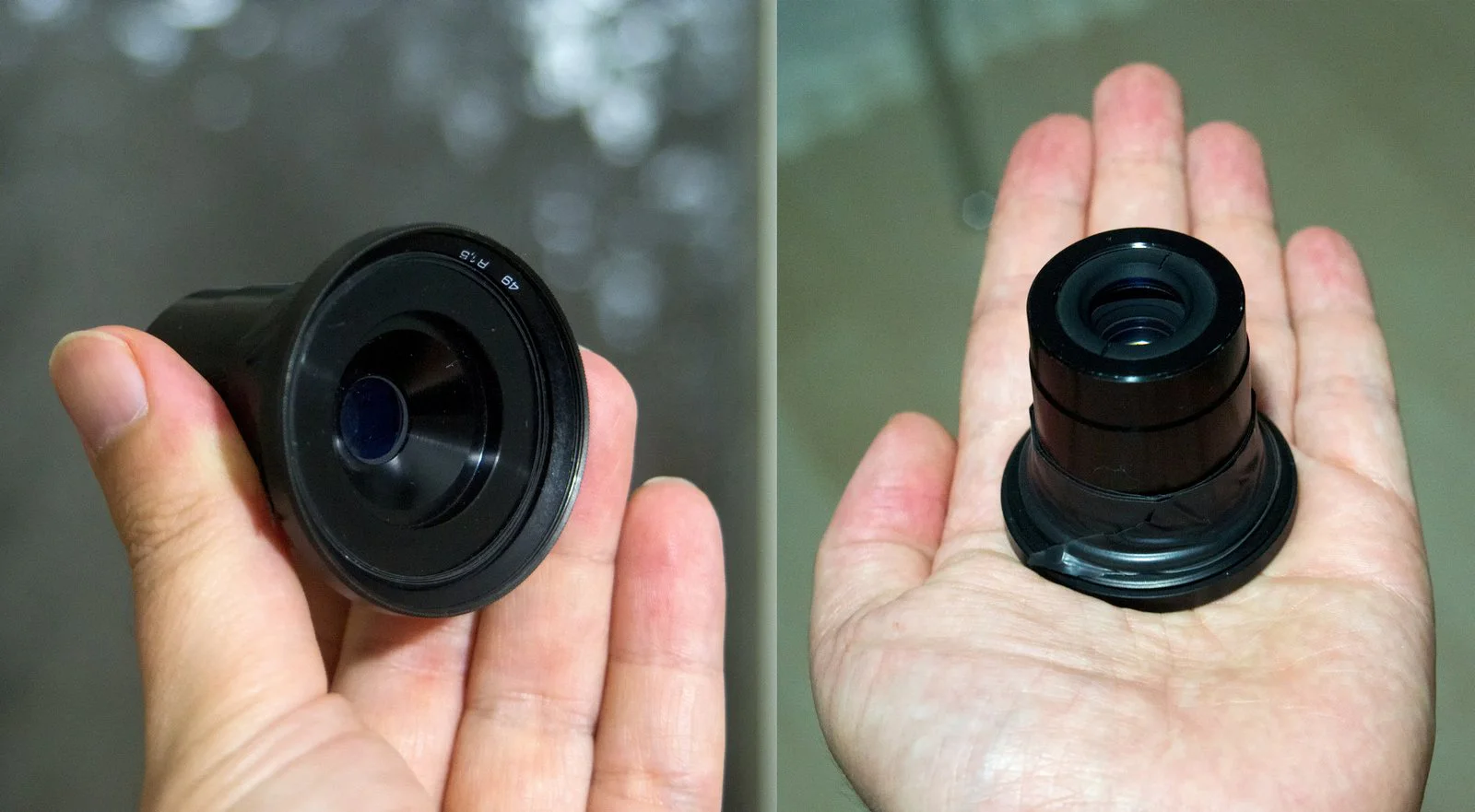
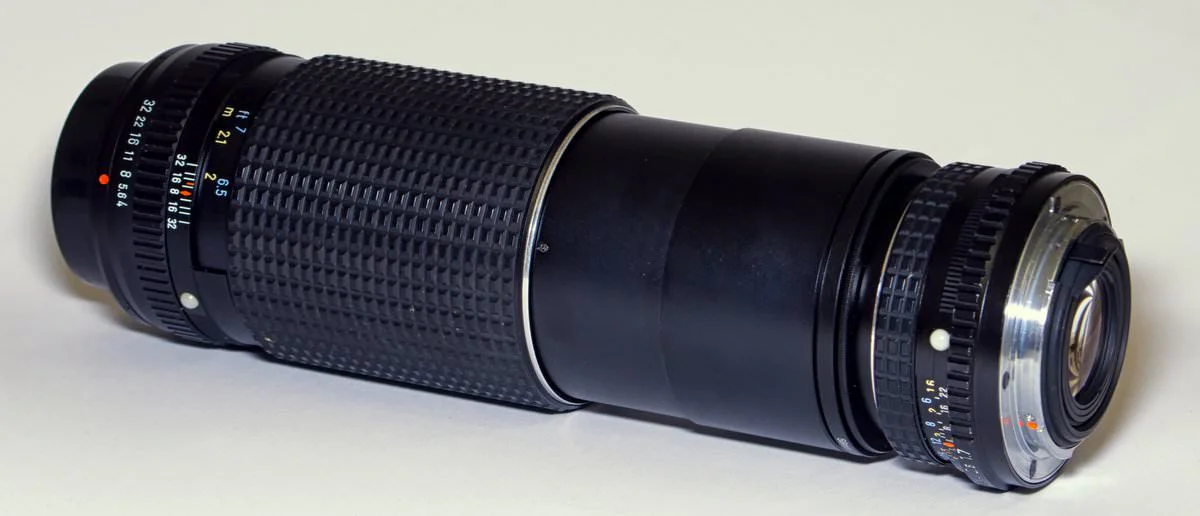
These objectives, marked with the ∞ symbol, use a more modern design. To use them you need another lens called a tube lens, typically 200 mm. There are dedicated tube lenses, but an ordinary 200 mm lens—or a 70–300 mm zoom—can serve as the tube lens. Of course, the tube lens’s sharpness directly affects your results, so better is preferable. Change the tube lens focal length and the magnification changes. Just like in the bellows example: use a 10× infinity objective with a 200 mm tube lens and you get 10×; with a 300 mm tube lens you get 15×; with 100 mm you get 5×.
Zooms aren’t the sharpest, but their variable focal length lets you tweak framing.
The flexibility doesn’t stop there. With infinity objectives you can also insert a bellows between the objective and tube lens and adjust bellows length to fine-tune magnification and framing.
For both types, the best practice is to use the objective at its design magnification for the sharpest, vignette-free results.
20× infinity plan microscope objective
The test lens is an unbranded 20×. We shouldn’t expect top-tier quality, but being a modern production lens it should benefit from certain advances. It’s not APO, so there will be chromatic aberration (CA). I’m also curious about working distance. The Lomo 20× shot from just a few millimeters away—that alone made things hairy. At that proximity, even lighting the subject is a problem in itself.
The objective uses an RMS thread, so we’ll mount it via an RMS adapter sized to the tube lens’s filter thread.

The back of the RMS adapter is very broad and will face the objective’s glass—meaning the sensor. Since the adapter’s interior isn’t matte, it could harm image quality. To improve it, I lined the inner, subject-facing side with a light-trap material to suppress reflections.


20× test shots
At 20× you really have to think about what to shoot. Your target area will be about the size of a pinhead. Working distance is short, depth of field extremely thin. If possible, aim at relatively flat surfaces and avoid deep, overlapping structures. At this scale, 1 mm is “very deep.”
I decided to start with a weevil. Here’s our 1 cm long bug whose full-body photo I’d shared before:

20× with a 200 mm tube lens
I want to shoot a patch on its back. My goal is to measure working distance, verify magnification, and gauge overall image quality. Before committing to a full stack, I need to see what I’ve got.


13.5× with a 135 mm tube lens


Ant portrait
The ant portrait made me feel all the challenges of 20× to the fullest. And I have to repeat what I said at the start: I hit the limit at 20×. With the current method, this is as far as I can go. To cover the depth of a tiny ant’s head, I needed 175 frames at 2 s each. And then I realized that if I also wanted the right antenna sharp, I’d need about 100 more frames. I was tired and unsure what would come out, so I stopped there and left the right antenna in blur. With microscope objectives, the transition from sharp to blur is brutally abrupt, so the antenna looked snapped off.

Precision rail
I use Newport rails, among the best options for macro. They glide silky-smooth with finer precision than I can feel—gorgeous hardware. One click of the micrometer equals 10 µm. Using the vernier scale you can push that to 1 µm, but the challenge is actually turning the micrometer that finely. Here are typical step sizes I use:
With reverse-mounted lenses I advance 5–25 clicks between frames.
With the Lomo 3.7× I advance 4–5 clicks.
With a Nikon 10× objective I advance 1 click.
This time I had to hold my breath and advance by half or even a third of a click—the smallest touch my hand could manage. We’re talking 3–5 micron steps. The depth of field is that shallow.
Vibration
If depth of field is only a few microns, how does ambient vibration affect it? Answer: catastrophically.
From experience I’d already stopped shooting microscope objectives in the living room. With wooden floors, even if I stood a meter away from the tripod, my breathing—heck, my heartbeat—showed up as vibration in the frame. Our tiny movements cause microscopic movement in wood flooring. And we’re using a microscope to study microscopic movement, so there’s your recipe for visible trouble.
Instead I shoot in the corridor on a stone-tile floor. There I can breathe easy. The floor is rock-solid. Well, it was. This lens amplified ambient micro-vibration by the power of 20×.
While reviewing the live view after the stack, I noticed something. I just couldn’t get focus to settle!
Please watch the video below at 1080p, full screen.
https://www.youtube.com/watch?v=9MFsymYmwLo No, it’s not your slow internet. The video isn’t dropping to a low resolution, nor is it turning to mush from over-compression. Watch the details closely—they won’t stay put. They’re jittery. In other words, there’s a constant, never-ending vibration.
Where’s this vibration I can’t see or hear coming from? I press an ear to the wall and listen. A deep humming. The building’s central heating—the pump in the boiler room! If there’s sound, there’s vibration; sound is vibration.
Now imagine my cold-shower moment realizing this after shooting 175 frames. Despite all that effort, the photo wouldn’t be sharp. In other words, even with the best lens, this method wouldn’t deliver crispness. The vibration was coming from the building and there was no easy way to block it. So that’s 20× for you.
What kind of setup?
So what do we do? Are we going to throw in the towel at 20× while folks are pulling off 50×? Of course not. Here’s the fix:
- Use a vertical setup mounted on a microscope stand. The focusing screws on microscopes are far finer than a Newport. They’re built to handle not just 20×, but up to 100× and beyond. - Lay a foundation for the mini-studio like a seismic isolator: a sizable slab of marble with small vibration-damping rubber feet underneath. Build the mini-studio on that. Micro-vibrations from the floor will be absorbed by the soft feet and won’t have the energy to shake the heavy marble. - Get a powerful computer. I didn’t mention this above, but processing and stacking 175 frames at 24 MP isn’t trivial. It can take hours, and storing the large files is its own headache. Number 3 is whatever; until I sort out the first two, I’ll likely steer clear of 20×.
Spider face
Before wrapping up I wanted to try one more test. For some reason I made a hard—actually poor—choice and picked a tiny spider I’d found dead that day. Poor because with semi-transparent critters it’s hard to dial in color and contrast. The real issue is that stacking software struggles to find focus: with translucent structures the difference between sharp and blur is tiny, so the algorithm gets confused and may pull from the blurred frame instead of the sharp one. You lose texture and detail. The result is a troublesome image that’s very labor-intensive to process.
The sensible thing would have been to find a larger spider and shoot at 3×—same framing, far sharper photo. Keep in mind this is a truly small spider shot at 20× as you look at it.
I’m including it here for the sake of the test, but I didn’t share it elsewhere because I don’t consider the quality acceptable.