Field macro shooting – Comfort and safety
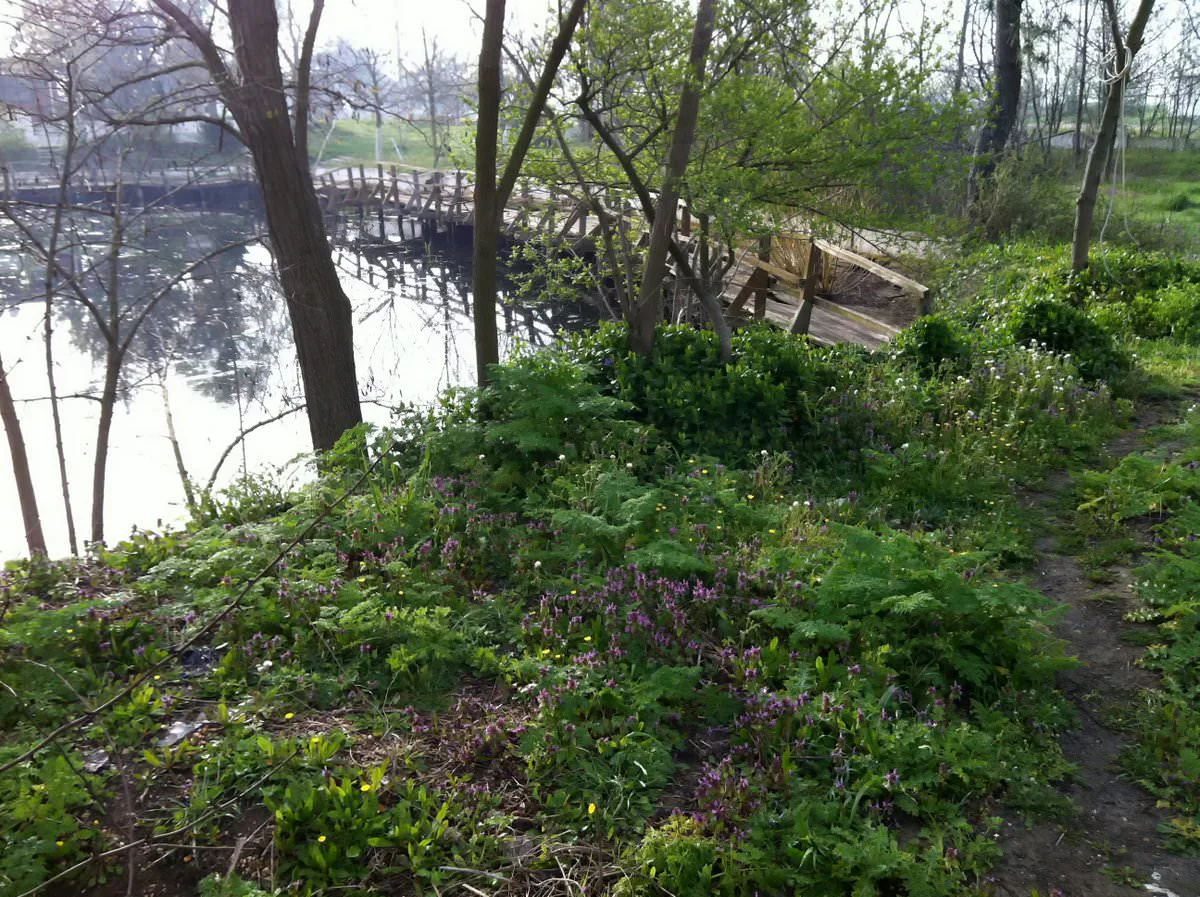
If the goal is macro, nothing beats being out in the field. Escaping the city’s crowded, noisy crush; working with live insects and flowers in their natural habitat; watching and listening to nature… I’m not comparing this to a comfy corner at home or a tiny tabletop macro studio. Those are always at hand and truly valuable. But the best way to learn is by doing. We want to see new places, new species, try new methods. Clearly, that’s not happening on the balcony.
Most of us—myself included—live in cities. Finding green space is getting harder by the day. Reaching a location that suits shooting takes effort. Either we can’t find the time, or we can’t be bothered.
But the outdoors is full of surprises. Every macro outing ends up with a story—some excitement, some disappointment. That’s exactly what we want to experience. Since opportunities and time are hard-won, we naturally want to make them as enjoyable as possible. In other words, it might be possible to nudge the balance away from disappointment toward a bit more excitement.

By the way, you’ll notice I keep saying “we.” I usually head out to open country with my cousin. That “we” means the two of us. I’ll get to that too.
Comfort in Macro Shooting If we feel better at the end of the day, we’ve met our goal. Even if we’re empty-handed and drenched in sweat, if we can look back on the time as a lovely nature walk, it was worthwhile. To feel even better and more at ease, it helps to think ahead about a few things that support us and the work.
Hunger and Thirst
The wee hours of the morning are the best time for macro. While nature sleeps, we swoop in and work before anything can so much as twitch, filling our memory cards. Then watching the sun slowly rise and everything wake and dive into the daily hustle is a joy of its own.

We lived that exact scenario! (We don’t anymore.) We first crawled to a place for toast/tea. Painkiller on top… Don’t do that. Have the toast and a juice with you beforehand.
Weather
We’re unfortunately very weather-dependent. Planning days in advance is pure luck. Not just rain—even a light breeze can be a pain. So it’s worth checking the forecast even if it’s not always spot-on. Install a meteorology app on your phone. The day before an outing, check wind conditions. If it’s windy, don’t go without flash—or cancel.
The main reason I say phone is to track precipitation live on radar as an animation. If the weather changes while you’re shooting, and there’s a chance of rain, the app lets you see if a cell is approaching or moving away. In the screen grab I saved, there was heavy rain outside at that moment.
 Rain situation in Istanbul as I write this
Link for Istanbul: https://www.mgm.gov.tr/sondurum/radar.aspx?rG=anm&rR=34C&rU=max#sfB
Rain situation in Istanbul as I write this
Link for Istanbul: https://www.mgm.gov.tr/sondurum/radar.aspx?rG=anm&rR=34C&rU=max#sfB
Last summer while shooting macro in the Bahçeköy Atatürk Arboretum, clouds rolled in so I checked and saw a strong storm cell bearing down on us. We packed up and hustled to the cars. About 15 minutes later, just as we got in, the skies opened. Had we not checked, protecting cameras and lenses would’ve been tough.
Comfortable Gear Comfort largely comes down to gear. If our kit is solid, light, and fit for purpose, we work faster and tire less.

Bag

Bags with reconfigurable dividers and lots of small pockets work well. Hip-belt packs are great—some let you swing the bag to the front without undoing the belt, open it like a table while standing, grab gear, even swap lenses right on the bag. That’s excellent. Handling prep work standing up on wet, muddy ground is a huge help.
Packs often have mesh side pockets—perfect for mini tripods. We use a pair as plant clamps in natural-light shooting, one on each side of the pack for tidy carry.
Lastly, many packs have integrated rain covers. Open a zipper and there’s a built-in waterproof shroud. Pull it out, invert it over the pack, and you’re weather-sealed. A crucial feature.
The bag in the photo is quite pricey. I use a cheaper one, but there are moments I wish I had that.
Spare Battery
Don’t say, “Who goes out without a spare?” It’s not ignorance—it’s failing to check. We’ve even headed out without the camera body! We assume batteries are full—they’re not; we think we packed spares—they aren’t in the bag. Spares are a must. Check twice.
Spare Memory Card

True, the shoot didn’t stop midway—but I have deleted un-offloaded photos to keep going. Focus stacking fills cards fast. A thousand frames in a session isn’t surprising; it’s rarely under 500. If you don’t want to delete old shots or call it a day early, keep a spare in the bag. You might find the in-body slot empty and carry on with the spare—like I did.
One more point on cards: high write-speed cards can be a necessity and make a difference. We don’t use burst shooting in macro, but I’ve hit stutters and waits in video with slow cards. If a subject wakes up and moves mid-stack, I switch to video—card speed matters then.
A quick note: there are now bodies that can do focus stacking very fast, automatically—Olympus has this feature. In that case, card speed can determine total time. Bottom line: buy fast cards.
Only as Many Lenses as Needed
“My macro lens is so convenient—can’t leave it. But I also can’t give up the Componon 80 mm… What if I need more magnification? I’ll bring the Componon-S 50… Field landscapes will be lovely; I’ll shoot sweeping scenes with the Samyang 14 mm… Maybe we’ll see birds. I’ll take the 500 mm mirror. Or wait, that’s not great in shade—the 300 mm is better, faster aperture. Or both? Actually I need a zoom too—AF will be handy for odds and ends; everything else is manual… That 50 mm should basically never leave the bag… And what if we find mushrooms? I’ll need swirly bokeh in the background. Would the Diaplan fit, or is that pushing it?”
Don’t overdo the lens selection.
I’m sure this has a name in psychology.
In orthopedics it’s called “back pain.”
If we’re talking comfort, the biggest comfort is light weight. Also, when a bird shows up, you swap macro for tele; you look back—bird’s gone. But look, a damselfly has landed! Swap back to macro—oops, it flew. Wait, maybe the bird’s in the next tree, light is gorgeous—throw the tele on again… Madness. I’ve lived it. Fatigue, sloppy photos, and back pain—that’s what remains.
So the best approach is a clean, purpose-driven kit for the day’s goal. If a bird appears, we chase it another time.
…
Still… maybe keep the 50 mm in the bag?!
Tripod

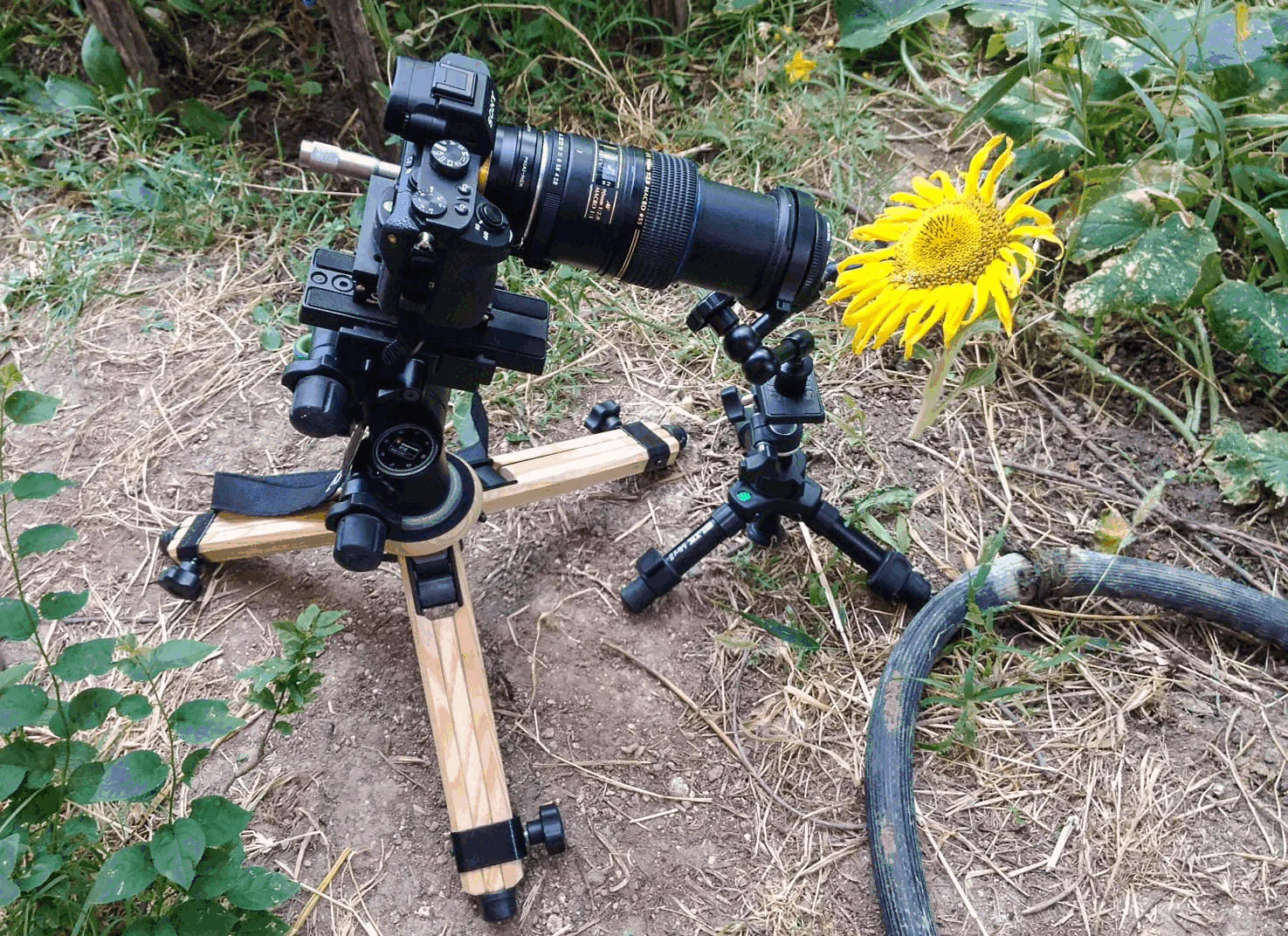
Tripods are heavy—that’s what tires me most to carry. I took a step here too and finally got the tripod I’d been dreaming about for months: the wooden Berlebach Mini. Small, light, solid, and gets very low. Its standout feature is wood’s ability to damp vibrations instantly. Between us, it looks beautiful; I could put it in a display case. I’ll write a piece about this tripod.
Tripod Head
Whether studio or field, the head is crucial—arguably more important than the legs. As I’ve written before, we need to adjust framing with movements up/down/left/right. Doing that with a ball head is like a wrestling match. You tighten it, let go—it sags. Getting precise framing is a headache.
Geared heads provide precise movement on three axes, massively boosting comfort and speed. With the body rock-solid, we can make tiny angular tweaks effortlessly. If anything happened to mine, I’d immediately buy another—indispensable.
Clamps and Mini Tripods
When we shoot with natural light, we often have to use long exposures. Add a polarizer and it’s even longer. Shutter speeds like 0.5–1 s are extremely sensitive to vibration. The slightest breeze—or even invisible micro-vibrations—wreck sharpness. Our best friends here are mini tripods and plant clamps. I wrote about them here.

Helicoid
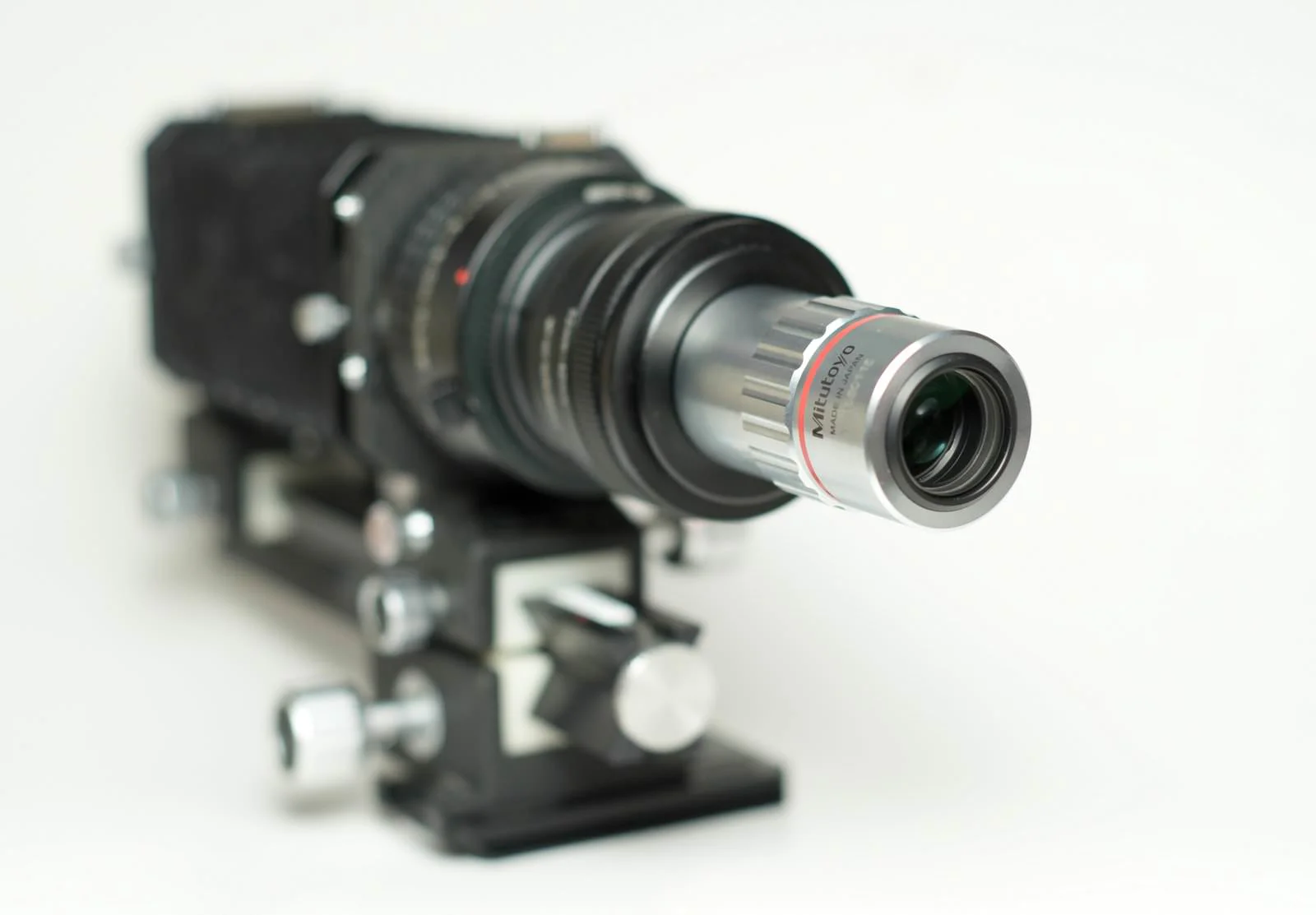
Especially with reversed lenses, setting magnification and framing is a pain. Bellows are the most effective solution, but their soft, delicate build and portability issues make them ill-suited to the field. Extension tubes are one answer, but then you’re constantly stacking/unstacking rings to change magnification—not realistic outdoors. For comfort in the field, you want something solid, one-piece, and smooth-operating.

Despite being an older product, these qualities keep the price a bit high. And because it’s Olympus OM mount, you’ll need adapters for other bodies. I struggled to solve it for Pentax. It’s easier on Canon, Nikon, and Sony mirrorless.
Pruning Shears

In those cases we carefully cut the plant just below the insect, carry it gently, and mount it—gently—into the clamps we’ve already set up. I’m sure you understand all the “carefully”s here :) Half the time these attempts end with the insect flying off or falling.
The most delicate step is the cut. We grip the branch firmly somewhere between the insect and the cut so vibrations reach it less. The shears matter here. You won’t notice with soft grasses, but if you snap a stiff twig with a “crack,” the insect will launch like a spring. With strong pruning shears, if you slowly squeeze through the cut, you can remove it calmly without jolts. I use shears made for this; Kerem uses the type you saw in the “fully kitted” photo. Don’t overdo it—we’re not shooting a horror film. Skip industrial loppers; choose compact shears that don’t eat pack space.
Eco-minded friends might ask, “Why are you cutting plants?” We’re not snipping rare endemics or uprooting anything. Out of the millions of weeds in a field, we might trim the tips of 15–20 in a day. I write this because I used to hesitate myself… You should see our gardener :)
Knee Pads

Because I constantly drop to my right knee to shoot, I finish the day with aching knees and pants wrecked by mud/grass stains. On rocky, thorny ground it’s even worse. And I always manage to get wet.
I bought a pair for both knees. I found them silly and kept them in the front pocket of the camera bag—unused—for a long time. The first day I wore them I couldn’t believe the comfort. If I could’ve, I’d have done a Caucasian dance right there, bouncing on my knees. Turns out I’d suffered a lot from kneeling work.
If you don’t mind looking odd and want to be comfortable, I recommend them. You can find them at work-safety suppliers for very reasonable prices.
Hat
This is more of a summer item. For folks like me who work at a desk under AC and rarely see the sun, it can be important. Heatstroke comes quick. Consider this a reminder.
Likewise, those with sensitivities should pack sunscreen. I write this because last summer, during a shoot, I earned sunburns I hadn’t had since military service—all in one day. I wished I’d had lotion.
Flashlight

Getting out at dawn isn’t always possible. The easier option is late afternoon into evening. I start a few hours before sunset and continue until I lose the light. Like early morning, you get beautiful side light and calm, breeze-free, cool air.
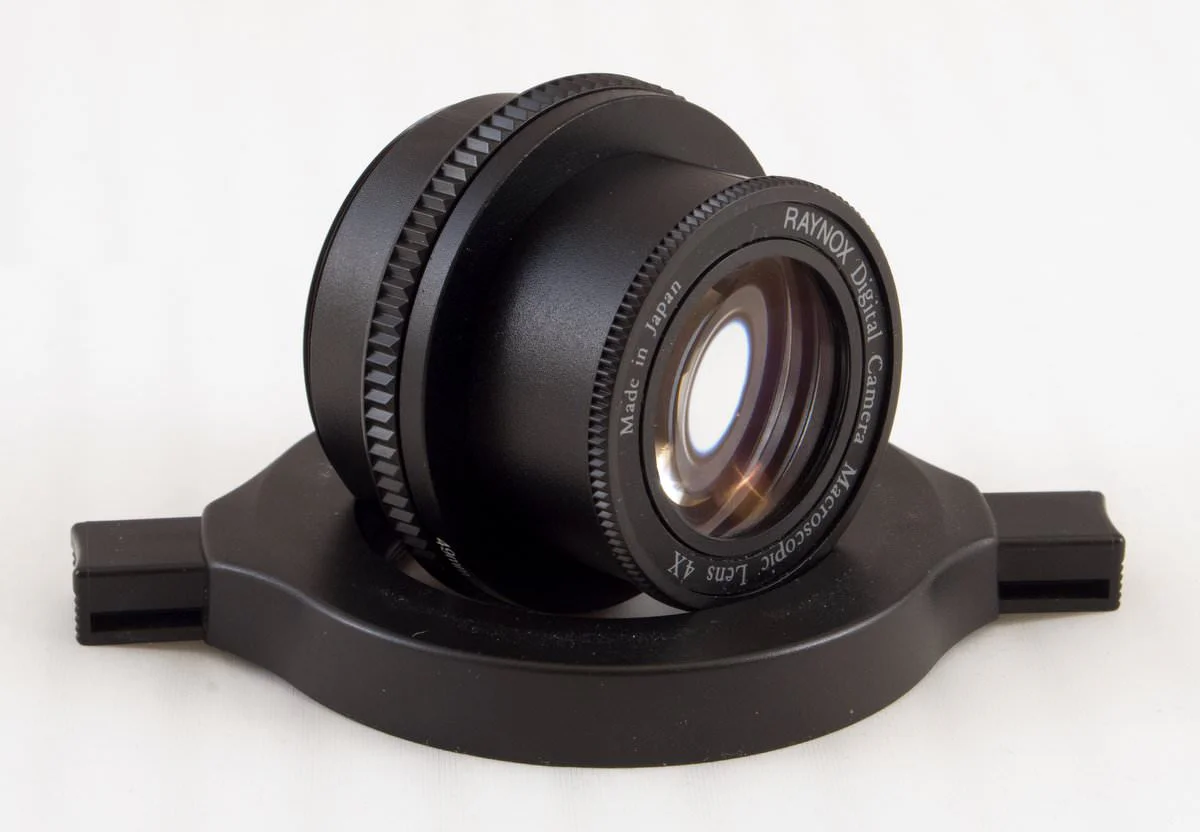
A flashlight helps two ways. In low light, it can provide fill through a diffuser. And after sunset, in the quickly darkening air, it’s useful for everything. Once I couldn’t find my Raynox cap in the grass while packing because I didn’t have a light. And maybe we’ll stay and shoot a few stars… Worst case, we catch distant cats’ eyes and make them sparkle :)
When it comes to lights, one brand stands out. Fenix flashlights are worlds apart from cheap, junky LED torches. The E12 I use is nearly finger-sized, runs on a single AA, and outputs 8/50/130 lumens. Out in the field, 130 lumens feels like carrying a big light—astonishing throw. The waterproof aircraft-aluminum body is designed like a sleek accessory. There are many models, including very powerful ones. Mine runs $26–$30. Not cheap, true.
Safety Now for the unpleasant factors.
People
People have caused me the most grief while shooting. Curious looks are fine. If someone sees the setup and asks, “Wow, what kind of camera is that, what do you shoot with it?” I’m happy to explain—and I do. The problem is those who see it as a threat.
People are the first obstacle we face.
“What are you doing here?”
“Do you have permission?”
“Shooting here is forbidden.”
“Where will you use the photos?”
—be ready for this kind of approach. Even the security guard in my own complex questioned me about disturbing the area while I was in our garden. I started with, “You must be new here,” because everyone else knows the drill. I didn’t snap—then I explained.
One day my cousin and I were shooting in one of Istanbul’s quiet groves. We’d greeted security on the way in—he saw our bags and tripods. Right at the most exciting part, two guards appeared: “Do you have permission?” That was the start of a conversation that ended the shoot. On the radio we heard “suspicious individuals.” We trailed these two, bags and tripods on our backs, trotting several kilometers over hills to the responsible manager. These guys have turned into antelopes from roaming the woods all day—maybe they wanted to prove it. We were drenched.
The manager was clearly fresh out of school—a young woman. “Why are you shooting?” she asked. “For fun,” we said. “All right—have fun, carry on,” she said.
Fun was over by then. We didn’t continue. The guards skipped off into the trees, content in having done their duty. We headed home.
If it’s public land, there’s a problem from the outset. Even a park becomes “Top Secret.” I can’t explain that “this camera can’t shoot beyond 10 cm.” Am I giving an optics lecture on reversed lenses there? Google serves satellite imagery, while our flowers and bugs become an issue. Where you’ll use the photos is critical. It doesn’t matter if the same insect is in your garden—their bug is special and classified.

So it’s normal for security to ask questions. You just need to be ready for it. That’s my point.
Now let’s look at it from the perspective of the threatened, rather than the threatening.

Even two people in remote places at remote times isn’t very safe. We decided to drop one of our favorite spots. We’d run into passed-out drunks a few times. There were beer bottles everywhere. We heard people were going there to use drugs. A few abandoned buildings nearby. We don’t go anymore. Likewise we avoid remote wooded pockets. Some folks in our fair land like to “practice shooting.” After bottles, the most common thing I find is spent shells.
Forget all of the above—how many of us avoid going out for macro simply because of neighbors’ curious stares? Humans manage to throw a wrench into everything, including this.
Dogs
Jumping from people to dogs is odd, but in my threat ranking outdoors, dogs come right after people. I’m not afraid of dogs. I’ve had many close calls but never a bite. I understand a bit of body language and behavior. Still, there’s a thin line between courage and foolishness.
Dogs in their territory—and at dusk when quiet settles—shift into a different mood. The stray that naps in crowds by day can kick up dust by night. Since we prefer quiet locations and hours for macro, we invariably meet dogs.
There’s a place I sometimes go that’s known for packs. Years ago I had a few attacks there on a bike. One morning as we were spread out shooting, about 20 dogs watched us from a field 500 m away. They stayed calm for a long time; we kept working. Then suddenly chaos—they all started barking and running toward us. From the opposite direction, another group the same size. We stopped and watched. The two packs merged into the largest group of dogs I’ve ever seen—about 50. Other dogs appeared and slipped silently by us, even at our side. I guess the big pack was the real threat—to them. The dogs didn’t bother us that day, but the idea of facing 50 stayed with me.

I’m researching ultrasonic dog repellents/whistles. No strong opinion yet. They’re very sensitive to smells too. I wouldn’t want to spray a dog in the face, but it’s good to have an emergency option.
Mosquitoes
Annoyance varies by season and location. I remember two times I simply couldn’t shoot—both late last summer. They swarmed me like a cloud and, as I bent to shoot, turned my back into a pincushion. My face looked like I’d been punched. My cousin and I laughed at each other’s faces. One time they almost didn’t let us shoot at all. With hundreds of bites, the itch gets so intense you can’t think—running away is all you can manage.
Because we crouch and stay still for focus stacks, backs and ankles get attacked. On one of those “runaway” days my cousin photographed his ankle. If he sends it, I’ll add it here as a warning.
On another buggy day I’d anticipated it and brought repellent lotion. Even with the same swarms around me, they barely bit. It works. Highly recommended for allergic types.
There’s also the disease angle. We don’t hear much about malaria, but I read that it’s rising quickly with climate change. Then there are sand flies (phlebotomine). They transmit weird diseases. Those in warmer regions know better. After a Cyprus vacation I had to stay in the hospital for days with sandfly fever.
Ticks
Now this is the truly infuriating one. I hate ticks. Even as an insect lover, this is probably my least favorite creature.
One November in Istanbul’s Belgrad Forest, shooting birds, I figured tick season was over and didn’t take precautions. When rain hit, we sheltered under trees. I even crouched to rest. It was a great day; we went home happy. Then, in the shower that night—surprise. A tick on my leg. Assuming Crimean-Congo hemorrhagic fever isn’t seen in Istanbul, I didn’t panic, but I didn’t remove it myself either—straight to the ER. They simply used tweezers and disinfected the area. Then sent me for a blood test. We did the test the next day; they asked me to come back if I had flu-like symptoms within 10 days. That was that—but the whole scramble is not pleasant.
I had the same experience a few more times in later years. Sometimes they drew blood for testing; sometimes they just removed the tick and sent me home.
In regions with CCHF, you have to be very careful. Not a joke.
There’s another tick-borne disease cluster: Lyme disease. Heard of it? If I said it’s estimated that 10 million people in Turkey carry the bacterium? Surprising, right? It’s a chameleon often confused with ~350 conditions. That headache, that lingering fatigue—could be Lyme. There are far more serious outcomes too. Anyway—let’s not digress; let’s take precautions.
The easiest protection against ticks and other biters is tucking pant legs into socks. We’ll look awful, but nothing gets in. We do this. After packing up, give yourself a good shake. And finally, shower and do a full body check when you get home.

Other Venomous Creatures
Snakes and scorpions are mostly regional and not commonly encountered. I sometimes run into snakes; they usually bolt. In the field we move very quietly and slowly to spot insects and avoid spooking them. Because of that, animals that would normally flee can wait until the last moment. A woodcock and a wild hare exploded from the grass at almost stepping distance. Had I not seen the mother hare, I would’ve stepped on her kits. Watch your steps.
More commonly we’ll run into stings from wasps/bees. It’s easy to bump a small wasp nest by accident—I see them everywhere. If you’re allergic, don’t go out for macro without medication. The rest of us will hop around a bit… and keep shooting.
Final Word
After all this, I don’t want it to sound like this requires tons of prep. You can have very enjoyable field sessions without paying attention to any of it. When I first started macro, I spent a year with nothing but a macro lens, shooting handheld with flash—and loved it. You can absolutely keep doing that. As the title says, I focused on the “luxury” side this time.
For outdoor macro, I think the biggest comfort is being able to shoot in your own garden. Being shooting-ready in two minutes—with a hot coffee next to you. My door is open; you’re welcome anytime.