Natural light in macro – Preparation
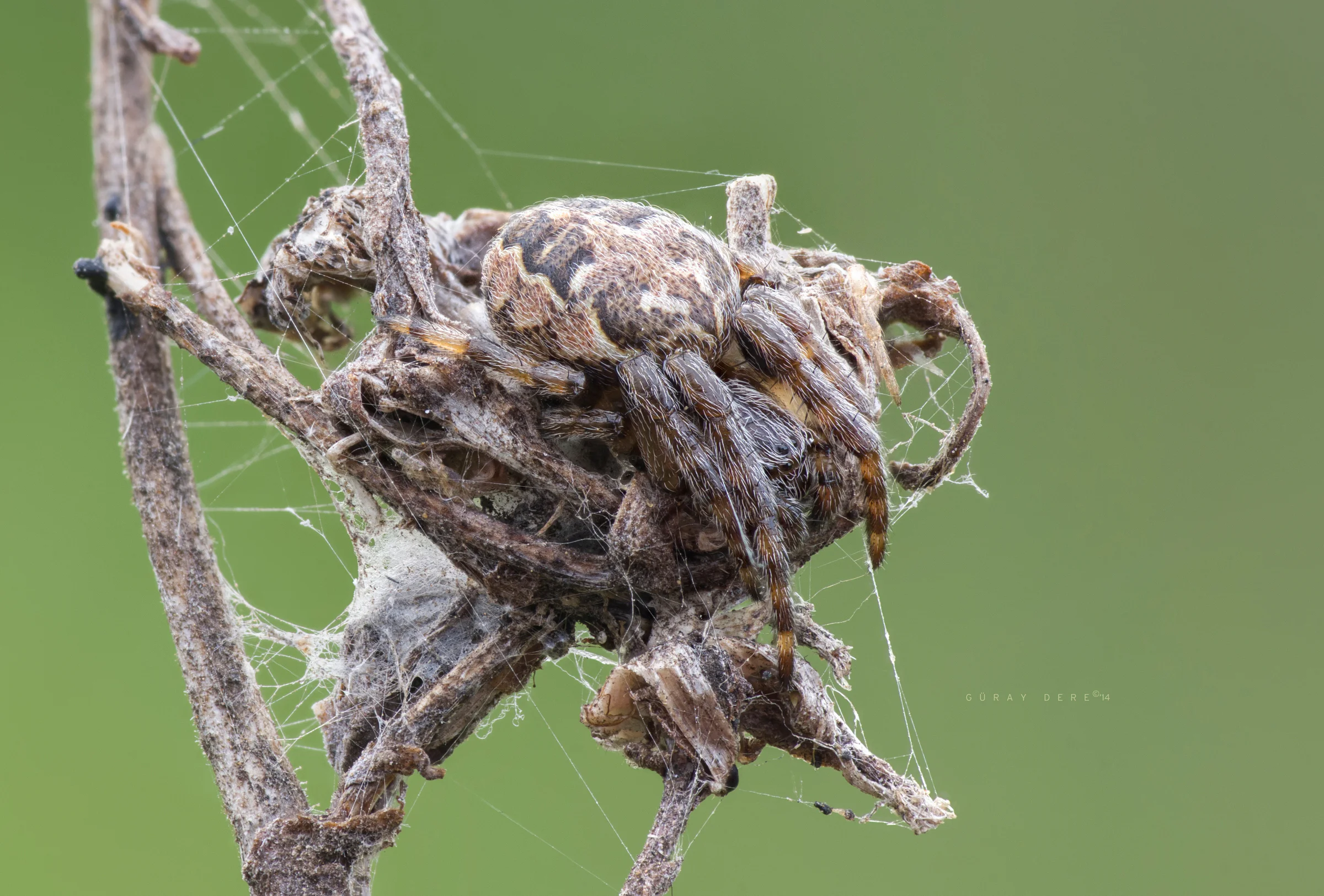
In an earlier article I explained how important flash usage is in macro photography. Now I’m going to write the exact opposite and praise shooting macro without flash. Rather than creating confusion, I want to show how different techniques can be used. If we set aside light sources like flashes or flashlights and use natural light correctly, our little friends will look much more lifelike in our photos. But the shooting stage will be quite a challenging process. Let’s see how to do it.
Using natural light in macro photography is a slightly advanced topic technically. So I’ll explain it in a few articles. First, let’s discuss the equipment needs, the route we should follow, and the difficulties. In the follow-up posts, I’ll cover sample field shots and the different situations we encounter. Sometimes we won’t reach our goal and we’ll come back empty-handed.
Why natural light
- Natural Colors
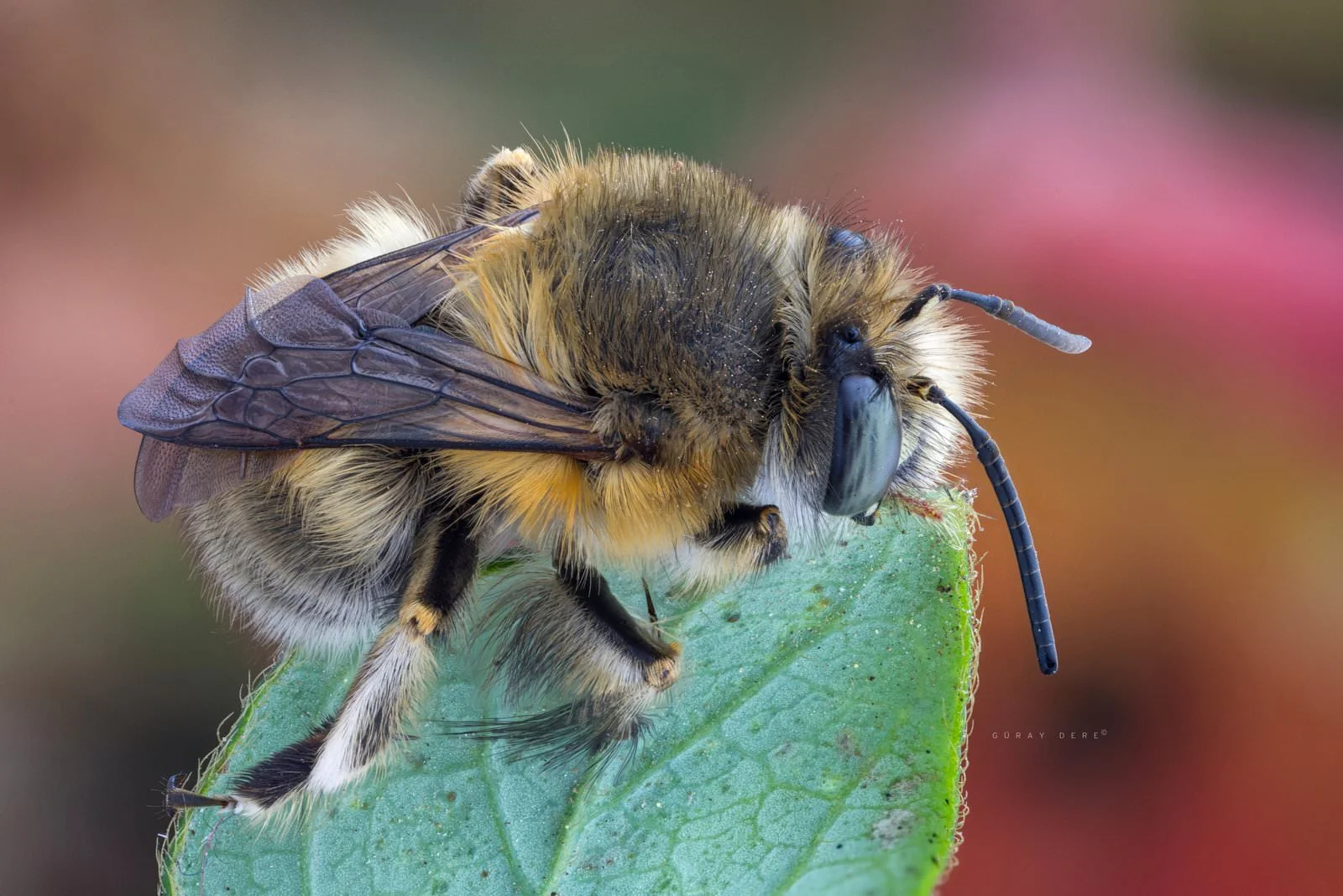
The most natural answer to “why natural light” is that we see the world with natural light (daylight). If we want to shoot photos closest to what our eyes see, we need to use this light. For example, people who do 3D modeling pay attention to how light spreads in the sky and clouds and comes from all directions; this is important for a natural look. Likewise, the object we photograph displays color reflections coming from everything around it. Light-to-shadow transitions are soft. All of this shows our subject in its natural environment, making it feel real rather than floating in space.
- Background
In flash-lit shots, illumination falls off as you move away from the flash. The small apertures and high magnifications of macro often require powerful flash use. Even when shooting in daylight, the flash will only light our insect and its immediate surroundings. That’s because flash is much stronger than daylight, and our camera is set to expose for that strong flash output. Depending on the situation, even in broad daylight we can end up with nearly black backgrounds. To get colorful and bright backgrounds, we must use natural light.
- Skittish insects
Most insects won’t stay indifferent to a flash popping off right under their nose. In fact, beyond the light itself, I’ve seen some insects startled even by the high-frequency whine—barely audible to us—while the flash is charging. In macro shooting we generally need to take many exposures. With flash, spooking the subject and making it flee on the very first frame will happen often. When doing lots of exposures for focus stacking, the insect getting irritated by the flash every few frames and changing position—or flying off—can make the job impossible with some species.

Macro Shooting with Natural Light Having seen the advantages of using natural light, let’s look at the path we should follow. I’ll touch on as much as I know. First, the challenges.
Long exposures and vibration
The biggest challenge of using natural light is that it requires long exposures. Generally, we need to create a vibration-free setup that allows exposures around 0.5–1 s. If we’re talking about natural light, we can also say we’ll be doing this outdoors. Even if we lock the camera on a tripod, the slightest movement of the flower/bug we’re shooting—or a light breeze—will render the image completely blurry. Just as we stabilize the camera, we must stabilize our insect too!
Vibrations we can’t even feel in everyday shooting become our worst enemy at high magnification with long exposure. Vibrations don’t only come from the outside world; the camera itself is also a source. The mirror movement triggered by pressing the shutter makes long exposures in macro unusable in many DSLR models. At the time of writing, my old Pentax K-x body unfortunately put me among the unlucky in this respect. Why?
Mirror Lock-up
The DSLR mirror mechanism is a system that directs light either to the viewfinder or to the sensor. The image is in the viewfinder first. When exposure begins, the mirror lifts and directs light to the sensor. During this, the viewfinder goes dark. When the exposure ends, the mirror drops and sends light back to the viewfinder, and we see the scene through the finder. This mechanical movement makes the famous “clack.” Long-exposure shooters know this well. Even with the camera stabilized, the mirror-up movement can blur the photo due to the vibration it causes.
To prevent this vibration, a setting called “mirror lock-up” is used. Thus, the mirror movement happens well before the exposure. First the mirror goes up; then, depending on your setting, 2–3 seconds pass. During this time, the mirror-induced vibration dies out. The exposure starts in this vibration-free window. When the long exposure finishes, there’s sound and vibration again as the mirror returns, but our work is already done. The vibration from this last movement doesn’t affect the photo.
Shutter – Curtain
Unfortunately, suppressing mirror movement isn’t enough for long exposures in macro. There’s a second movement inside the camera: the opening and closing of the shutter curtains.
Two curtains right in front of the sensor control exposure time. I could cover how they work in another post. What bothers us is the vibration they create while opening and closing. Even with mirror lock-up enabled, the curtain movement—betrayed by a little “tick” at the start—can be enough to ruin a high-magnification long-exposure photo. I had to live with this for a long time, leaving me with no option but changing bodies. Fortunately, it’s a much smaller vibration than the mirror’s, so it damps out quickly and its effect decreases as exposure times get longer.
EFSC – Electronic First Shutter Curtain
Some Canon DSLRs and many mirrorless bodies from Sony, Olympus, and others have a feature called EFSC. It lets you open the physical shutter before the exposure when doing long exposures. At the start of the exposure, the sensor is electronically reset and exposure begins—no mechanical movement, no sound. And of course, no vibration. While Canon markets this as “silent mode,” it’s really “vibration-free mode.”
Cameras with EFSC are ideal bodies for high magnification and long exposures in natural light. The Sony A7II I’m using now supports this feature, and I can say it makes a significant difference in sharpness.
Support Gear Now that we can have a vibration-free body, let’s briefly look at the support gear that will hold both the body and the subject steady and improve overall quality.
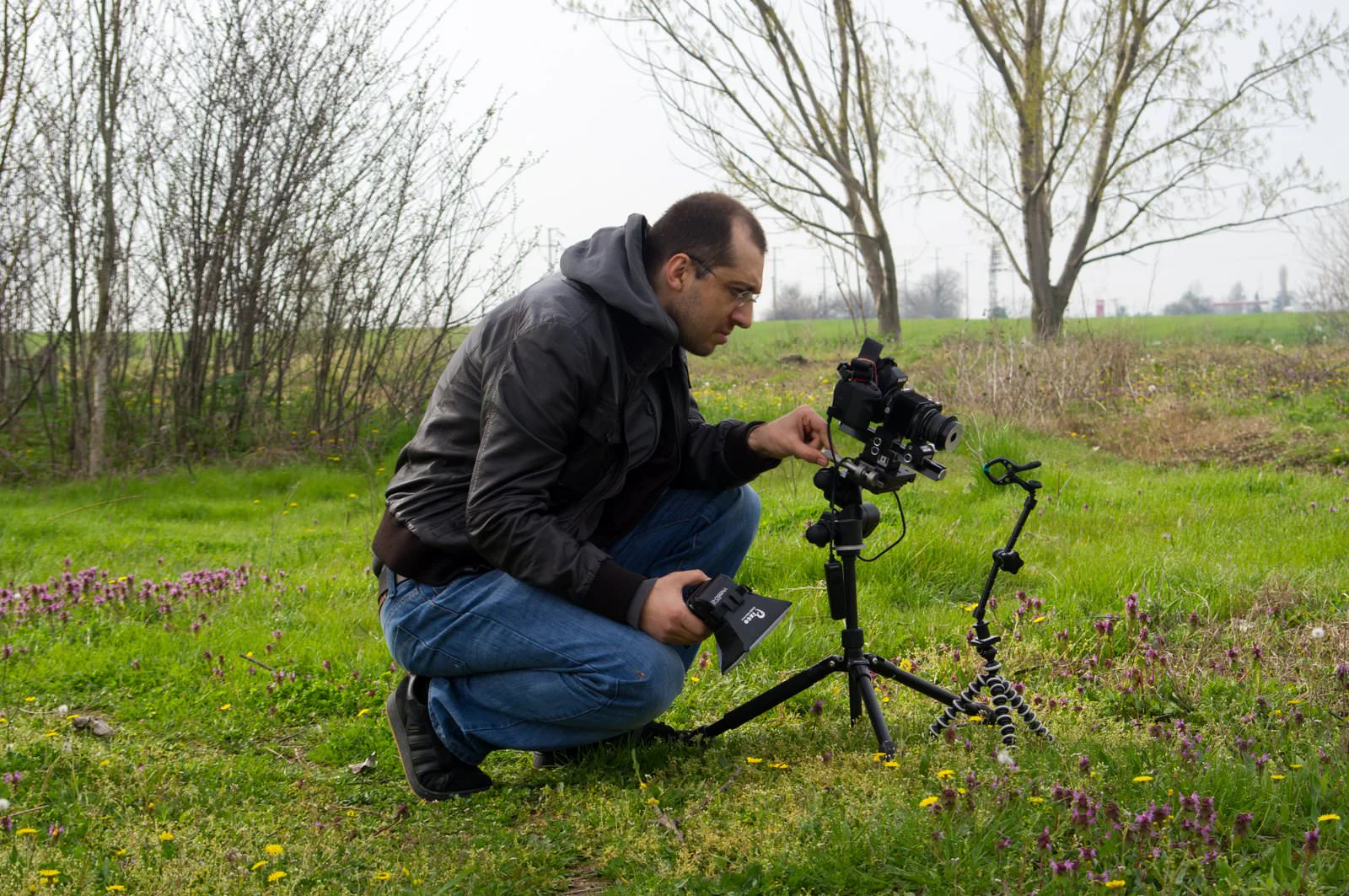
By the way, at the time of writing I didn’t own a body with EFSC, so I’ll show examples with the slightly better-behaved Pentax K-5 in terms of vibration. My cousin Özgür Kerem Bulur, with whom I often go on macro trips, helped me in the next two posts with gear and sample photos.

Tripod for Macro
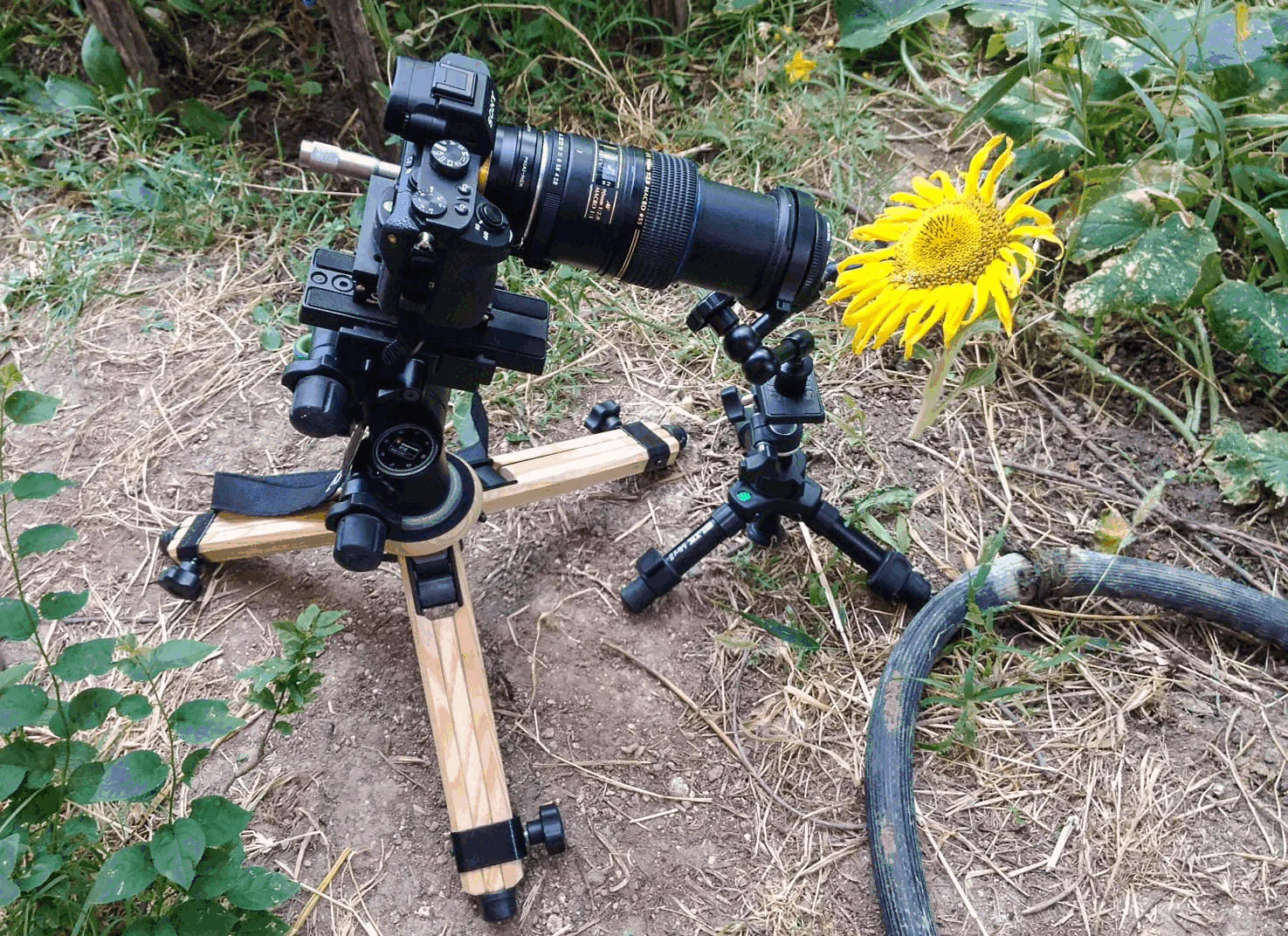
The general purpose of any tripod is to hold the camera steady, but the high magnifications of macro take this need to another level. Thin-legged metal tripods produce long-lasting vibrations in a light breeze or with a touch. Instead, we prefer short, thick-legged tripods that sit low to the ground. If possible, getting a custom wooden tripod will help vibrations damp out as quickly as possible.
Remote Shutter Release
Wired or wireless—doesn’t matter. If we touch the camera during the shot, that vibration will persist throughout the long exposure. That’s why a remote release is a must when using natural light.
Tripod Head
After setting up the camera and framing with a long effort, a single step by our insect can ruin things. Tripod heads that allow precise movement on three axes can easily compensate for this. The Manfrotto 410 Junior Geared Head is among the recommended options.
Focus Rail
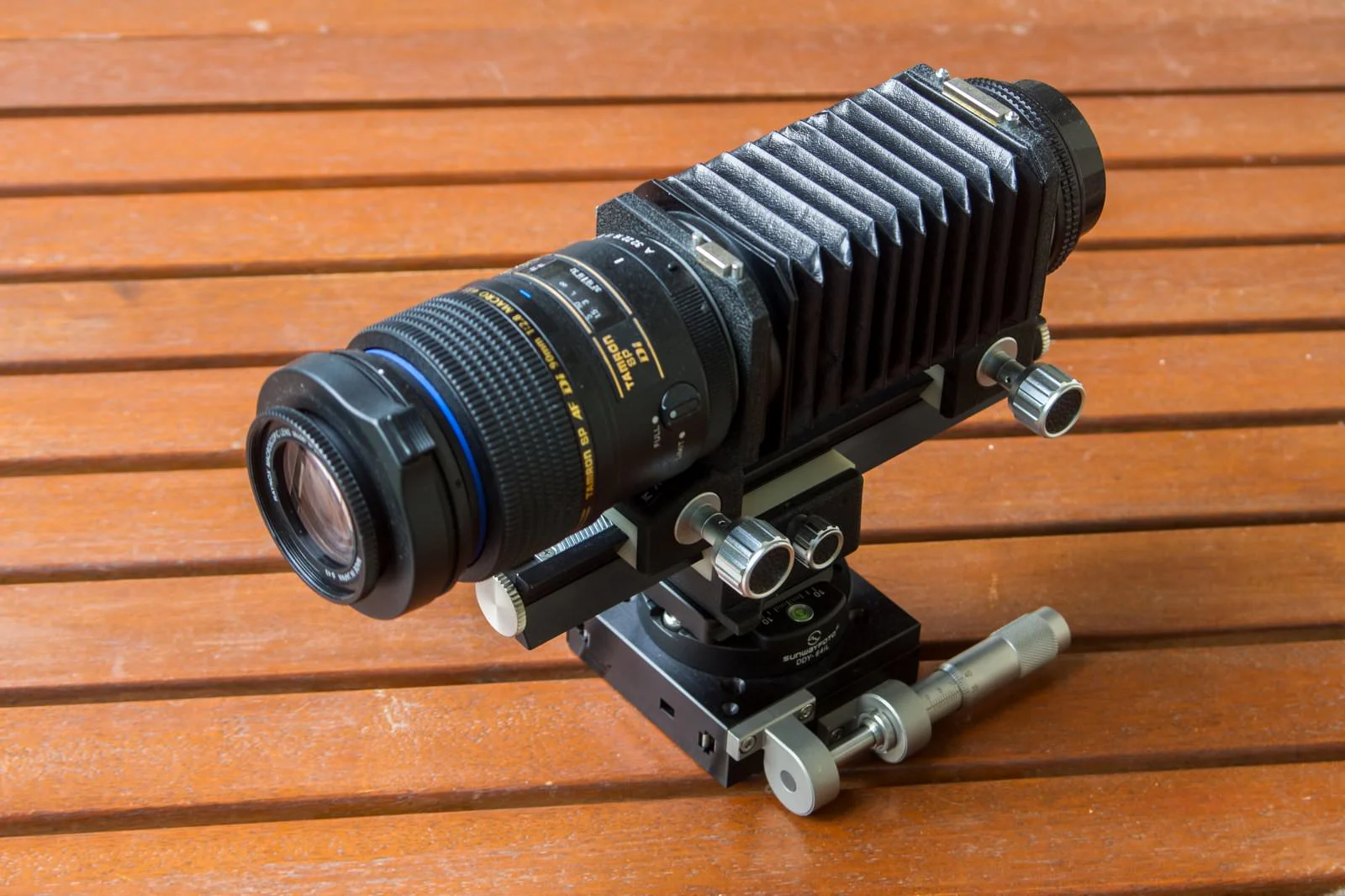
As magnification increases, the “focus stacking” technique is used to create broad depth of field. For this, you shoot the same frame many times, shifting focus slightly in each. To do this on a tripod, we use sliding mechanisms called focus rails. If you have bellows, the rail under the bellows can work too, but unfortunately it often doesn’t provide movement that’s precise enough.
The best solution is micrometer translation stages, effectively CNC products. The Newport family—hard to source in Turkey—is widely used in the macro world.
I don’t recommend cheap, generic rails. With those, you can’t control forward-backward movement precisely enough.
Specimen Holder

We grip the object we’ll photograph—or the leaf/branch it’s on—with these clamps to prevent it from swaying in the wind. With rotatable clamps we can also set the angle we want.
Diffuser and Reflector
We don’t want to use natural light completely “as is.” Homemade white plastic diffusers do a good job softening harsh sunlight. We can also add fill from the shadow side with a broad white surface or metallic reflective surfaces (a reflector).
Again, using these tools together with octopus tripods can be a good idea.
I kept the support tools brief without going deep. You can find a post where I cover them in a bit more detail here: /dogal-isikta-yardimci-ekipmanlar-tripod-ve-tutucular/
The next article will be a hands-on session on using natural light outdoors. Our experiments and the two-day macro trip with Kerem showed we need to be very patient :)