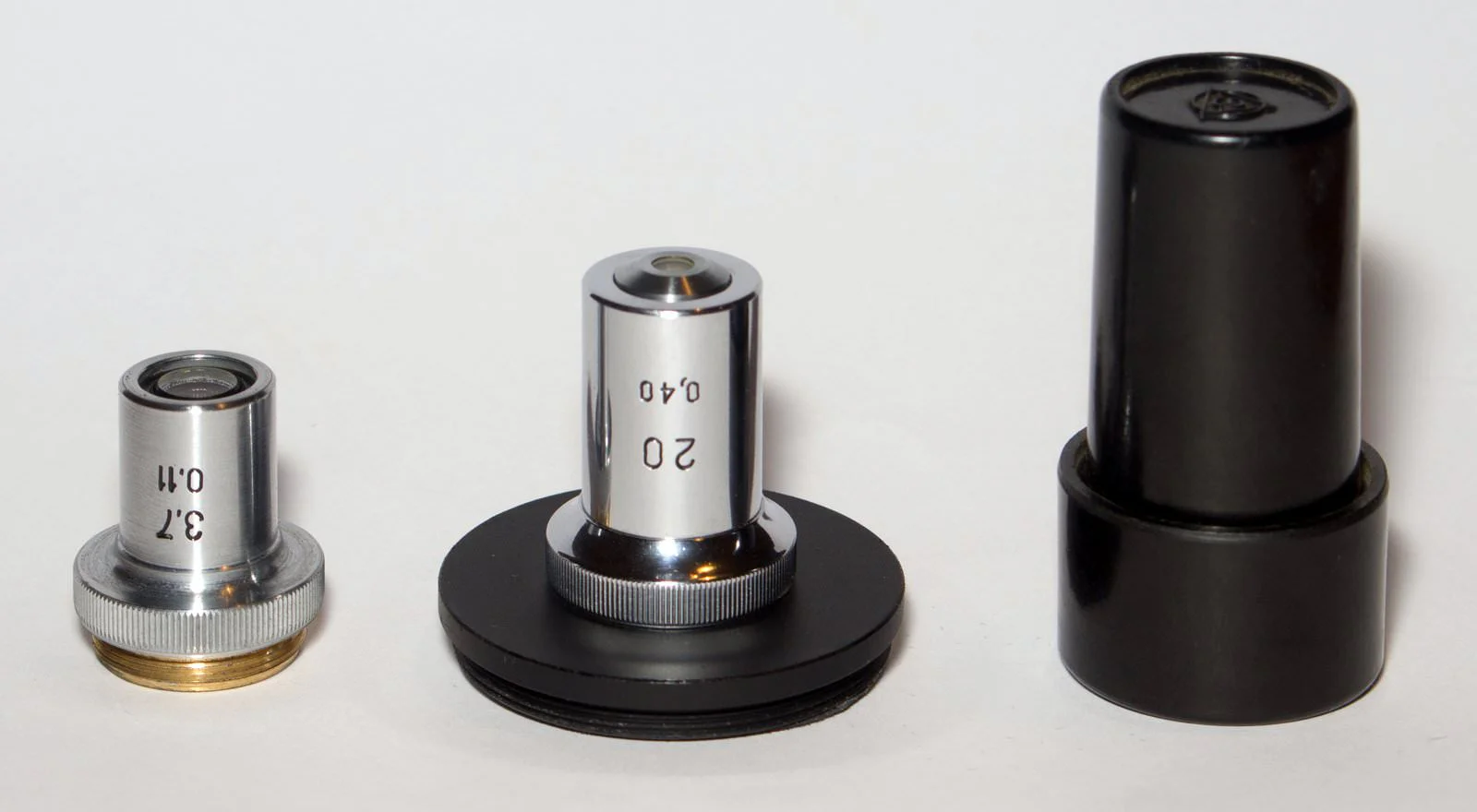
Lomo 8X 0.20 microscope lens

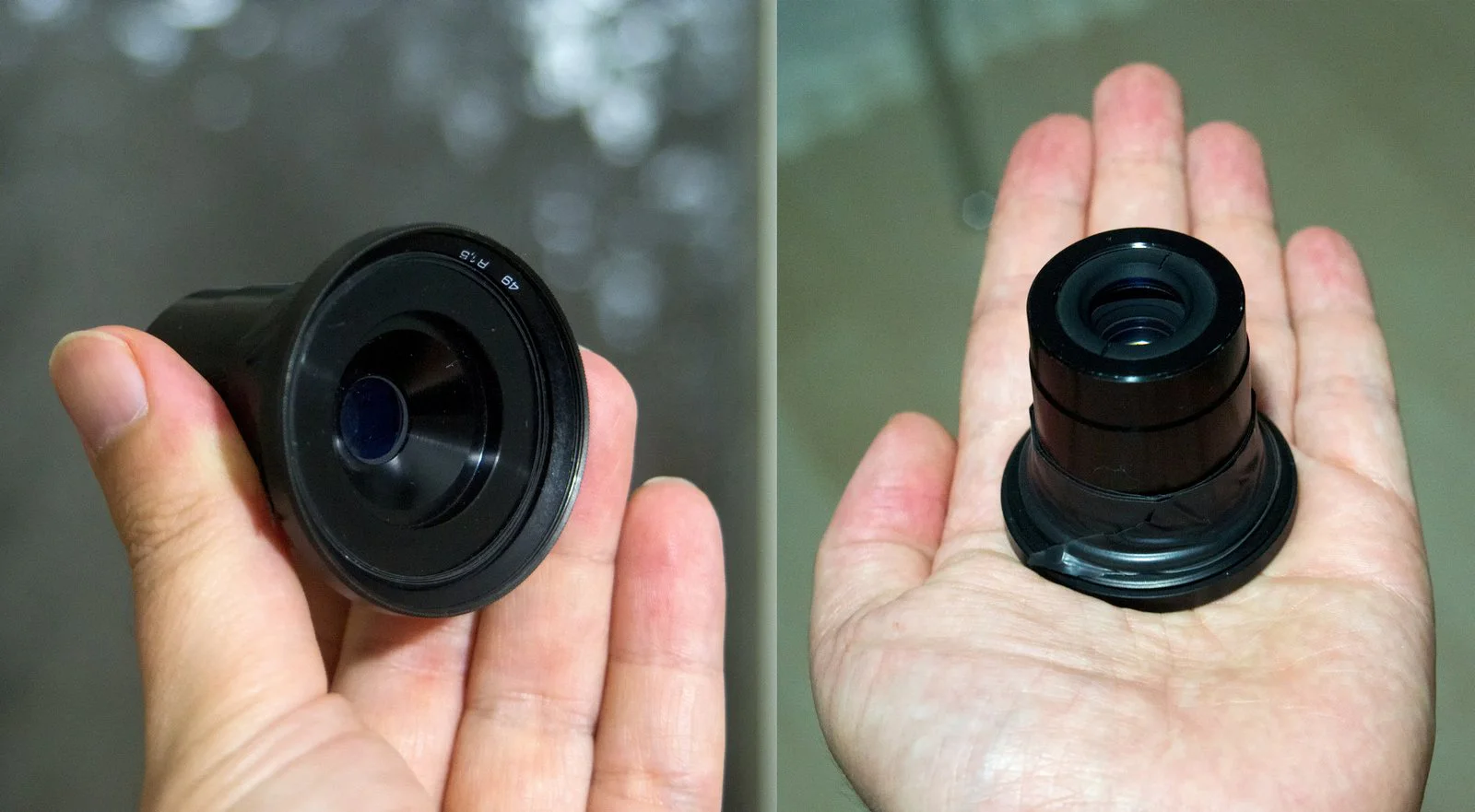
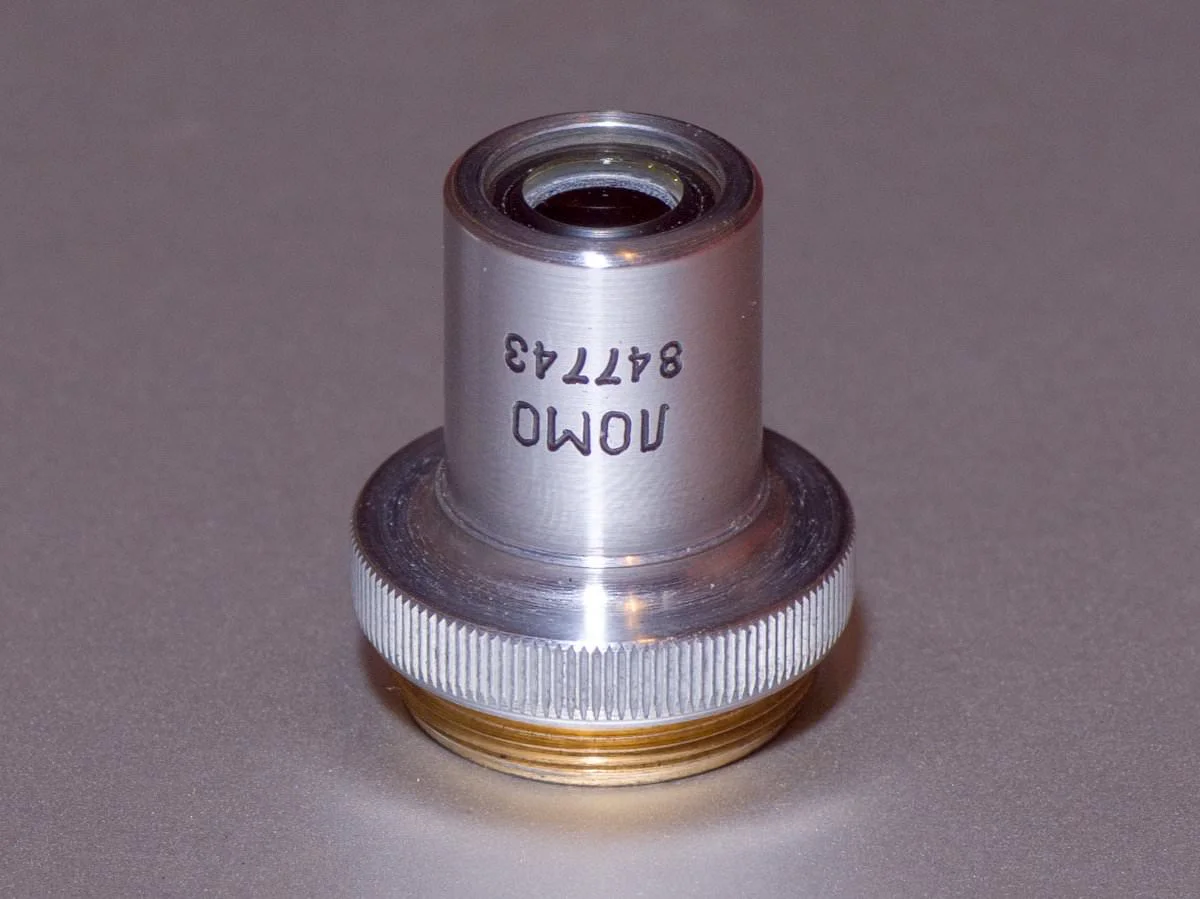
My first microscope lens was a Russian-made 1970 Lomo 8× 0.20. When I first saw it, I was a bit surprised—I didn’t expect it to be this small. These lenses have a standard threaded mount called RMS (Royal Microscopical Society). To mount it on a camera, you need an RMS-to-bayonet adapter. When the lens arrived I didn’t have an RMS adapter, so I taped it on with paper tape and attached it to my camera. The first impressions were very promising :)
When I first published this post, I had no experience with microscope lenses either. In the initial excitement, I aimed to quickly share some results. There will be a much more comprehensive article on using microscope lenses. In this post we’ll focus on the Lomo 8×.
Compared to the 8–10× magnifications I had previously achieved with enlarger lenses, the Lomo delivers much sharper images; with a numerical aperture of 0.20 it has a very narrow depth of field. It’s essential to combine many frames using focus stacking.
Because the Lomo 8× is an old lens, it can be found for next to nothing. The working distance is just under 1 cm, and for 8× I think that’s quite good. At this magnification we’ll already be concentrating on very small insects or on a specific area like a “portrait,” so we won’t be doing very deep focus stacks. A depth of around 1 cm will generally be sufficient.
The lens’s truly tiny size provides a big advantage for lighting. Its small form allows front-lighting of the subject, so even when the distance is very close we can work comfortably.
In terms of sharpness it gives quite satisfying results. I’m sure you’d have to pay a fair amount to get even sharper at the same magnification. So this lens is enough to make the vast majority happy at the first stage. Chromatic aberration (CA) is clearly visible—that’s a disadvantage. But we can correct it to a sufficient degree with photo-editing software. It’s not a worrying problem.
It’s a lens I can recommend to everyone. Just be a bit careful when buying due to its age—they can be in poor condition.
After a bit more experience…
I’ve used the Lomo 8× in various shoots. My opinion hasn’t changed: for its price, it’s a lens that performs very well. With the publication of this post, other friends also bought it and used it extensively.

The only drawback of the lens is sharpness that starts to fall off at the edges. After moving to full-frame, the edge degradation revealed itself more. On APS-C it wasn’t much of a problem. You can see the situation in the sample photos. However, this also depends on how it’s used. If you use the lens at its nominal magnification or slightly above and pay attention, it gives satisfactory results even on full-frame bodies. I know this from my cousin Özgür Kerem Bulur’s shots. He uses the Lomo 8× better than I do.
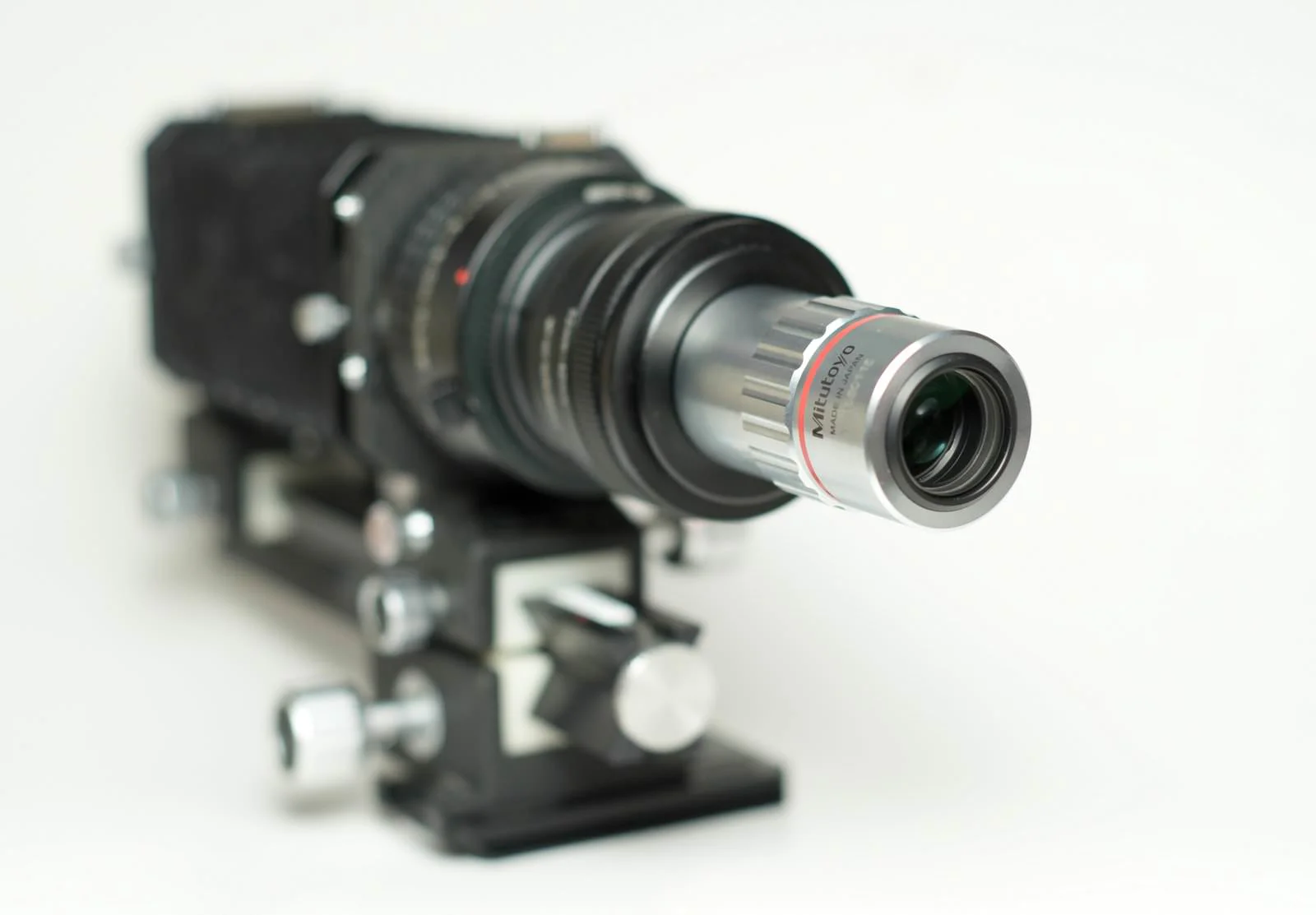
And of course, at this level of magnification precise supporting gear is essential. Without equipment like a micrometric focusing rail and a bellows alongside, the Lomo 8× on its own won’t make you happy.