Macro photography using the reverse lens mounting technique

Just as the use of extension tubes is common and important in macro photography, reverse lens mounting is likewise among the first techniques we should learn as a method we’ll use constantly.
In the previous article, while examining macro extension tubes, I mounted all the lenses I used in the normal (straight) way on purpose. We got good results with true macro lenses when mounted straight, but the other lenses didn’t look that great. In practical use, most lenses give better results when reversed. Now we’ll see this.
Reverse lens mounting adapter

To be able to reverse-mount, our lens needs to have threads where a filter can be attached. With a few exceptions, almost every lens has a filter seat. What we need is to get reverse mounting adapters made so that one side fits the filter threads and the other side fits the bayonet mount of our camera.
You can find these ring-shaped adapters on various shopping sites for around $5.
To reduce our expense, instead of buying a separate adapter for each filter diameter, you can get a single reverse mounting adapter together with filter thread step-up/step-down rings. These rings are sold as sets and let you change the filter diameter across a wide range. That way we can use lenses with different filter diameters with the same reverse lens adapter.
The lens we’re going to reverse-mount will most likely be used together with some amount of extension tube. Reversing a lens by itself may not provide the desired level of magnification. Provided we don’t exceed the lens’s resolving capacity, we’ll attach a tube (or tubes) long enough to give the magnification we want, and use the lens with them.
With reverse mounting we don’t have a brand/bayonet compatibility problem. In fact, in macro shooting you generally don’t get hung up on such an issue. With the combining adapters we’ll use, we usually lose the ability of lenses to focus to infinity. But we’re shooting macro anyway, so it doesn’t matter. The only thing we need is for the filter threads to be functional and solid. It doesn’t matter which bayonet lens we use—Canon, Nikon, Pentax.
So you could go to a seller and have this conversation:
– We were looking for a sharp manual 28mm lens, second-hand… – Which bayonet? Canon, Nikon? – Doesn’t matter. – !?!? – … – … – Umm, we’re going to use it for macro shooting. – Okay, what’s the camera brand? – … – ?? – Heh. We’ll take this one… – ?!!
:) The attempt at communication above was personally experienced in one of Istanbul’s most famous camera gear passages…
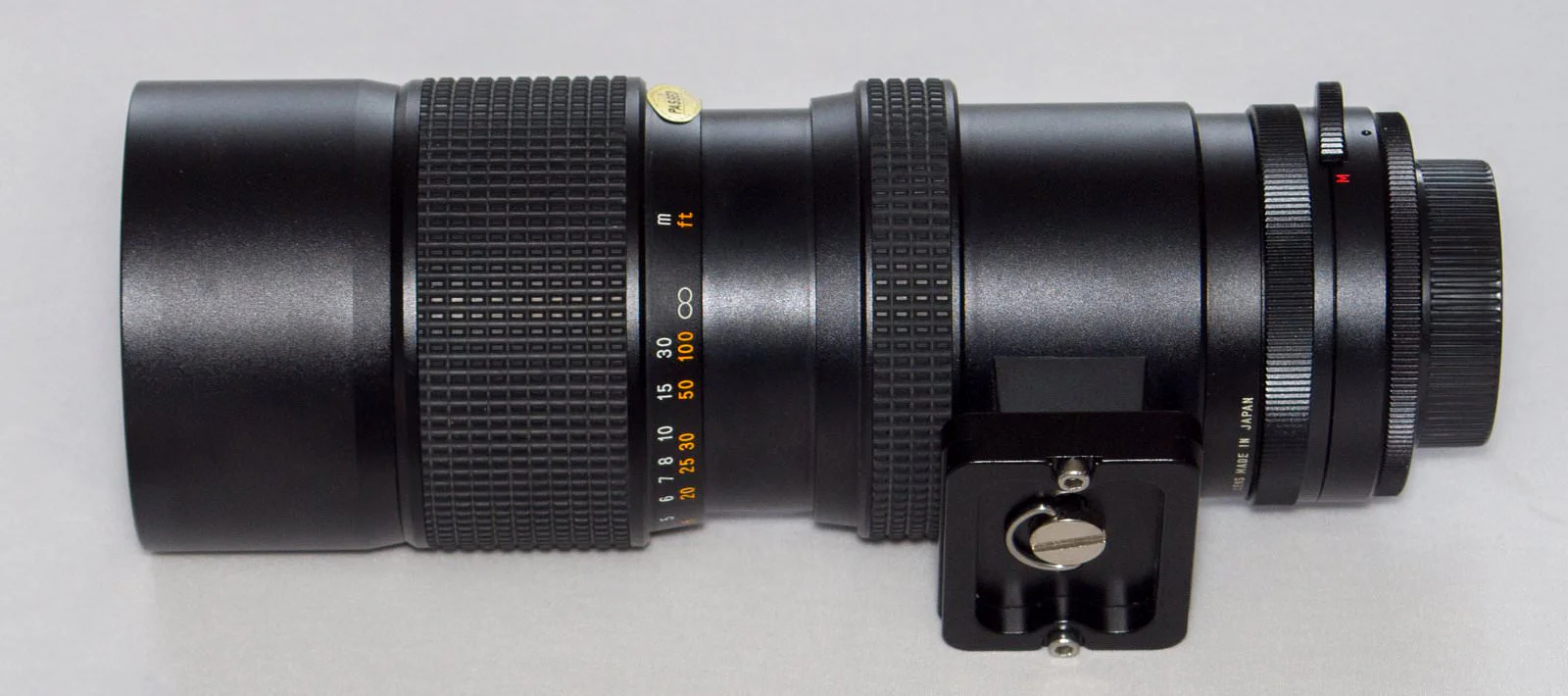
The lenses most suitable and sharpest for the reverse lens technique are usually enlarger lenses. They’ll be the subject of a separate article. You can reach that article here: Macro photography with an enlarger lens. For this test I picked 2 everyday lenses. These are the SMC M 50mm and SMC M 28mm, much loved by Pentax users, which I used in the straight-mount test. Both are lenses frequently used for macro shooting with reverse mounting. Master macro photographer Thomas Shahan loves these two lenses.
If a fully automatic lens lacks a manual aperture control, you may have difficulty setting the aperture when you reverse-mount it. Some lenses keep the last set aperture. Try first mounting the lens straight, set the aperture, then turn off the camera and remove the lens. If this method doesn’t work, check whether the lens has an aperture lever. If it does, you can roughly set it by pushing and wedging the lever with a small object. If that still doesn’t work, try another lens :)
In the tests, as in the previous article, there will be photos first with the lens in bare form, then reversed with 1 set (68mm Kenlock) of extension tubes, and with 2 sets (118mm, Kenlock + no-name Chinese) of tubes. I’ll first show the magnification ratio, then give a practical example.
Pentax SMC M 50mm The 0.5X to 2X range is a very suitable magnification for handheld shooting. 50mm lenses can work successfully in this magnification range when reversed. Let’s look at our test photos for the Pentax 50mm.


As an example, I hosted one of the wildflowers that started to cover the garden as the weather began to improve.
The photos were taken at f/8 – f/11 with external flash support; I didn’t make any edits on the computer other than brightness/contrast. What I mainly want to emphasize is making the magnification understandable. I didn’t bother with visual richness.


The Pentax 50mm has quite ergonomic use with 1 set of tubes. It shows that up to 2x magnification is suitable for handheld use. However, using the 2nd set of tubes starts to make me feel the weight of the lens in the wrist. Shooting without support from below starts to feel unsafe with the no-name tube set I have.
Pentax SMC M 28mm When it comes to macro shooting with reverse mounting, 28mm lenses are among the first that come to mind. As we move toward wide-angle, our magnification increases and the appeal grows. But we also start to exceed the limits of handheld shooting.
In the days, even weeks, when I first tried the reversed 28mm, I looked for a fault first in the lens and then in myself. It just wouldn’t work. The viewfinder image was extremely dark, the depth of field extremely narrow. I had to get too close to the subject and ended up scaring the insect. By the time I pressed the shutter, I had already lost the framing I saw due to shake and ended up shooting something else.
In fact, no one is at fault. By its nature, shooting handheld above 4X can turn from fun into torture. If you’re patient enough and take a lot of handheld shots, one of them might be the photo you’re looking for.
Now let’s look at the magnification values of the 28mm.


We see that the magnification is very high. Let’s also take a look at the sample photos.


Yes, our magnification values are very high. But accordingly, depth of field became a real problem. The f/8 used in the shoot caused diffraction and harmed sharpness. As if the increasing light requirements weren’t enough, the size of the lens sitting 3cm from the flower began to block the light, creating unwanted shadows.
Diffraction: The phenomenon of light bending when the aperture is stopped down too much, reducing sharpness.
6X magnification is not suited to our Pentax 28mm lens. Using a double set of tubes isn’t appropriate for this lens.
Compared to the 50mm, we can reach high magnifications with much shorter tubes, even without tubes. We get the chance to work in the 2x–4x range with a light and short lens. That’s an advantage, but this time the magnification kept being high. It’ll be a problem to fit an insect longer than 1cm into our frame.
One reversed, one straight As in knitting, we can say there’s such a term in macro too. :)
Finally, let’s recall the magnifications given by the 28mm and 50mm lenses in their straight-mounted and reversed states. I created a table for this.
The ones I marked in green show values that can be preferred for working (focus, working distance). The ones in red indicate configurations that are unsuitable due to various issues.
These comments apply only to these 2 lens models and reflect my personal preference. You can of course work across all magnification ranges with whatever lens you wish.
**Note: **Above 1:1 magnifications, using the focus stacking technique becomes a necessity. Since the sample photos consist of single frames, the extremely shallow depth of field stands out.
| | Pentax SMC M 28mm | Pentax SMC M 50mm | | Normal-mounted without tubes | 0.13X (insufficient magnification) | 0.15X (insufficient magnification) | | Normal-mounted with 1 set of tubes * | Cannot be mounted (no focusing) | 1.31X (short working distance) | | Normal-mounted with 2 sets of tubes **| Cannot be mounted (no focusing) | 2.44X (short working distance) | | Reversed without tubes | 1.81X | 0.46X (weak corner sharpness) | | Reversed with 1 set of tubes * | 4.17X | 1.75X | | Reversed with 2 sets of tubes **| 6.27X (diffraction issue) | 2.91X (tube length not ergonomic) |
Note: 1 set of tubes is 68mm. 2 sets of tubes is 118mm. With a bellows extended to the same length, you’ll get the same values. By using the tubes not as sets but piece by piece, you can create a much more flexible magnification range.