The excitement you feel when doing anything for the first time is upon us today. We’re about to try, for the first time, a flash-free, open-air “focus stacking” session we’ve long prepared for in terms of gear and technique. We’ve been following photographers who shoot using only natural light for a long time, and it finally feels like it’s our turn.
I touched on the beauty of natural light and the challenges in practice in the previous post. Today we’ll be trying it firsthand.
By “we” I mean myself and my cousin Özgür Kerem Bulur. We often go out together for macro sessions.
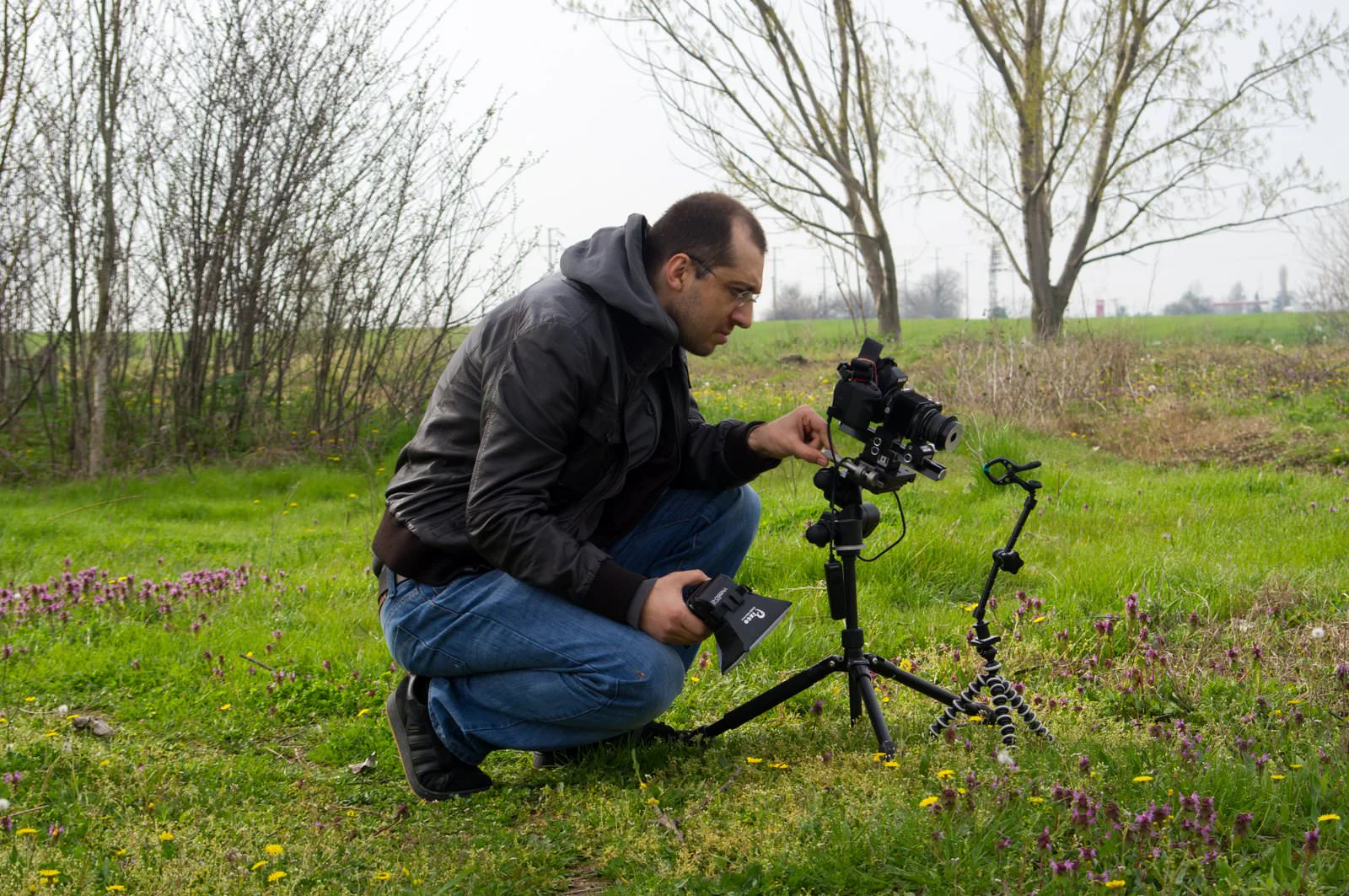
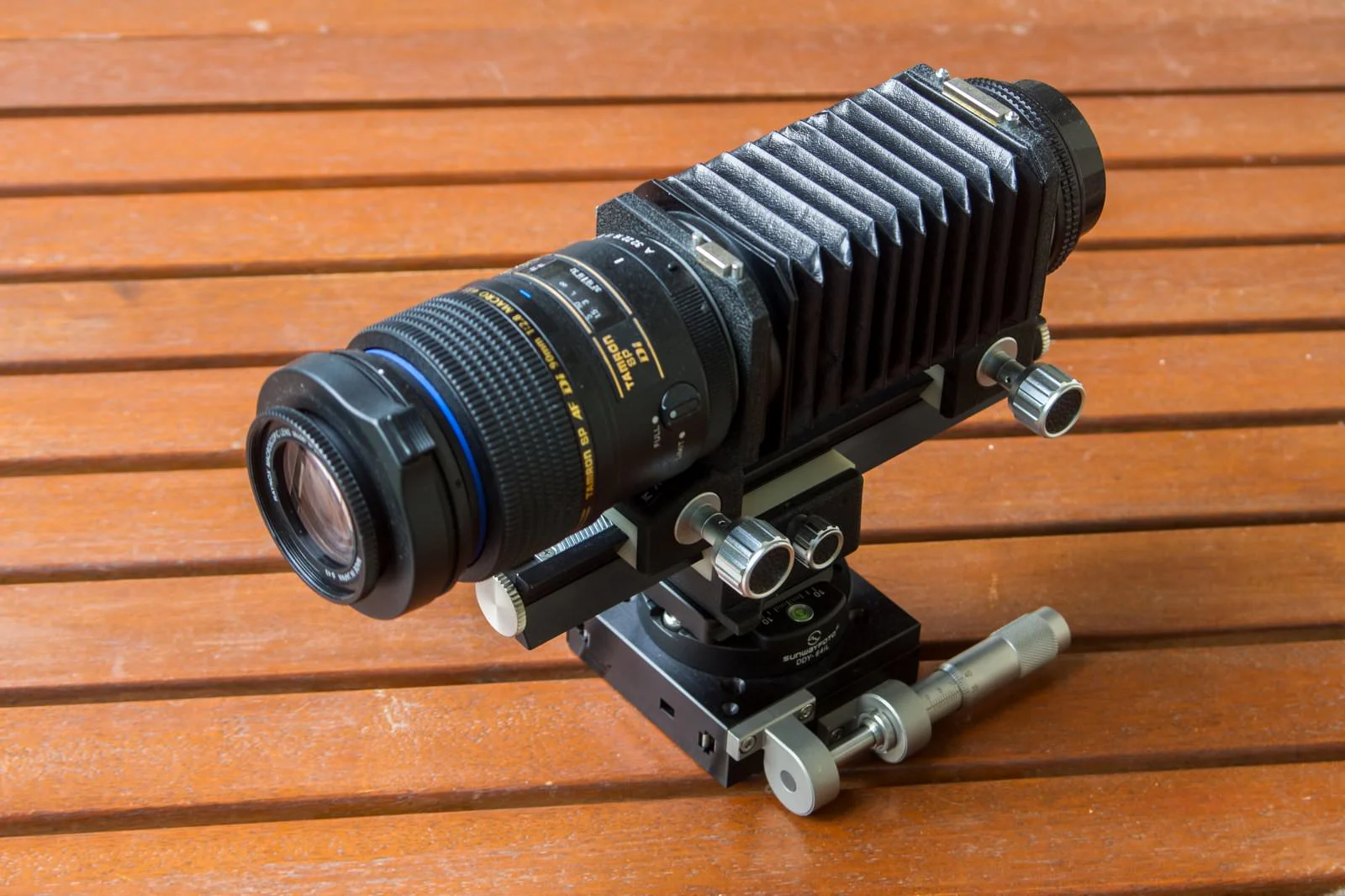
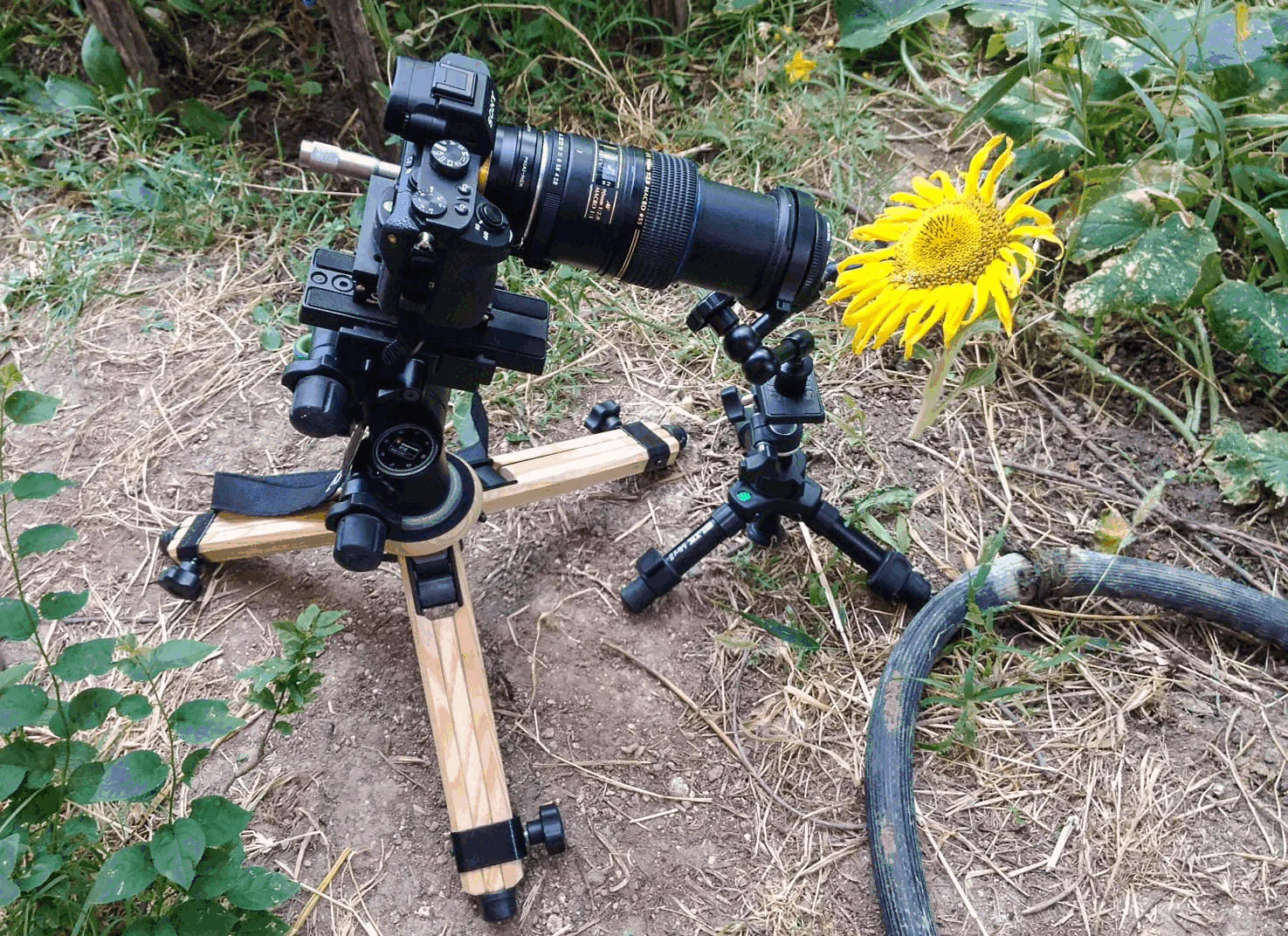
Kerem is better prepared than I am for natural-light shooting in terms of equipment. With a Pentax K-5 body that handles vibration better than the K-x, and a Manfrotto 410 Junior Geared Head that allows 360-degree framing while on a tripod, the job is a bit easier. So Kerem will do the natural-light shooting. I’ll help a bit—holding reflectors etc.—and try to show what we’re doing. Meanwhile I’ll also shoot plenty of flash macro for myself.
Day 1 – Natural light on a rainy day Despite spring having arrived, Istanbul is cold and rainy. Stubbornly, we decide to do an outdoor shoot today. Our hope is that the cold will keep the insects calm and motionless. We have to do long exposures and also shoot many frames of the same composition using the “focus stacking” technique. The insect must not move at all during this process. On a warm day we’d have no chance.
We won’t go far; we’ll shoot in our garden. That way we can work without soaking the gear—and enjoy some hot coffee.
The sky is fully overcast, which is an advantage—no harsh sunlight. It also means we don’t need a diffuser; the clouds are doing that nicely. But there’s also a lack of light. We’ll solve that with white reflective surfaces.
After a short bit of planning like this, we head out into the garden.
After setting up the focus rail, tripod, etc., it’s time to find a subject. There’s nothing in sight because of the rain and wind. Thankfully, after a while we come across a Chalcididae species in sleep mode—rain-soaked and clinging tightly to a leaf. These are small parasitic creatures that lay their eggs on other species. With scissors we cut the leaves it’s holding and take the twig along with our insect. We carefully bring it in front of the camera and stabilize the leaf with “helping hand” clamps.
Detail from the photo aboveDetail from the photo above
We notice a few issues in the first round of shots. The light isn’t coming from the right angle, and there’s a touch of wind-induced sway. With a second “helping hand” we stabilize the other end of the leaf too. Since the wind keeps causing trouble, as a last resort we prune the leaves that act like sails and shake the insect. At last, we get a stable setup. We support the lacking light with white paper and finish the shots. Despite all the poking and jostling, our little friend, who barely moved aside from tiny antenna twitches, deserves our thanks—and we call it a day.
I’d never done macro on a day covered with dark clouds—cold and rainy. Even though finding insects is hard, the cool weather creates its own advantages: since they’re all asleep, it becomes a unique working environment.
Detail from the photo aboveDetail from the photo above
Day 2 – Natural light toward evening A few days after the first session, we have a bright, sunny, and warm day instead of rain. For this attempt we’re at the edge of a field outside the city in Thrace. The nearby stream brings lots of variety.
Hoping to find calmer insects, we choose a time closer to evening instead of the hot midday hours. Even so, there’s plenty of movement everywhere. They don’t look calm at all.
While I enjoy the conditions—perfect for handheld shooting—with the Tamron 90mm and Raynox DCR-250 combo, Kerem spends minutes each time setting up his tripod rig, only to tear it down again in frustration. The insects won’t stay put; they don’t allow long exposures.
Kerem wrestling with the tripod
By day’s end I head home with full memory cards and empty batteries, while Kerem is quite tired, tense, and empty-handed.
Realizing that long-exposure work with natural light isn’t really possible during the hot daytime hours, we plan for an early start the next day.
Day 3 – Early-morning outdoor “focus stacking” We set the alarm for 6 a.m., but don’t get moving until 7. Luckily, the clocks moved forward that night, so it’s still 6 by the old time. The sun has just risen, the surroundings are lit, but everyone else—including the insects—is asleep.
We hurry to hit our targets before things warm up.
After losing a bit of time looking for a place to go, we pick a lakeside tea garden within just a few kilometers of the city that’s no longer in service.
Kerem using natural light for stacking. We’re not using the flash in his hand.
We reach the spot within 10 minutes. After passing through a few dogs with menacing looks and moving into the denser vegetation, it becomes clear we’re in the right place. The habitat is rich, and all species are asleep. While I quickly get the Tamron + Raynox ready and start my first shots, Kerem works on the tripod, focus rail, and bellows connections—only to run into a nasty surprise!
The camera body was left at home!
We elevate our macro-tour memories—already done without batteries, memory cards, and flash—to the next level by heading home to grab the body :)
Kerem is shooting me through a dewdrop. And I’m shooting him…
We’re not smiling at the time, of course. With the time lost, the sun will rise a bit more, the air will warm, and the insects will start waking up. By the time we return to the same spot, we’ve burned another half hour.
The situation isn’t as bad as we feared. Shaded wooded areas are still cool and the insects are asleep. Dewdrops are everywhere. It feels like we’re seeing the photos we’ve been following.
Instead of hauling the tripod setup to each spot to rebuild the angle and frame from scratch, we leave the camera rig in place and bring the insects we deem suitable for shooting—along with their leaves or twigs—to the setup. Maybe because we couldn’t get there early enough, many still escape and we keep grumbling. Sometimes we’re forced to move the tripod and lock it down again. Personally, I didn’t expect this to require so much patience. But Kerem is quite stubborn—he doesn’t give up.
Me, inside the dewdropA tiny spider, focus stacking without flash.
Now and then some insects cooperate. As the process—focus shifting, delayed shutter, long exposures—repeats 30–40 times to create a single photo, each rare completion boosts our spirits. This time we won’t go home empty-handed.
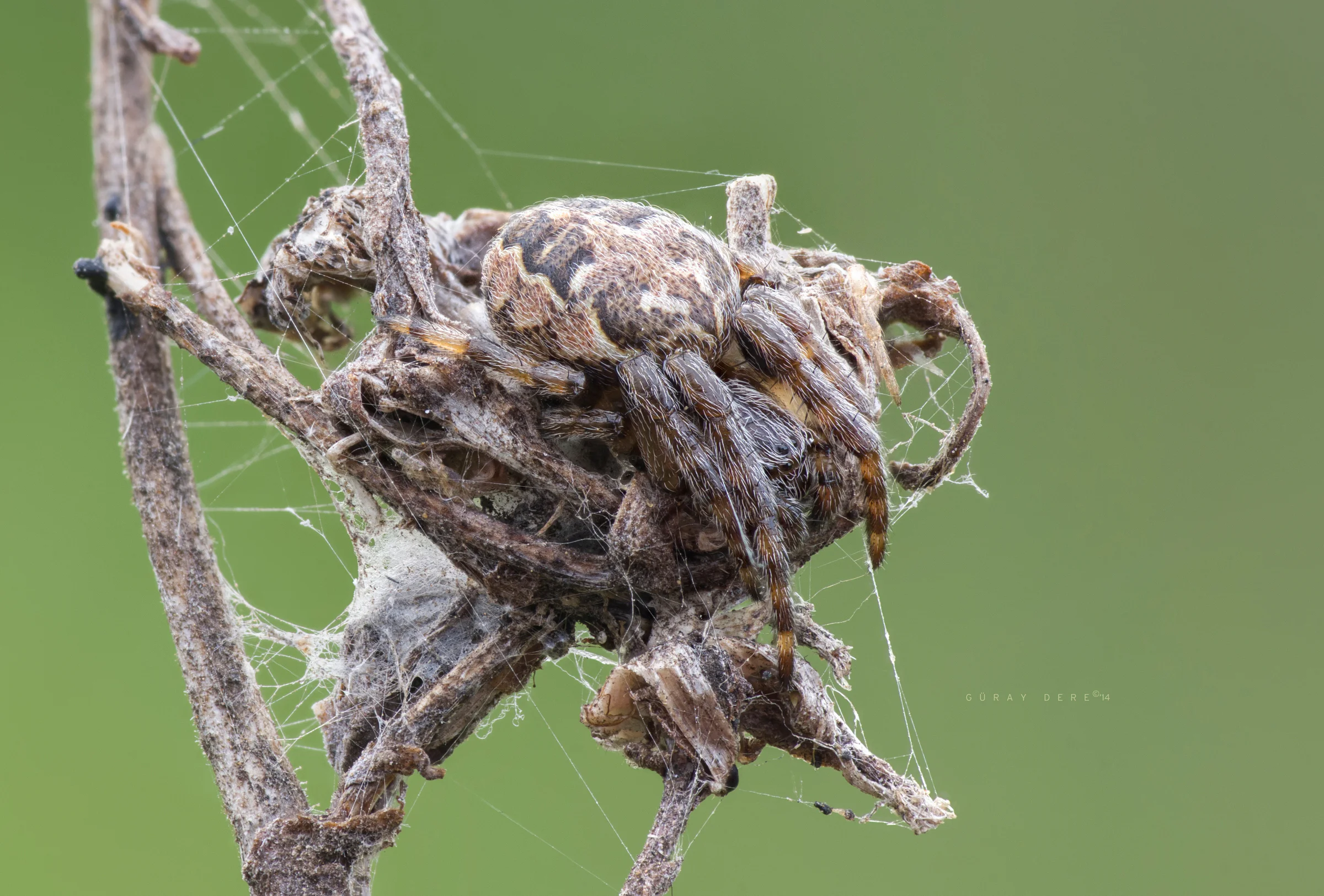
Our tiny spiderDetail from the spider
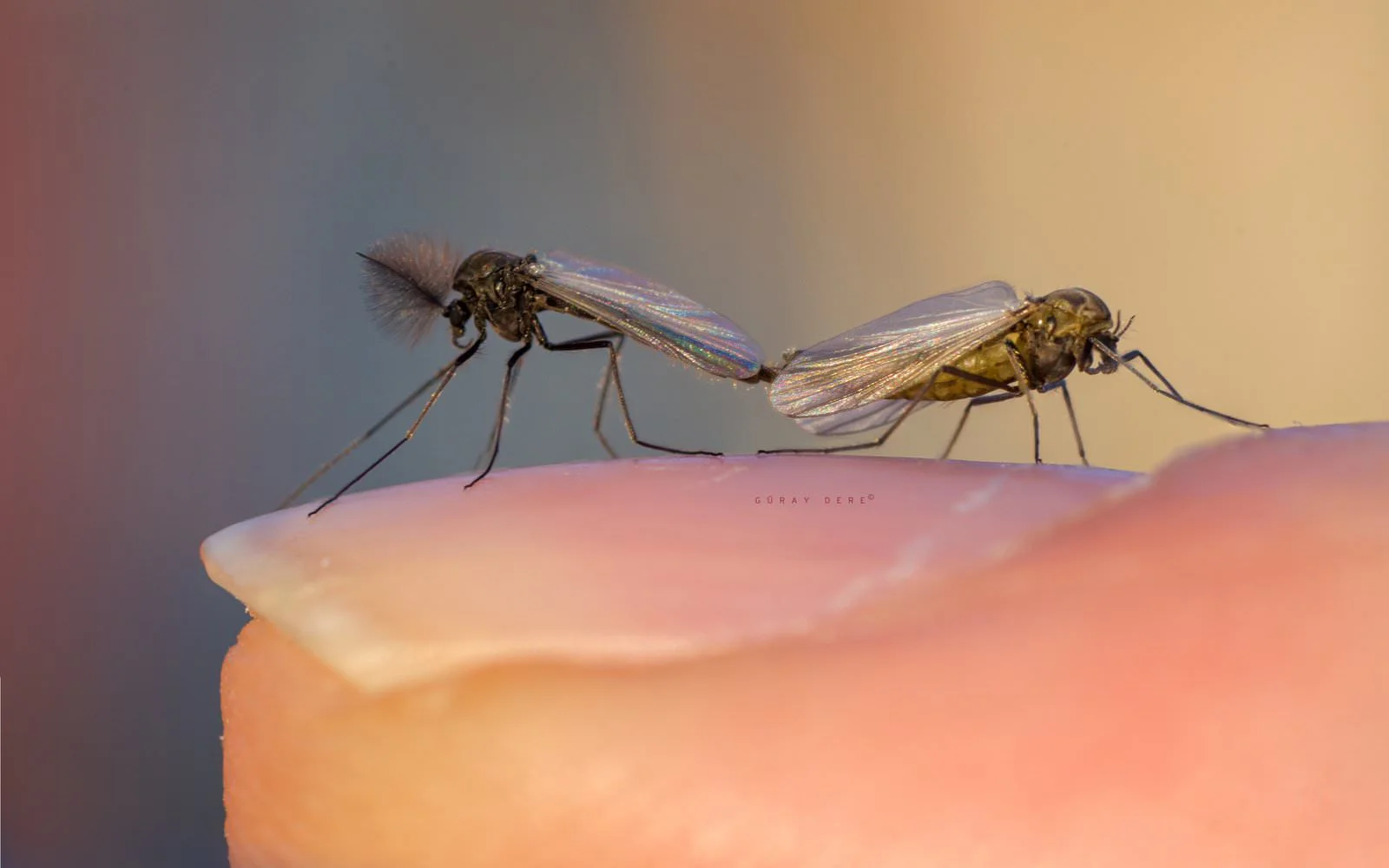
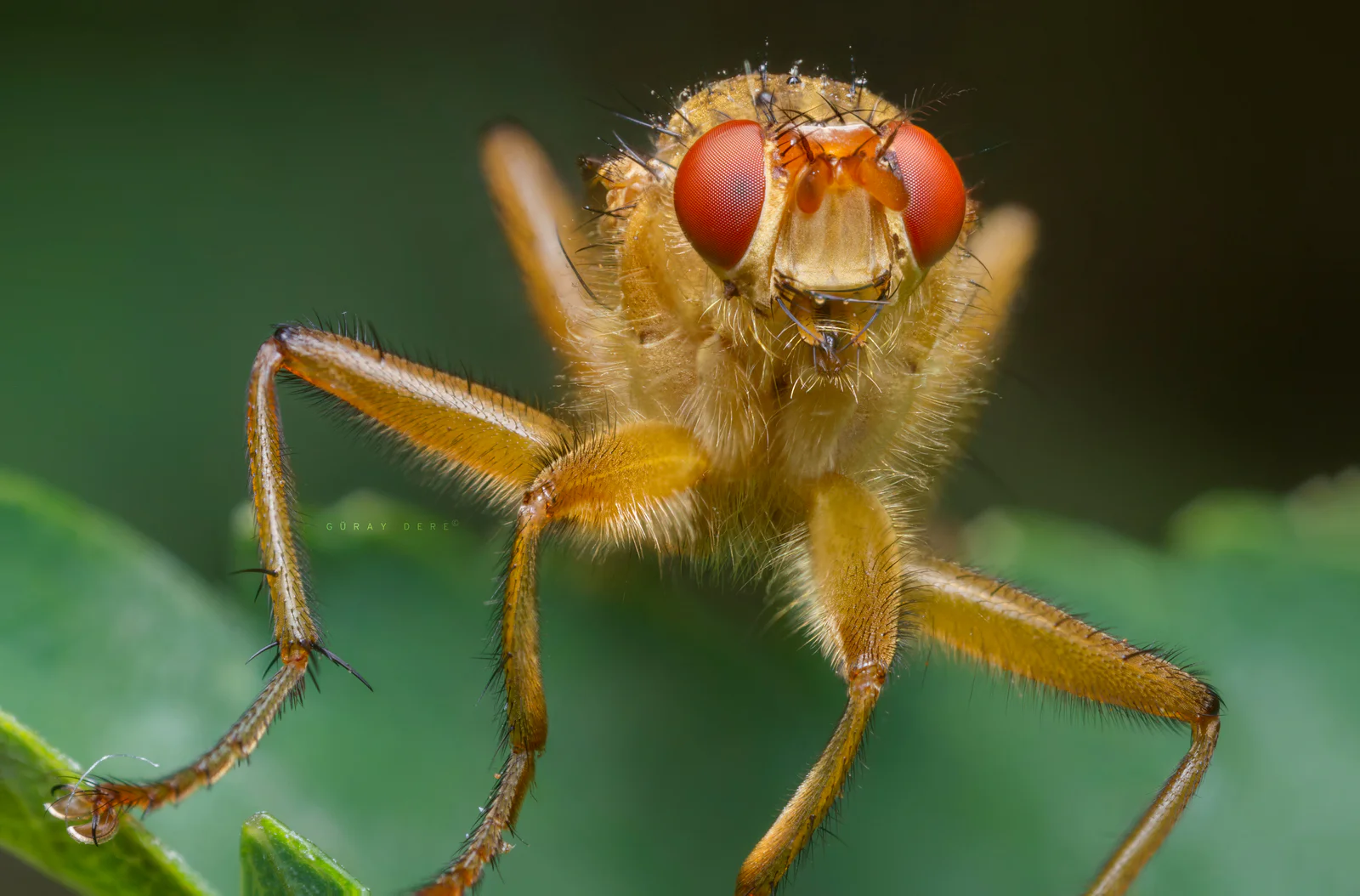
While Kerem wrestles with natural light, I shoot plenty of emphid flies. In their striking mating ritual, the male catches prey and offers it to the female. I see a pair on almost every branch. They’ve caught whatever they could—even smaller than themselves—and offered it to the female.
I also try something new here and record video of the emphids. I later regret trusting stabilization software too much, because the handheld footage is so shaky it’s unwatchable and unfixable. A simple monopod—or simpler still, a long stick—could have prevented this… Maybe video shooting will be a topic for makrodunyasi another time.
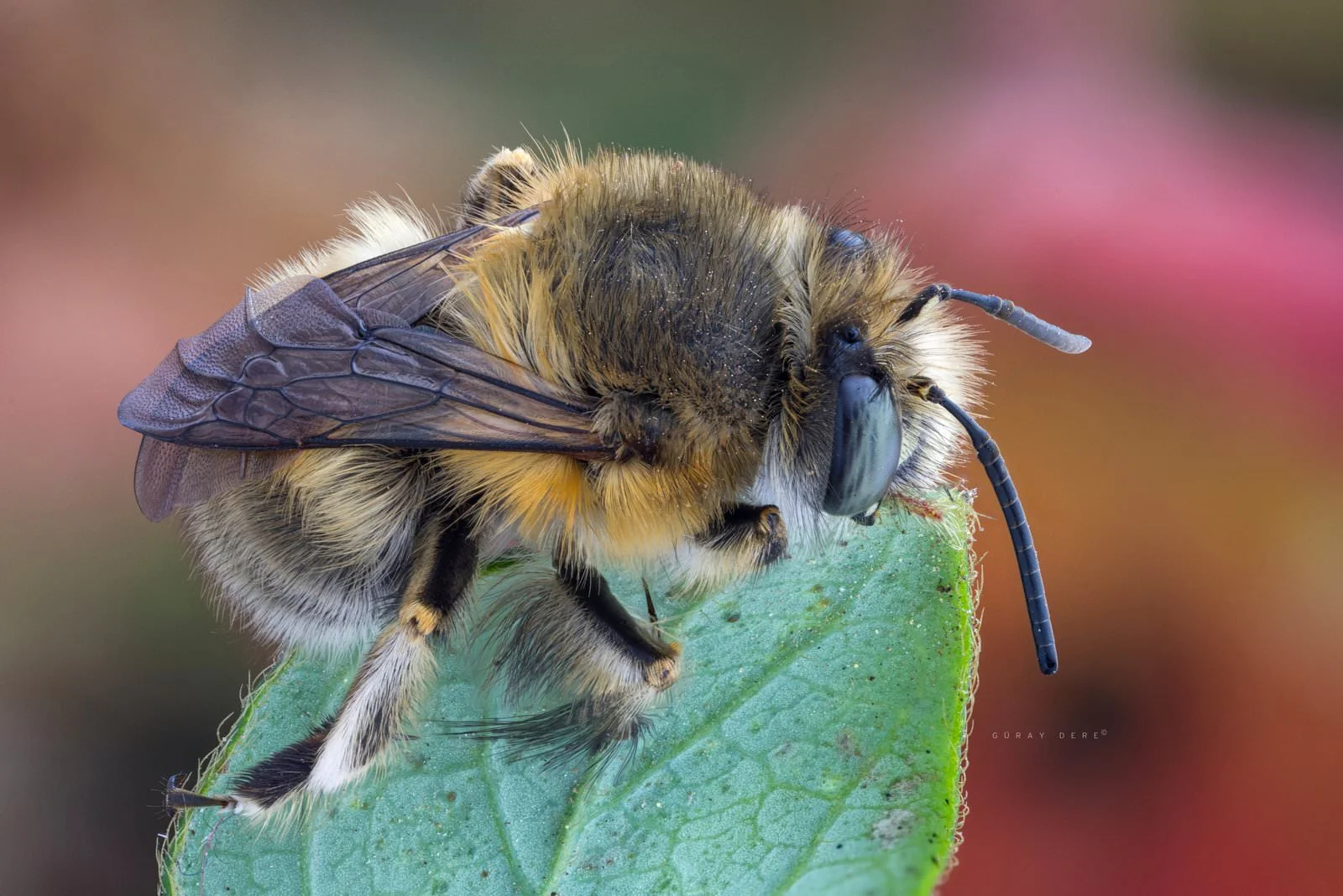
I’ll end by sharing one more of Kerem’s shots that showcases all the beauty of natural light.
Wing detailNote: A Nikon El-Nikkor 50mm f/2.8N lens mounted in reverse on bellows was used in the photos.