At the time I wrote this, I’d been happily following natural-light, flash-free work for a long while. Out of a bit of laziness, I hadn’t tried it myself yet. My tripod mounting issue played a role too. I couldn’t find the right screw to seat my Newport setup on the tripod, and that eventually led me to swap the Newport model altogether.
A dead European hornet (Vespa crabro) I found in the garden gave me the first opportunity. Hornets are a fairly large species, so 1:1 or higher magnifications aren’t ideal. To frame the whole body you need low magnification, so I went with the Tamron 90mm.
Compared to a honey bee, a hornet is a real giant
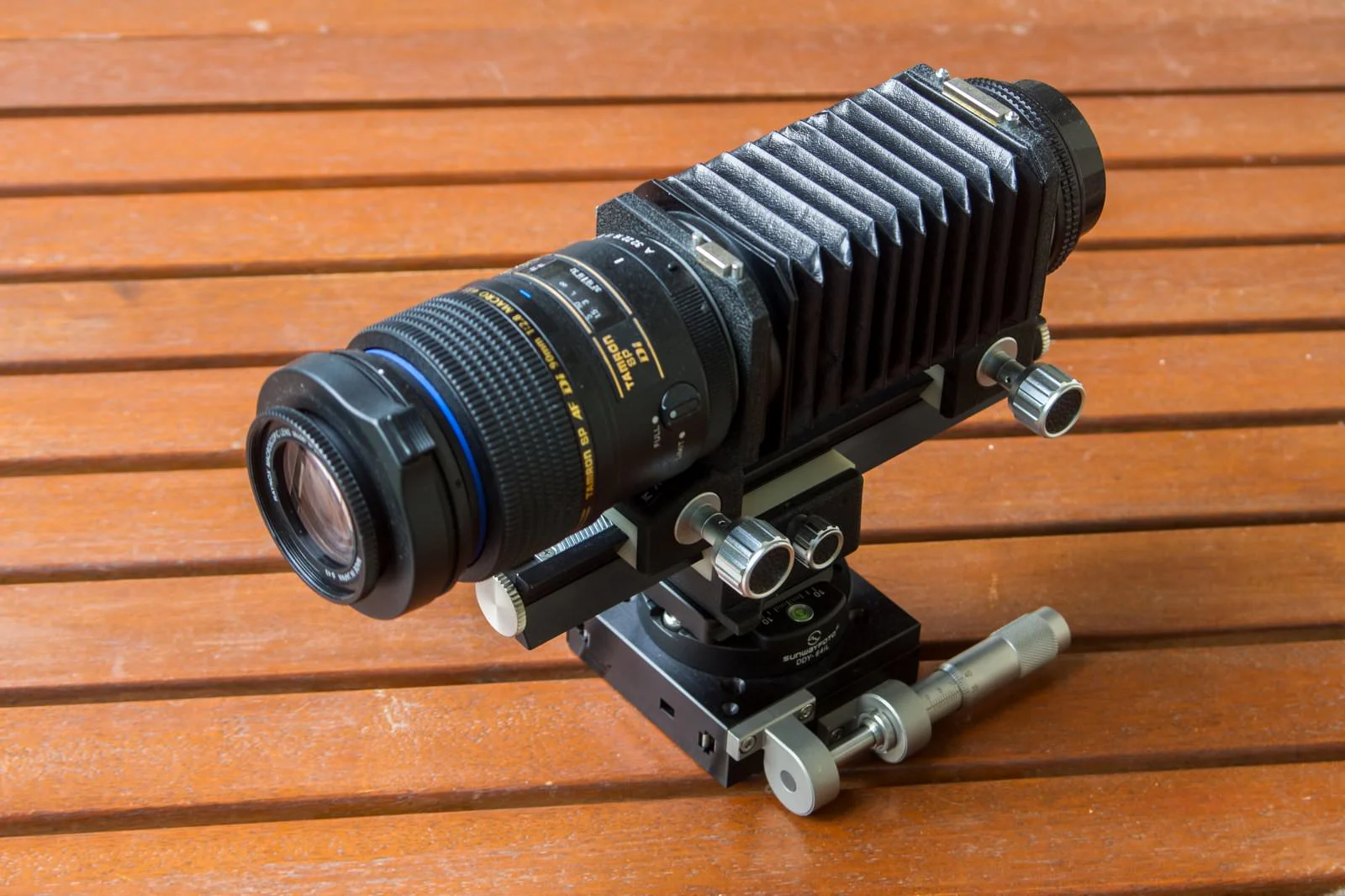
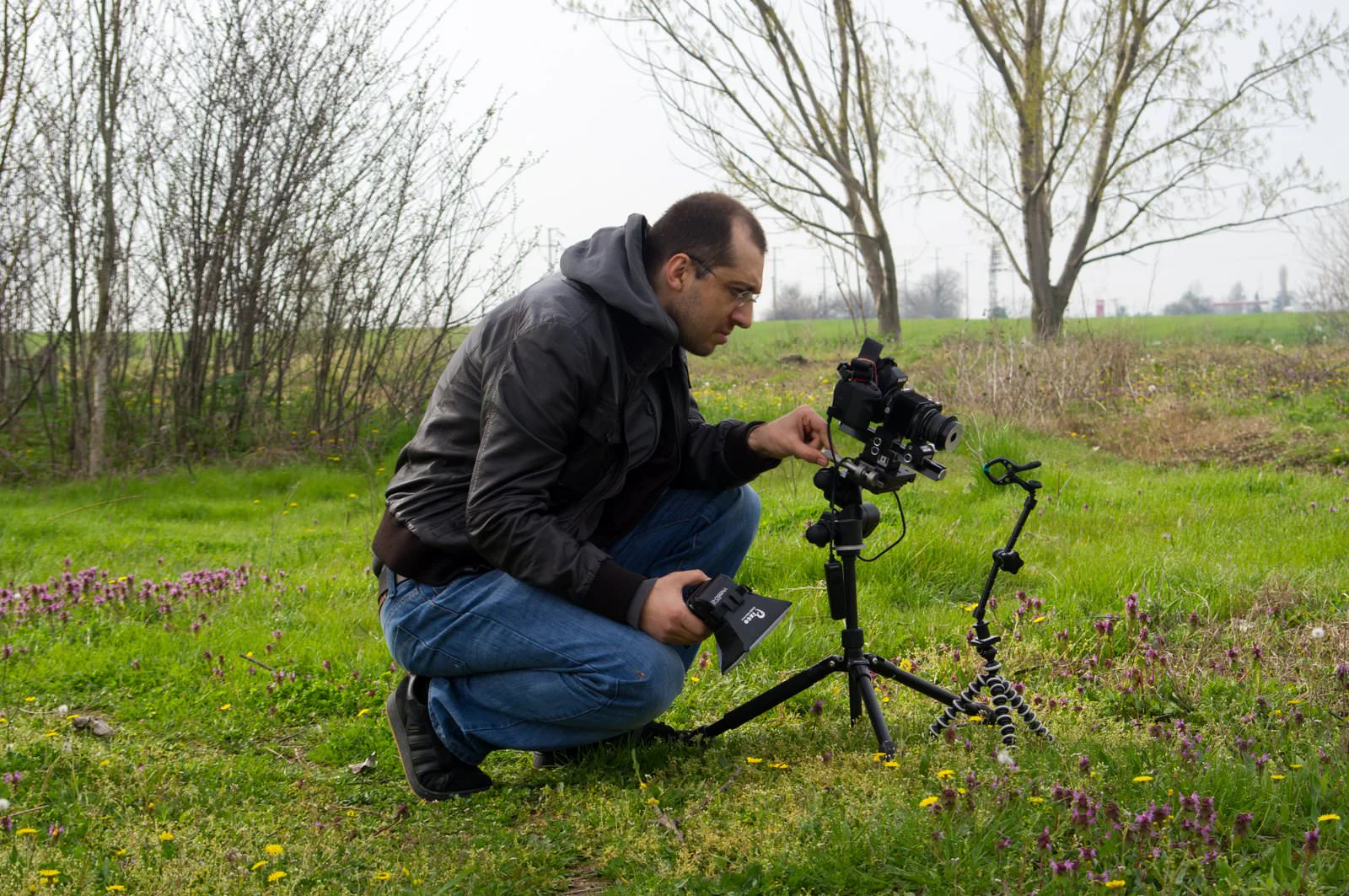
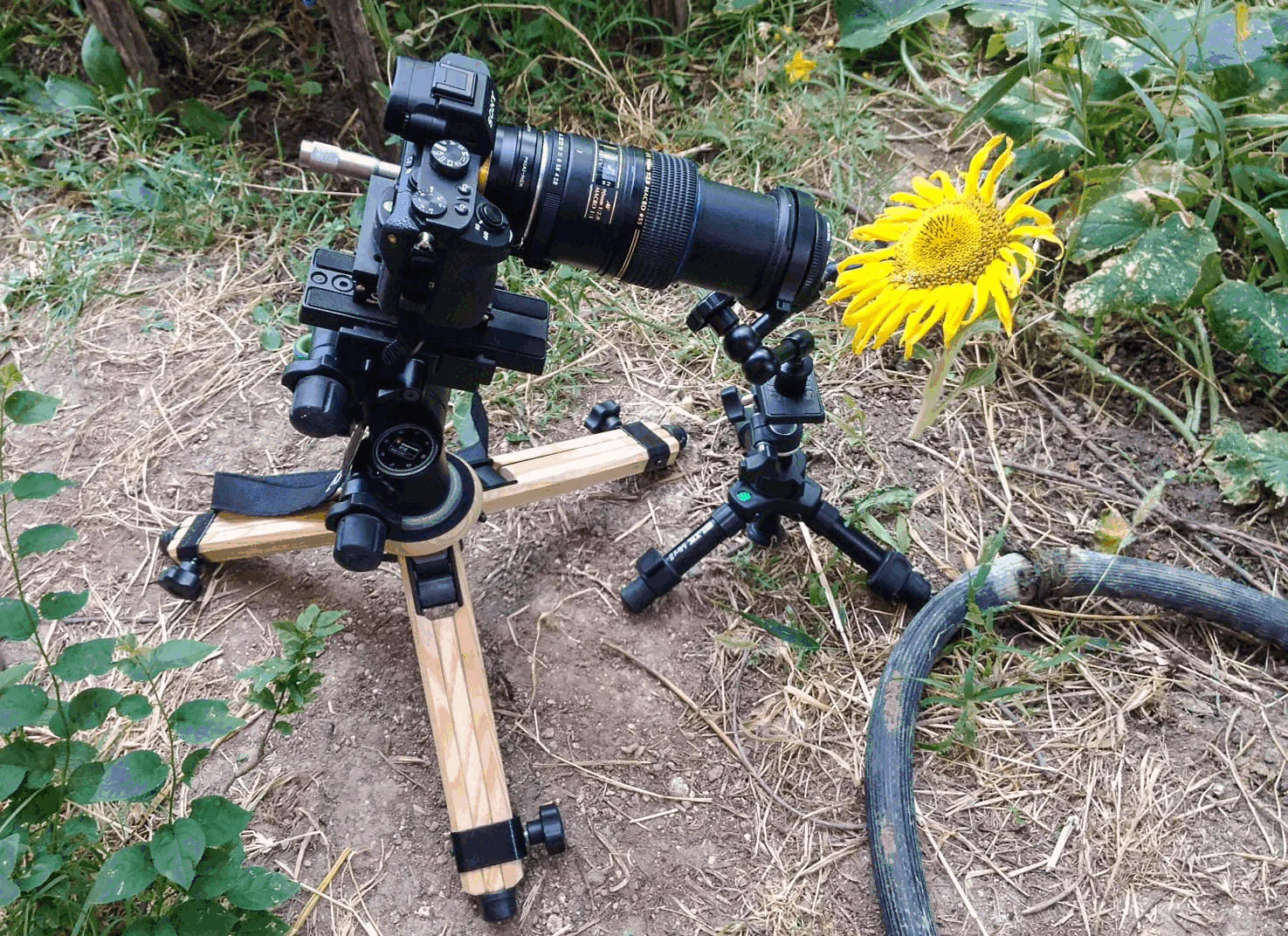
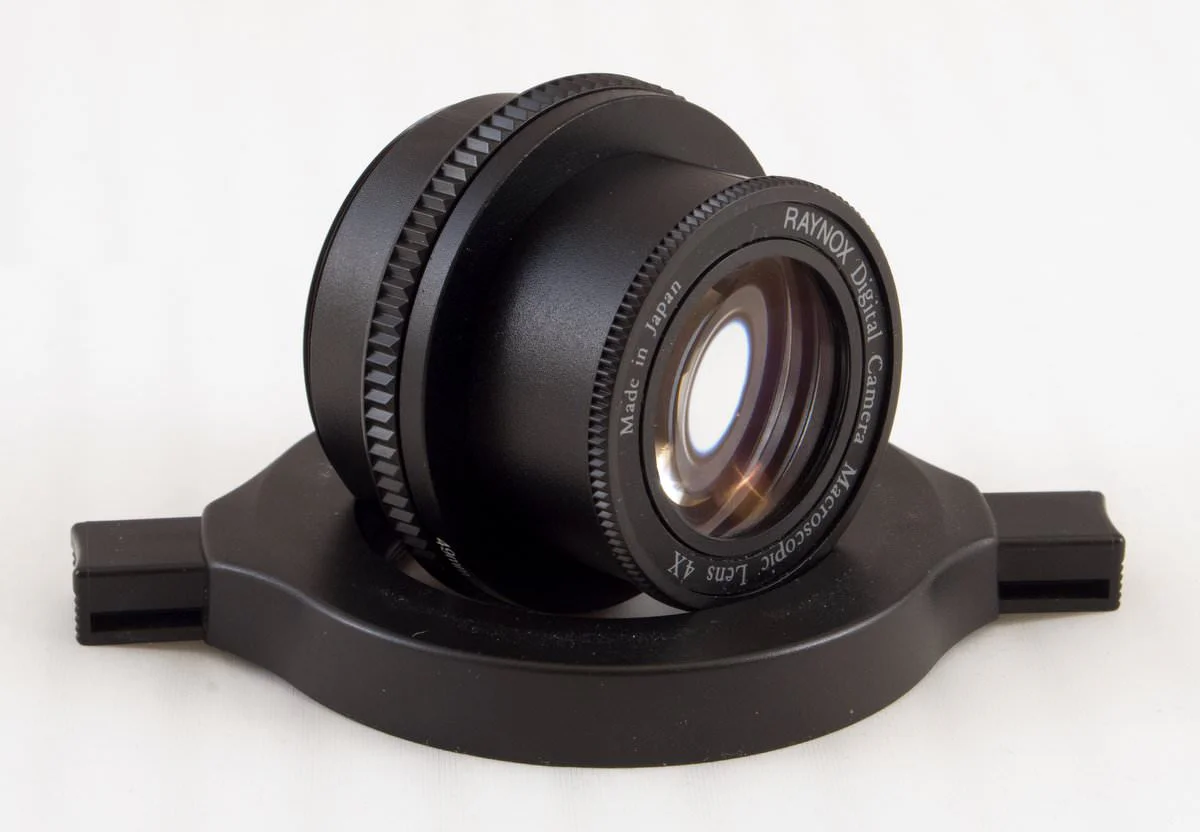
Since I wasn’t going to use artificial lighting, I started with an extremely simple rig. On a Newport 423 linear stage I mounted a Pentax bellows, with a Tamron 90mm and a Raynox DCR-250 up front to give me a broad magnification range. Having no idea how harsh the light would be, I placed two sheets of A4 white paper facing each other to soften it (as it turned out, not very successfully).
*
Newport + Bellows + Tamron 90mm + Raynox *
*
At lower magnifications you can skip the bellows and the Raynox. *
I realized that if I’d set up the same rig without the bellows, I would have retained automatic aperture/exposure control and let the camera meter automatically. The bellows I added for extra magnification forced the lens and exposure time into full manual. That’s not a huge problem—just requires a bit more attention. You may need to track shifting light (passing clouds, etc.) and tweak settings. If you’re using a mirrorless body, life is easier: even with fully manual lenses, the body can always adjust metering to match the light.
Since the Raynox was overkill for a hornet, I removed it before shooting and used the Tamron bare. Because this was a test, I didn’t intervene with the background. Honestly, a bit of greenery back there would have been nice :)
I did focus stacking from two different angles. The first stack has 20 frames. I used f/5.6.
In the second attempt, I shot from the front and kept the magnification higher. It’s a 24-frame stack, again at f/5.6.
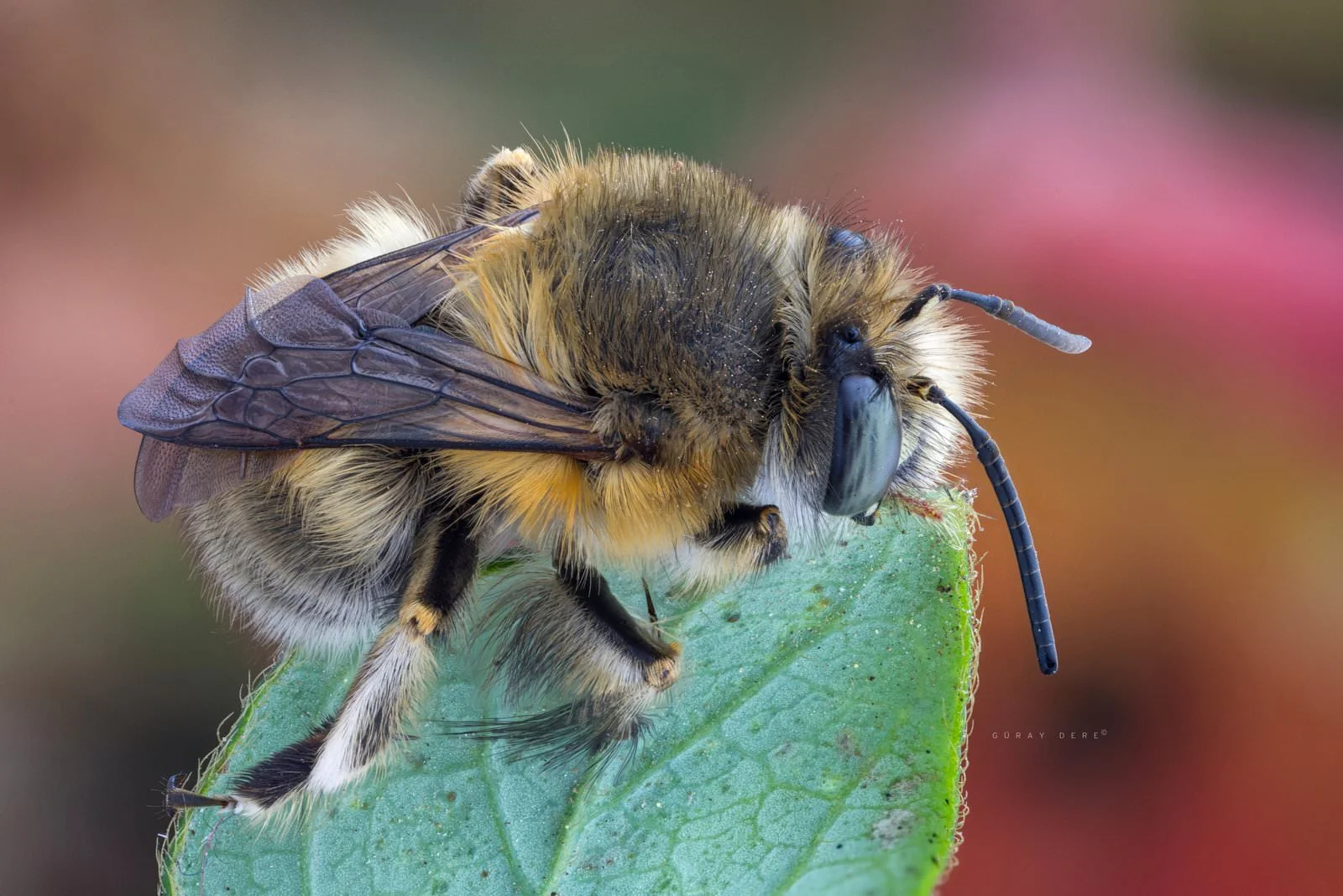
As expected, the gentle tonality showed up right away. Since I shot in evening light, the colors came out a bit too warm, but I left them as-is—natural light should stay natural. I didn’t get the density of detail I wanted, but it became clear that natural light deserves time. I’ll keep working on my kit and myself in that direction.
Update
As you know, I later published different articles on natural light. I’ve gone out to shoot in the field many times and gained experience. For macro, this is hands-down the best lighting approach. If you can’t provide true natural light, you can get close using other continuous light sources. For example, Ikea Jansjö desk lamps are very suitable for this.
Since switching to this way of working, I’ve abandoned flash completely. I’ve been shooting without flash for about two years now, and I can say that’s how it will continue.