Macro photography with a microscope objective

I still remember the thrill of picking up my 1:1 macro lens for the first time and shooting a few frames—being able to render flowers and insects that large was pure joy. For quite a while I thought that was the end of the road. Most of the time I wouldn’t even go all the way to 1:1 magnification; I felt I was getting enough detail. Why would we need to get any closer, anyway?
But thinking further back, I remember the microscope I bought in middle school with saved allowance money—so excited at the time. Half toy though it was, I tried to examine anything I could get my hands on at 1000X magnification, usually with terrible results. After a while I grew fond of the ~50X range: I spent time with brighter, sharper views and filled pages with drawings of them.
It never occurred to me I could do the same thing with my camera.


High magnification in macro
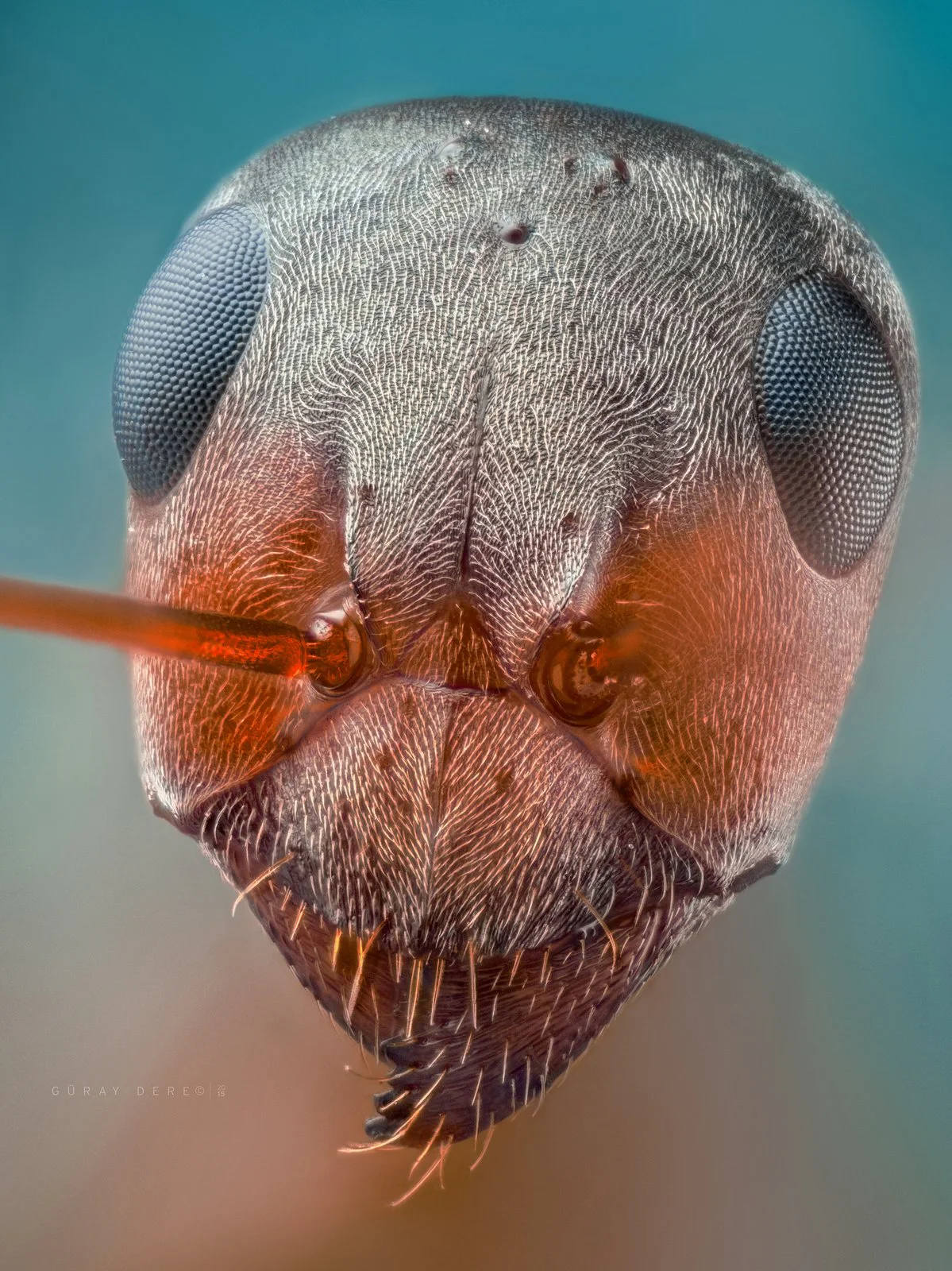
Anyone who gets into macro inevitably develops a magnification obsession. Soon it turns into a race. How large can we render the subject? How do they shoot those incredible images we see online? Can you shoot a portrait of an ant?
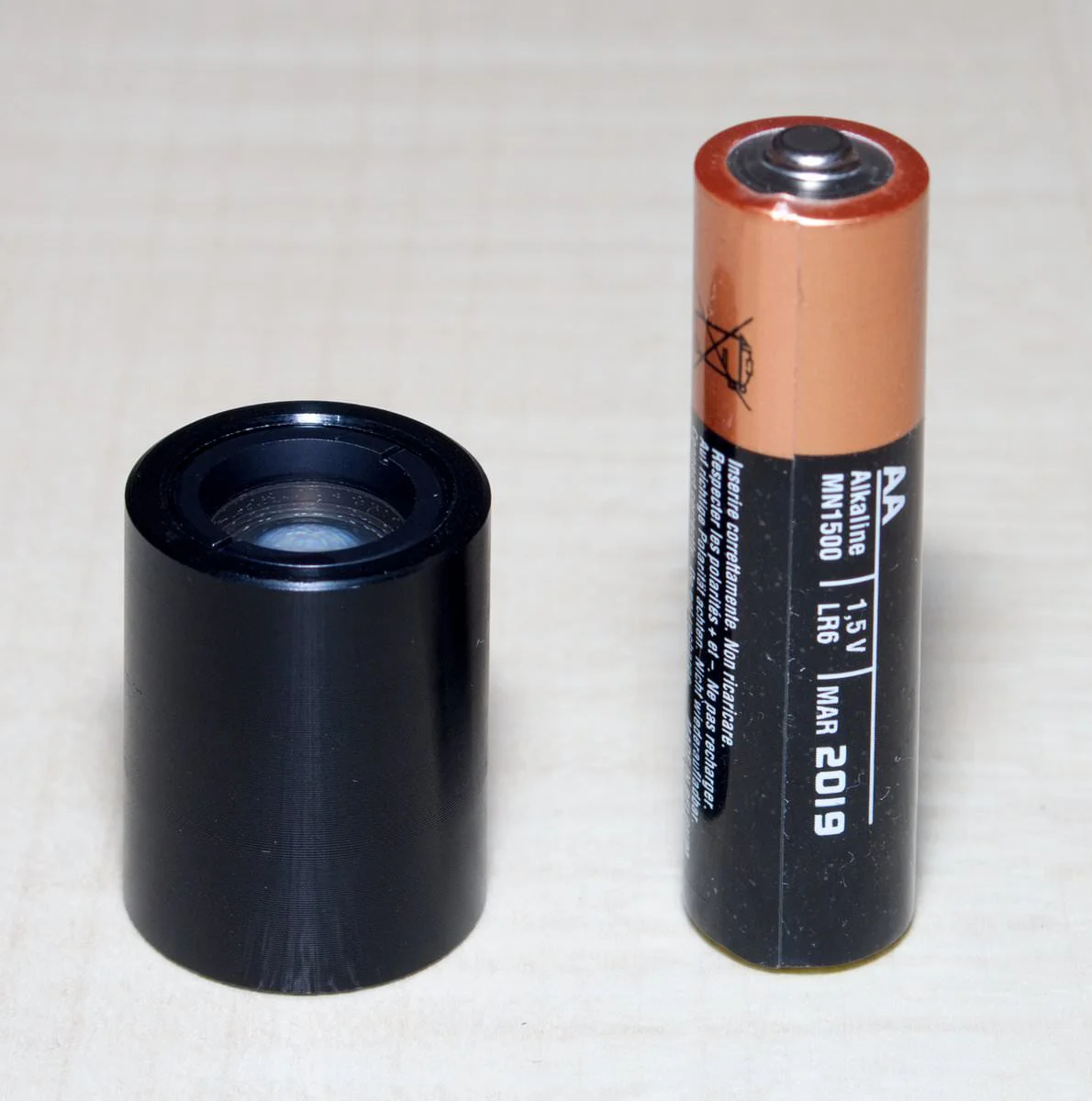
As I went from tubes to bellows to reversed 28mm lenses, the lenses I used kept getting smaller. With palm-sized enlarger lenses and later microfilm lenses half a finger long, I could reach around 10X magnification. But I still found the quality lacking. From that point on, I needed to switch perspectives.
Microscope objectives

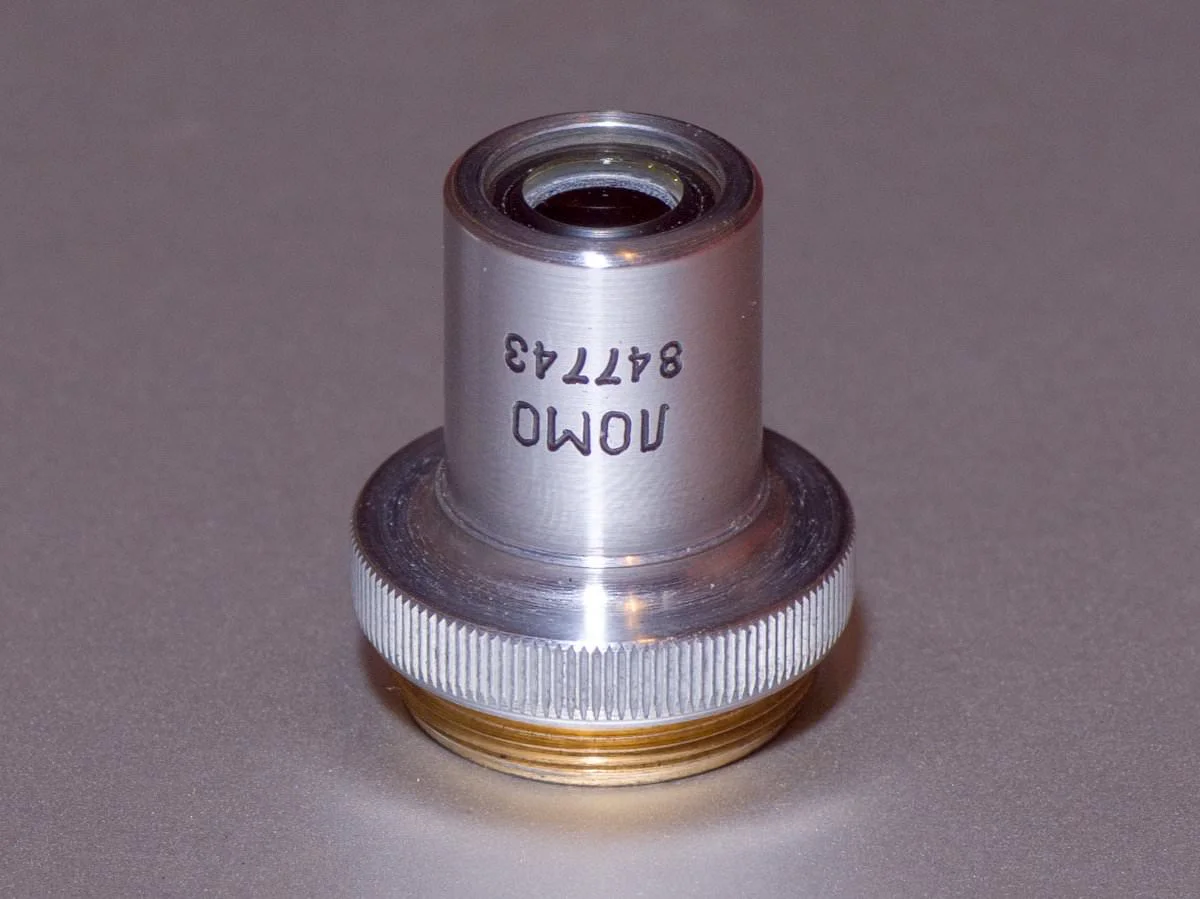
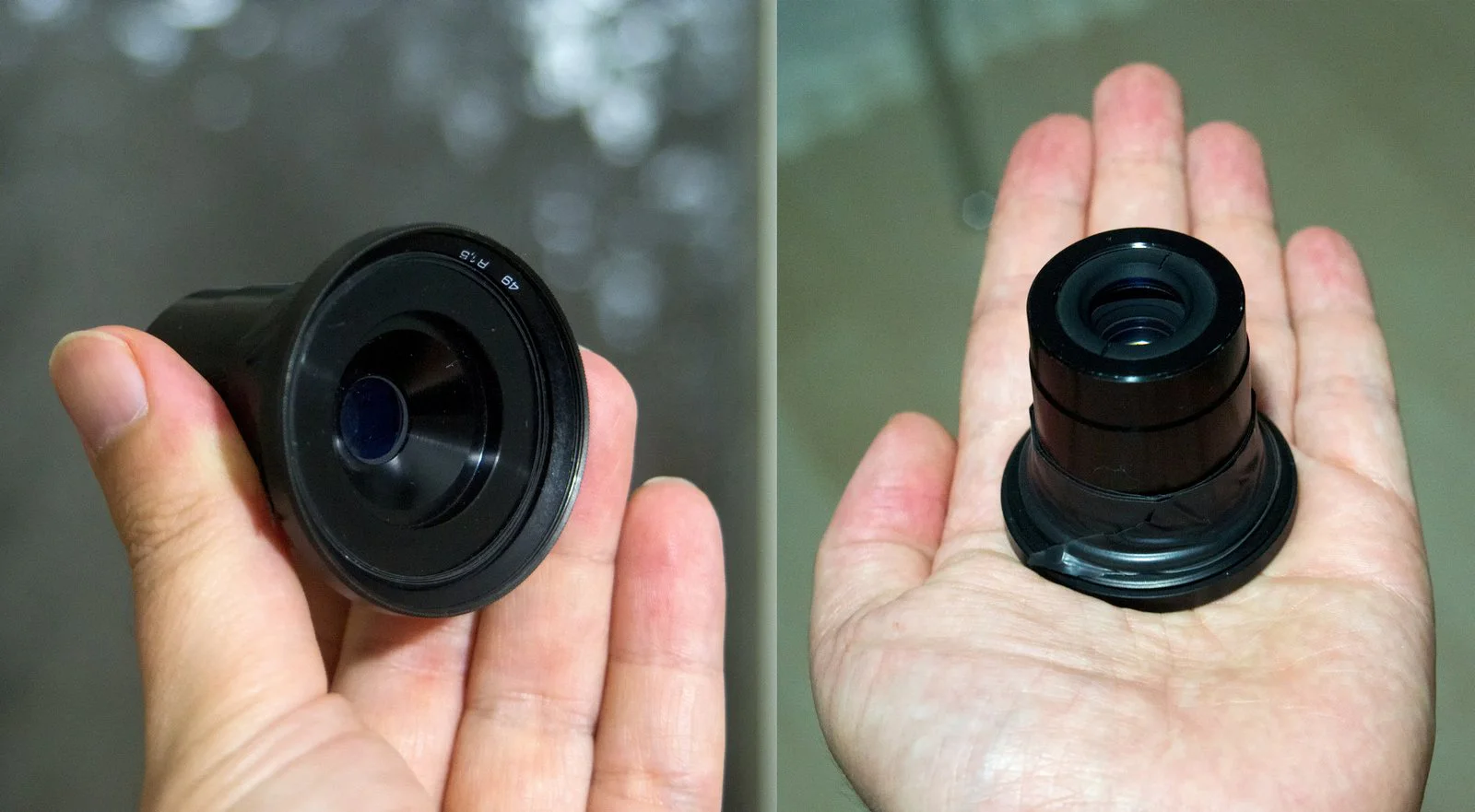
I’d planned to save this topic for later, but the use of microscope lenses for macro photography has drawn a lot of interest from many friends. I’ll share some general information and also talk about my experiences with the only lens I had at the time—a Lomo 8X.
Types of microscope objectives
Microscope lenses have a production history going far back, and you can see them as a broad field of expertise. Even seasoned macro pros struggle to decide whether a lens is suitable for photography. Sometimes you can buy a quality lens cheaply because the model info isn’t fully written; sometimes you pay a lot and end up with an optically flawed model. You can find countless models differing by technology, glass material, intended use, and design—and of course by magnification power…
We can mount any microscope lens to our camera. But the vast majority are unsuitable in one way or another.
- Extremely high magnifications aren’t practical. Objectives between 2X–60X are more suitable; above 10X the difficulties increase greatly. You need large, industrial setups, and only very specialized lenses work. Practically speaking, 10X and below is suitable.
- Many microscope objectives are made to work with an eyepiece (ocular). Used alone, they exhibit color fringing and other optical issues.
- Immersion objectives operate with their front element touching a drop of special oil on the specimen. These aren’t suitable for us.
- An objective produces a circular image. In some objectives this circle isn’t wide enough and causes heavy corner darkening (vignetting) on our camera, especially on full-frame bodies. Increasing magnification can compensate to a degree, but it’s best to research beforehand.
Finite microscope lenses
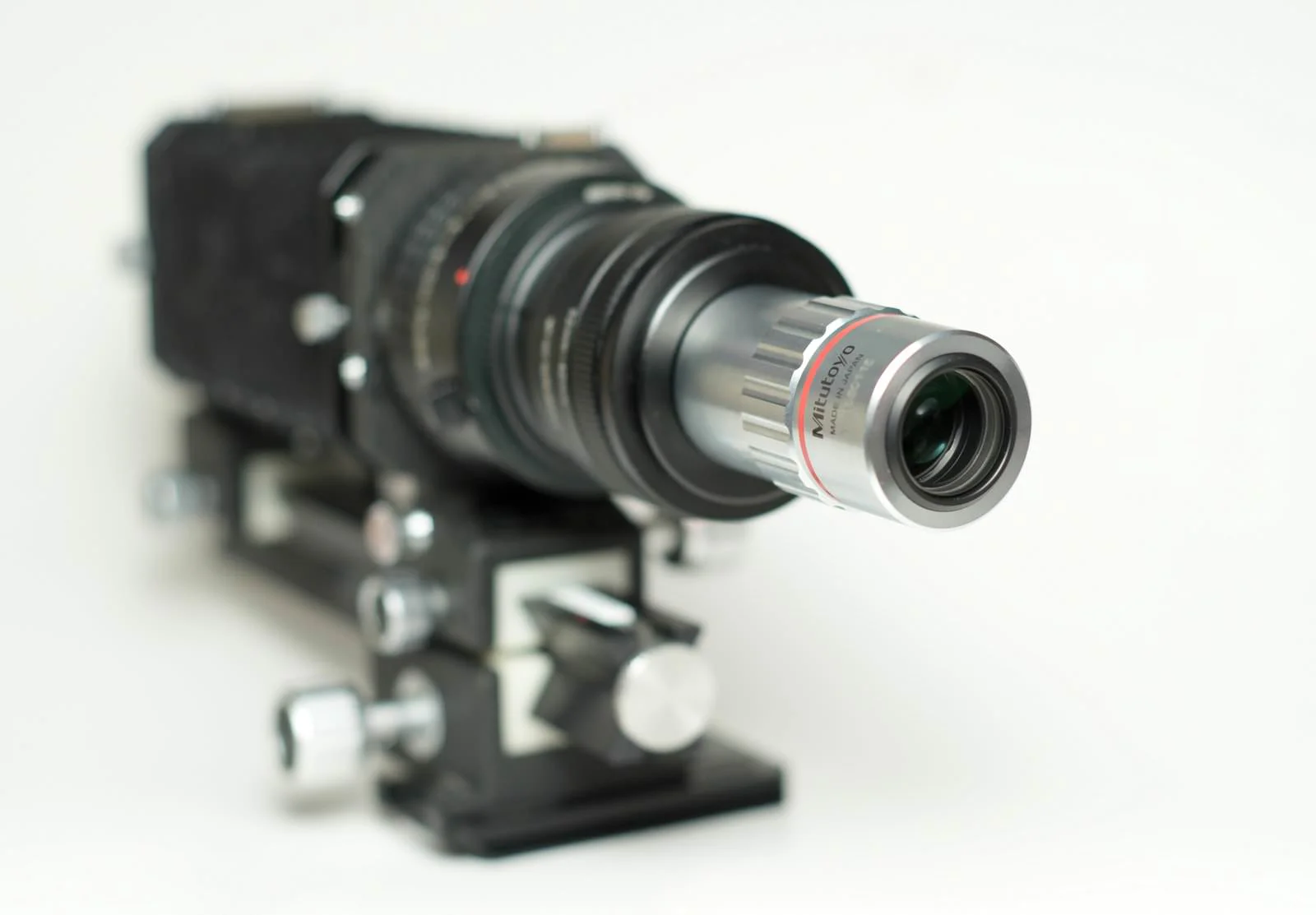
These lenses can simply be mounted on bellows and used on their own. With a specific tube/bellows length they produce the stated magnification. For example, a lens marked 160 gives its rated magnification at 16 cm extension, one marked 210 at 21 cm. You can increase or decrease magnification by extending or shortening the bellows a bit. Using roughly −50% to +50% of the stated magnification is usually feasible. But for best quality it’s wise to use them at their intended extension.
Most microscope lenses commonly available and affordable on the market are finite type.
Infinity-corrected microscope lenses
This design is used in modern microscopes. The rays coming out of the lens are parallel. So if we mount it on bellows we can still form an image, but it won’t be sharp enough. You need a tube lens to focus the image on the sensor. There are tube lenses made specifically for this purpose. Don’t worry—any lens you have that works around 200 mm can serve as a tube lens. For more magnification use a longer focal length; for less, a shorter one.
In use, you first mount the chosen tube lens to your camera. Then, with an adapter that matches the filter thread, you attach the microscope objective to the front of that lens. It may look a bit odd.
So, if you have a 70–300 zoom, with a 10X infinity objective you’ll get 10X at 200 mm, 5X at 100 mm, and 15X at 300 mm, scaling accordingly.
Since there’s a second lens in the setup, it directly affects image quality. Choosing a sharp lens as the tube lens is a good idea.
Because infinity objectives are newer-generation designs, we can expect better color correction and sharpness. Of course, it’s unfair to expect too much from a cheap lens. Quality finite lenses certainly don’t take a back seat to them.


Abbreviations on microscope lenses
You’ll see a wide range of abbreviations and numbers on microscope objectives. Here are examples of common ones:
Plan
As with macro lenses, “Plan” denotes a flat field—i.e., the plane of focus is actually planar. Terms like “Semi-Plan” mean a more curved field will be in focus. While focus stacking will compensate for this curvature to a large extent, we prefer our lens to be Plan.
CF – Achro – Achromat – APO
These indicate correction against chromatic aberrations. APO lenses offer better correction. Since we’ll be using the lens alone without an eyepiece, having one of these markings is quite important for color.
BD – EPI
These describe illumination method. BD lenses have a channel allowing light sent from above, around the lens, to pass and illuminate the specimen below. For macro use, when mounting to a camera, that channel must be blocked from passing light. In EPI lenses, light is likewise delivered from above but through the lens itself. If that feature isn’t used, EPIs behave like normal lenses.
NA
Numerical Aperture. The larger this value, the more detail the lens can resolve. Typically, around 0.10 at 5X, 0.20 at 10X, 0.40 at 20X, and so on—NA increases with magnification. For the same magnification, a lens with higher NA will likely perform better. However, depth of field and working distance decrease accordingly.
LWD – ULWD – SLWD
Indicates longer-than-normal working distance (WD). L = Long, UL = Ultra Long, SL = Super Long—each implying progressively longer working distance. Note that increasing working distance usually trades off some NA, thus some sharpness. Still, we prefer longer WD so we can light more effectively and, during focus stacking, reduce perspective changes as the lens moves back and forth.
Challenges when using microscope lenses
You’ll face the usual high-magnification challenges.
Vibration
Vibration will be our biggest problem when shooting with a microscope lens. We must stabilize both the camera and the subject as solidly as possible. A cable release or remote is advisable. After each shot, it’s wise to wait a few seconds to ensure vibrations have died out. Bodies with EFSC greatly help with vibration control.

Working distance
With a microscope you’re one or a few centimeters from your insect. As magnification increases, you get within mere millimeters. Framing the shot—and keeping that frame steady for dozens of exposures—is very hard.
Establishing the initial frame will be tiring. Because we surround the insect with diffusers from four sides, it can be hard to judge where it sits in front of the lens. While looking through the viewfinder and trying to focus, we might move back and forth and touch the subject to the front element, smearing—or worse, scratching—the lens. Since a common method is to hold a dead insect with holders and a pin in front of the lens, we might inadvertently scratch the lens with the pin or holder.
Lighting
Long exposures are very difficult in microscope use. You need a completely vibration-free camera body (EFSC-equipped) and an overall vibration-free setup. Alternatively, flash use can largely overcome vibration issues.
With working distance around 1 cm, you need creative ideas for good lighting. Picnic cups, yogurt tubs, and ping-pong balls can be very effective for diffusing light. However, it’s important that the ball or cup not protrude too far in front of the lens. Otherwise, even if you don’t see it directly in frame, light spilling from the diffuser into the lens can cause veiling flare.
Extremely shallow depth of field

With a microscope lens, your plane of focus shrinks to a hair-thin film. You must photograph the subject piece by piece in sequence and then spend time and effort combining them on the computer. Even a “simple portrait” may require around 100 frames. For more about the method called focus stacking, see this post:
/en/focus-stacking-teknigi/
Considering the processed final photo, in this sequence of images moving from front to back, sharpness drops off abruptly after the last frame. You get an immediate transition from in-focus to out-of-focus—an unnatural look. To prevent this, you can shoot even more frames. Or, using a far more advanced approach, you can pair microscope lenses with homemade apertures. Stopping down on the final frame can naturalize the background, but it’s a pretty challenging solution.
Mounting

Mounting these tiny lenses to our camera can be confusing at times. Unfortunately there are many different mounting standards for microscope lenses: RMS, C-mount, M25, M26, M27.
Since RMS appears most often, it’s wise to keep an RMS adapter on hand.
Lomo 8X 0.20
You can read a short post about this lens here. It’s a Russian lens from 1970 that lacks many of the desirable features I listed above. Since these were my first microscope attempts, I got it mainly to develop my technique. Price-wise it was cheap enough to be worth the risk.
Although designed for 8X, I can use it in the 5X–12X range. It’s a finite-type lens made to be mounted directly to bellows.
There’s quite a bit of CA in the colors, but focus stacking can tidy most of it up. CA that remains in the bokeh areas isn’t easy to fix and can be displeasing depending on the situation.
In terms of resolving power, I can comfortably say it meets my expectations for a microscope lens. With ping-pong ball lighting, it’s easy to get the desired light level.


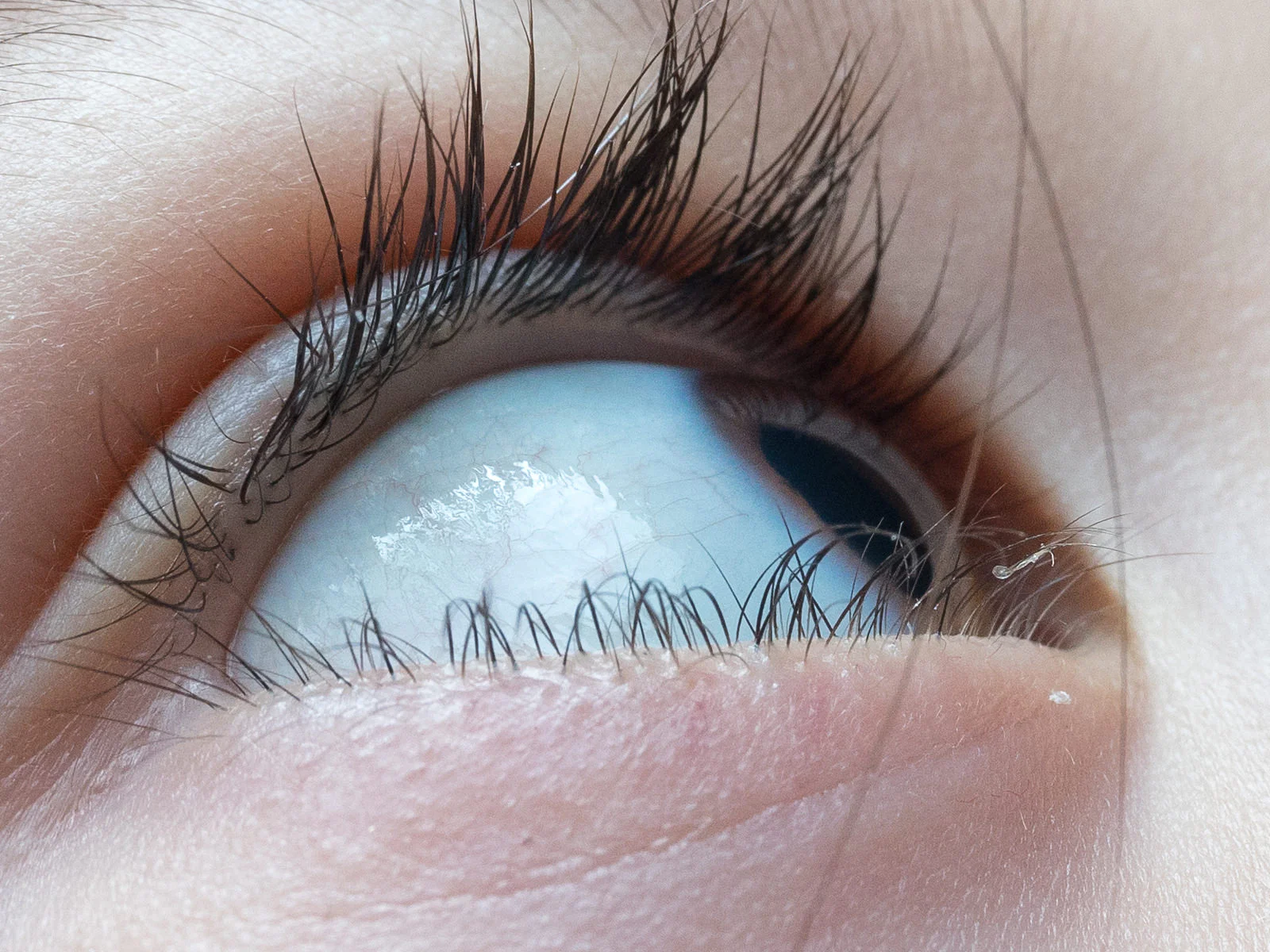
Samples from photos I’ve shot with microscope lenses


Other microscope lenses reviewed
You can reach the posts by clicking the links below.